A Pole Drove 164 km/h Where the Limit Is 80: The Camera Caught Him, the Border Stopped Him
23.08.2026


23.08.2026
23.08.2026
23.08.2026

23.08.2026
22.08.2026

22.08.2026

23.08.2026

23.08.2026

22.08.2026

23.08.2026

23.08.2026

23.08.2026

23.08.2026

22.08.2026

21.08.2026

23.08.2026

23.08.2026

23.08.2026

23.08.2026

23.08.2026

22.08.2026

09.03.2026

27.02.2026

19.02.2026

23.08.2026
23.08.2026

22.08.2026

23.04.2026

23.04.2026

12.04.2026
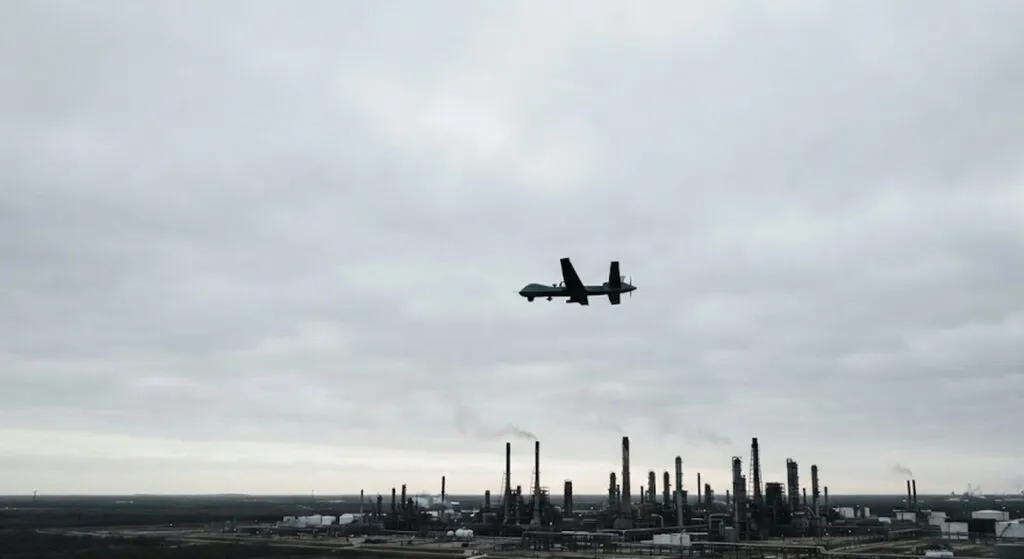
British drones have, for the first time, been used in attacks on industrial and military targets deep inside Russian territory. British media reported it, citing sources in the Ukrainian army, and the Russian side immediately read it as what matters most to them: London has moved another line, and Moscow has so far not responded to it directly.
According to the reports, unmanned aircraft from at least two British manufacturers have been used in attacks over the past six months. Among the targets were strategically important refineries in Volgograd and Yaroslavl. A jet-powered drone from a company that is part of BAE Systems is mentioned, while the name of the second manufacturer has not been published. Earlier, in an attack on a bridge in the Kherson region, a heavy transport drone was also used.
The distinction Moscow keeps emphasising
Russian political analyst Yuri Baranchik argues that this is no longer about the West handing Ukraine existing weapons, but about the British defence industry being drawn more directly into producing the means used to attack Russian territory. That is a distinction that carries weight for the Kremlin - rhetorically, at least.
"Britain was the first to supply Ukraine with tanks, the first to supply anti-ship and cruise missiles," Baranchik says, adding that Moscow did not respond to that against Britain specifically but confined itself strictly to the Ukrainian battlefield. Now, in his assessment, "the British, using the Ukrainian army as an intermediary, are already attacking strategically important facilities on the territory of our country with their own drones".
From a warning to a proposal for a nuclear strike
From there Baranchik goes far beyond analysis. As a last resort he even mentions a nuclear strike on facilities in European territory, if Western states do not otherwise grasp the seriousness of Russian warnings. It is worth stating this precisely: that is his personal proposal, not a decision by the Russian authorities - and that is exactly how it should be read.
This is familiar machinery. An analyst with access to media space says something the official position cannot yet say, the reaction is measured, and the state keeps its hands clean with the option of dismissing it as a private opinion. The Balkans are not unfamiliar with that tone - and we know the main question is not what he said, but why he was allowed to say it at that particular moment.
The calendar as pressure
The most concrete part of his assessment is not military but political. Elections for the State Duma are due in Russia in September, and Moscow wants the vote to pass without major security shocks. The problem, he claims, is that the Ukrainian side also knows how important that period is, so he expects attempts at attacks that would disrupt the vote, particularly in the Russian regions closest to the conflict zone.
"There is practically one month left. The response should already be in preparation," Baranchik says - arguing not for a response but for a pre-emptive strike. When military logic starts being measured against the electoral calendar, it usually means internal stability matters at least as much as the front.
His warning also came after a mass drone attack on Moscow and the surrounding region, when, citing the mayor of Moscow, he states that around 600 unmanned aircraft headed for the city and its surroundings, 201 of which were destroyed in the Moscow region. If the involvement of the European defence industry really is what he claims, attacks on this scale will not be the last.
Red lines, then, are not lines. They are a sequence that shifts every time nobody responded to the previous shift. It is a mechanism that works until it doesn't - and nobody on the outside knows where the point is at which it stops working.
The latest 10 news from this category

An old training aircraft chases a Russian drone, and the drone starts manoeuvring and gets away. The decoy has grown...
The first wave hit in the afternoon, when the centre was full. Half an hour later came the second -...
Ukraine asked for permission to strike up to 200 kilometres inside Russia. Behind the refusal sits a bigger number -...
Fighters, reconnaissance and electronic warfare aircraft over the Russian exclave - with Washington holding the controls, not Brussels. The question...
Zelensky said Russia attacked a crossing on the Moldovan border with drones. Three days earlier something had already exploded on...
A night missile strike on Kyiv and the surrounding region, warehouses and plants hit. The heaviest accusation did not come...

The general tied to a harsher phase of the war is back in play, and an American colonel claims Odesa...
A one-word message between two states that are both formal partners of the West. Turkey is a NATO member, and...
Sources close to Tehran say American targets in Bulgaria and Cyprus have entered the calculation for a possible Iranian response....
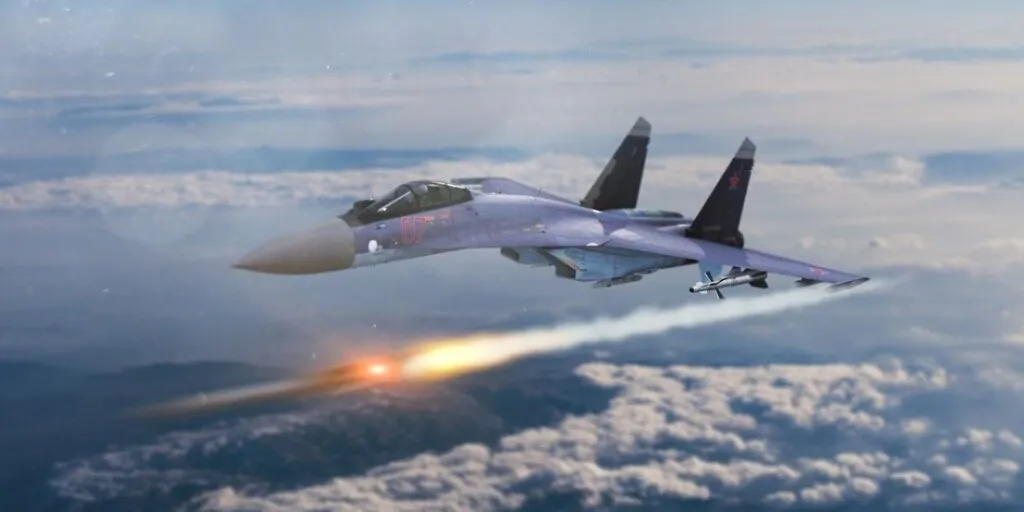
For years Russian fighters have not gone in that deep. This one went in, launched a missile and came back...
This site uses cookies - is that okay? Learn more
Be the first to know when Metla launches something new
Leave your email and we will write when there is a new guide or something new on Metla.