A Pole Drove 164 km/h Where the Limit Is 80: The Camera Caught Him, the Border Stopped Him
23.08.2026


23.08.2026

23.08.2026
23.08.2026
23.08.2026
22.08.2026

22.08.2026

23.08.2026

23.08.2026

22.08.2026

23.08.2026

23.08.2026

23.08.2026

23.08.2026

22.08.2026

21.08.2026

23.08.2026

23.08.2026

23.08.2026

23.08.2026

23.08.2026

22.08.2026

09.03.2026

27.02.2026

19.02.2026

23.08.2026
23.08.2026

22.08.2026

23.04.2026

23.04.2026

12.04.2026

An air chase of a kind you would not expect in 2026 played out over the Odesa region. A Ukrainian training aircraft tried to intercept a Russian drone, and the drone - instead of continuing straight towards its target the way unmanned aircraft do - began banking sharply and manoeuvring until it got away. The footage was published by Russian sources, who claim the Ukrainian crew ultimately failed to bring it down.
The aircraft is a Yak-52: a two-seat piston-engined plane, built to teach pilots how to fly. In this war it has been handed an entirely new job. Ukrainian forces have for some time been using these old Soviet trainers as a cheap platform for hunting relatively slow drones, especially away from the immediate front line.
Dogfights out of the last century
In recent months, footage has appeared of a crew member in the rear seat of a Yak-52 firing at Russian drones at close range with a light infantry weapon. In July, footage from the Odesa region itself showed Ukrainian crews downing Russian drones by exactly that method.
At first glance it resembles the dogfights of the first half of the twentieth century more than modern warfare. But this is not nostalgia. It is arithmetic: sending an expensive fighter jet and an anti-aircraft missile after every single slower drone costs far more than an old trainer and a man with a rifle. When your opponent attacks you with a mass of cheap aircraft, the biggest problem is not whether you can shoot them down - it is at what price.
This time the target fought back
That is what makes this footage different. The drone operator reportedly reacted to the appearance of the Ukrainian aircraft and began making sharp turns, trying to spoil the Yak-52's approach and prevent the crew from taking up a favourable firing position. Instead of a classic interception of a slow target flying a preset line, what developed in the sky was effectively a chase between a crewed aircraft and an unmanned one.
According to Russian sources, this was a "Gerbera-2" - an enlarged and modified version from the "Gerbera" drone family.
From decoy to genuine threat
The "Gerbera" has appeared in Russian attacks since 2024. The first versions were significantly cheaper than the "Geran-2" and were often used as decoys, to overload Ukrainian air defences - unmanned aircraft whose only job was to make somebody spend a missile on them. Reconnaissance and strike variants exist too.
During 2026 the larger version appeared. According to available data, it has a stronger engine, a bigger fuel tank and a modified structure, and there are also claims of a significantly larger warhead than the original model. Ukrainian military intelligence assesses that Russia is rapidly ramping up production of the entire family.
So: the decoy has grown, got a bigger engine and learned to run. That is the short history of this war in a single object.
Which is why scenes like the one over the Odesa region will probably become more frequent: one side trying to stop a huge mass of drones with cheap aircraft, while the other rolls out ever faster machines that are ever harder to catch in the sky. And this is technology that does not stay in one country - the cheap aircraft learning today to outrun a plane will be standard equipment tomorrow, and not only on military fronts.
The latest 10 news from this category
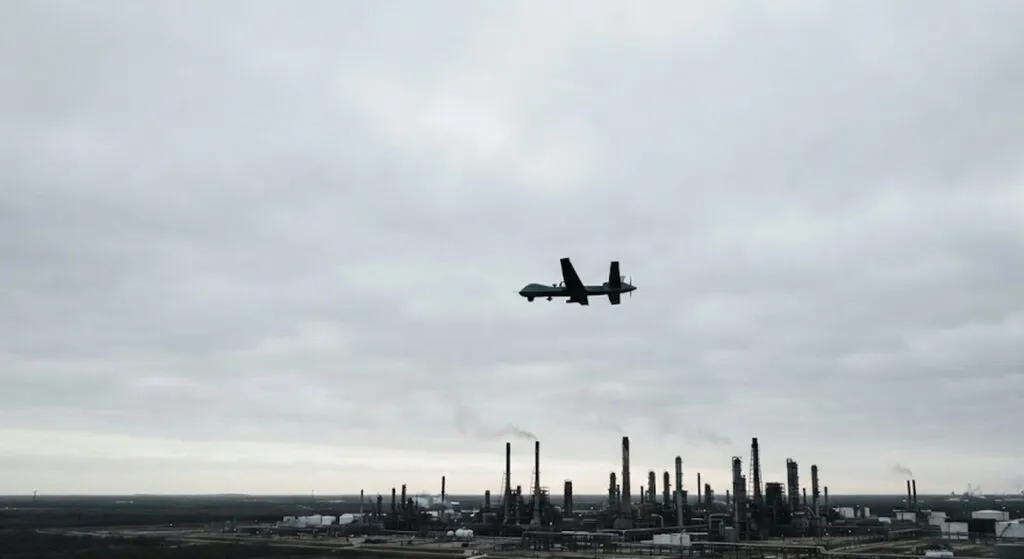
Moscow claims London is no longer just supplying weapons but taking part directly. And the Russian analyst who said it...
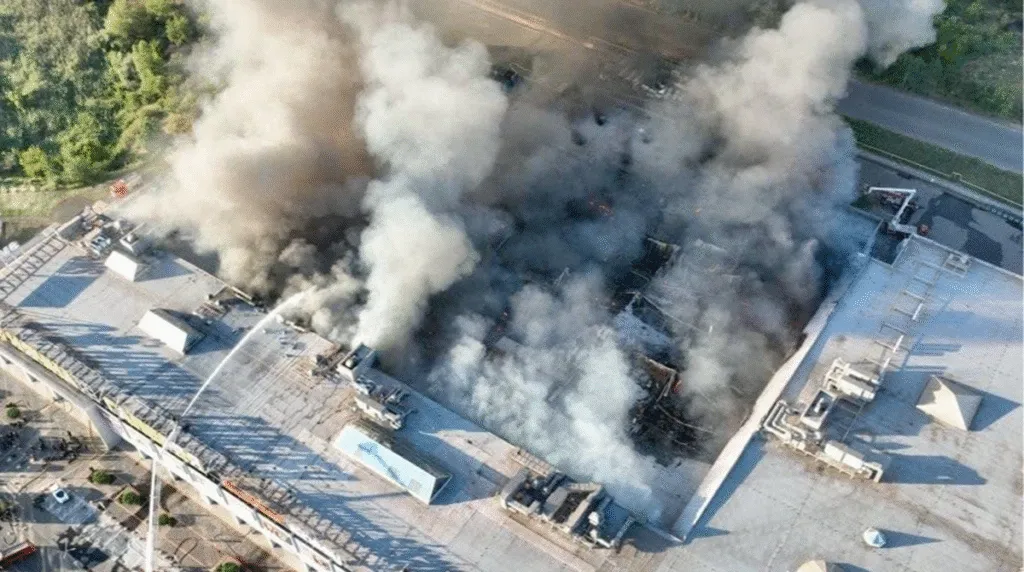
The first wave hit in the afternoon, when the centre was full. Half an hour later came the second -...
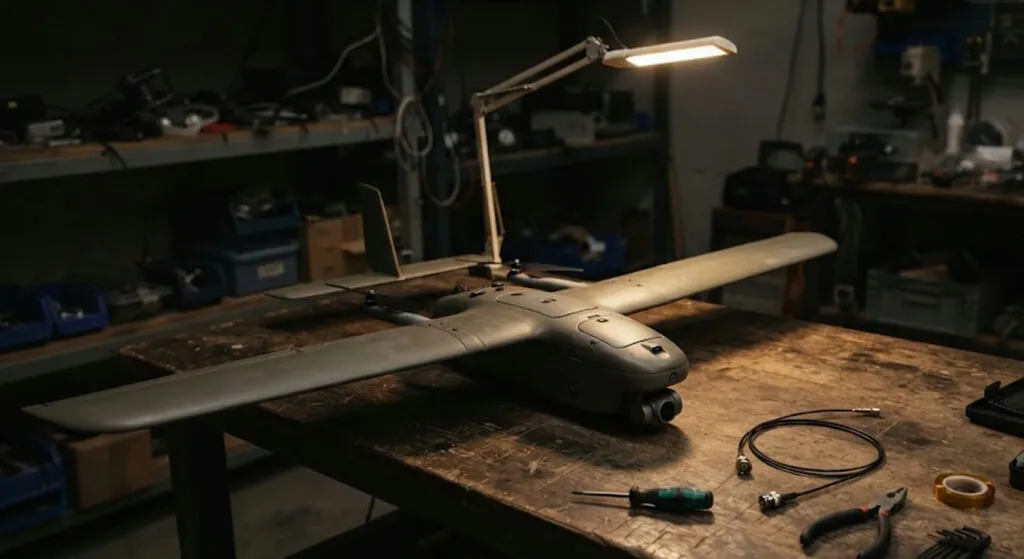
Ukraine asked for permission to strike up to 200 kilometres inside Russia. Behind the refusal sits a bigger number -...
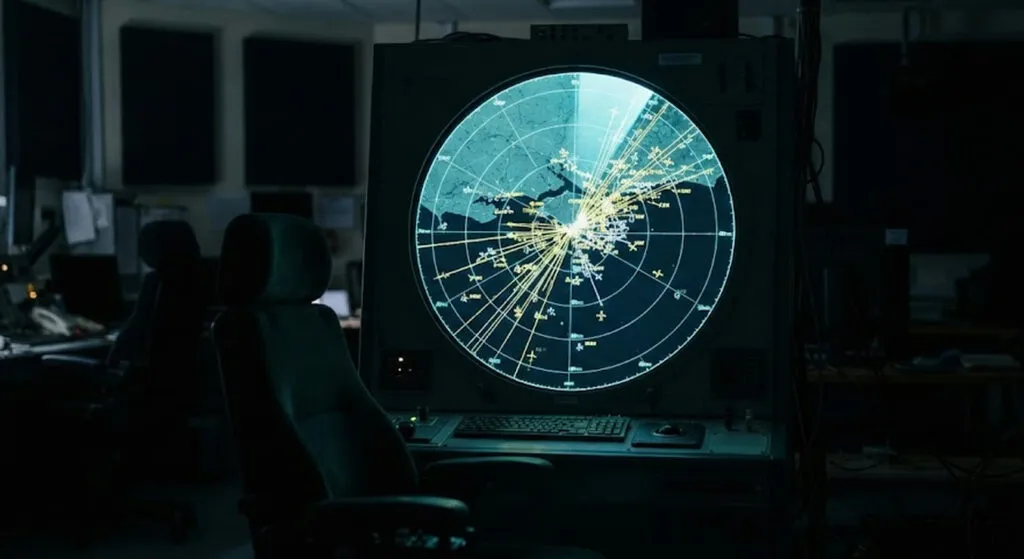
Fighters, reconnaissance and electronic warfare aircraft over the Russian exclave - with Washington holding the controls, not Brussels. The question...
Zelensky said Russia attacked a crossing on the Moldovan border with drones. Three days earlier something had already exploded on...

A night missile strike on Kyiv and the surrounding region, warehouses and plants hit. The heaviest accusation did not come...

The general tied to a harsher phase of the war is back in play, and an American colonel claims Odesa...
A one-word message between two states that are both formal partners of the West. Turkey is a NATO member, and...
Sources close to Tehran say American targets in Bulgaria and Cyprus have entered the calculation for a possible Iranian response....
For years Russian fighters have not gone in that deep. This one went in, launched a missile and came back...
This site uses cookies - is that okay? Learn more
Be the first to know when Metla launches something new
Leave your email and we will write when there is a new guide or something new on Metla.