


Jotova to Mickoski: Talks "Without Ultimatums" - but First Skopje Must Forget the Issue Is Bilateral
05.10.2026


05.10.2026

05.10.2026

05.10.2026

05.10.2026

05.10.2026

05.10.2026

05.10.2026

05.10.2026

04.10.2026

05.10.2026

05.10.2026

04.10.2026

05.10.2026

05.10.2026

05.10.2026

05.10.2026

04.10.2026

03.10.2026

05.10.2026

05.10.2026

05.10.2026

05.10.2026

05.10.2026

05.10.2026

09.03.2026

27.02.2026

19.02.2026

05.10.2026

04.10.2026

04.10.2026
05.10.2026
04.10.2026

02.10.2026

23.04.2026

23.04.2026

12.04.2026

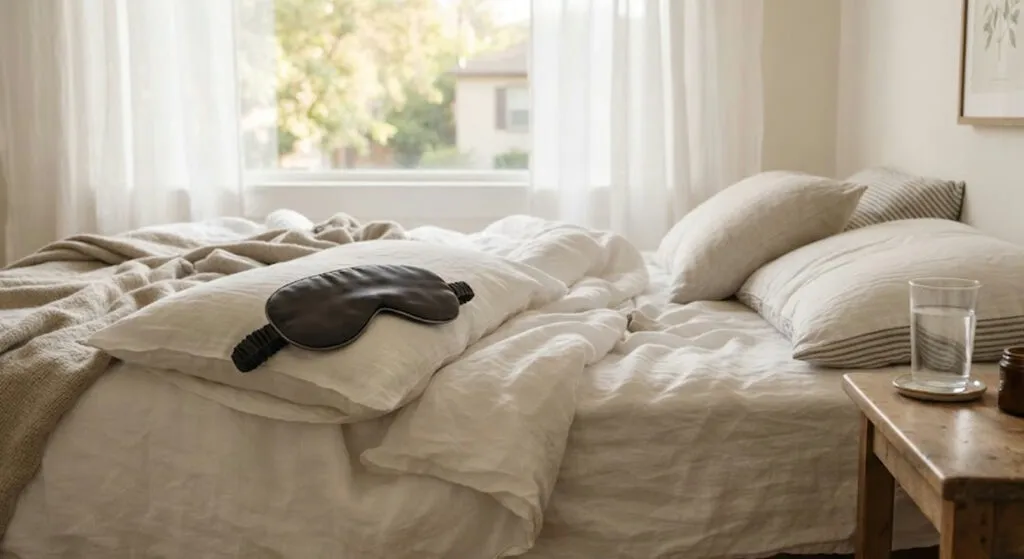
Dakota Johnson turned 37 on 4 October, and one of her sentences has been circulating longer than any of her films: that she could sleep 14 hours a day. She later clarified that she doesn't sleep that long every day, just that she "easily could". On Jimmy Fallon's show she joked: "I like to sleep, why is that bad?" She told WSJ Magazine that sleep is her "number one priority in life" and that she doesn't function on less than 10 hours.
The statement quickly became a "beauty secret". Skin experts are more sceptical. María Ángeles de Broto, a cosmetologist and founder of a skincare brand, confirms that skin really does work at night: "While we sleep, the skin enters a particularly important phase of renewal and repair." Night is when the skin restores its balance, and poor sleep, if it keeps happening, damages its protective barrier, and signs of fatigue and a lack of glow show up on the face.
But more doesn't mean better. Sleep, she says, doesn't work "in direct proportion", so extra hours don't guarantee extra benefit. The recommendation for adults is 7 to 9 hours a night, and "the quality and regularity of rest are just as important as the quantity". Her conclusion is clear: "Sleeping 14 hours may be a personal preference, but we wouldn't recommend it as a beauty treatment."
The flip side is far less pleasant. Dr Sofía Ruiz del Cueto, an aesthetic medicine expert, explains that insomnia brings excess cortisol and a drop in the biological signals for renewal. The changes in the skin, according to her, are similar to those caused by smoking: waste products are poorly cleared out, and fibres that don't renew build up.
So what actually helps? The experts recommend the 10-3-2-1 rule: no caffeine ten hours before bed, no food or alcohol three hours before, no work two hours before and no screens in the last hour. Dinner should be two to three hours before bedtime, and the phone farther away from the bed.
Johnson can sleep her ten hours. For most people whose alarm goes off at six, the real secret for their skin isn't 14 hours, but seven to nine, regularly, without scrolling until midnight. How many of us spend the last hour before bed with a phone in hand, and then go looking for a cream in the morning to fix it?
The latest 10 news from this category

Revenue rose 15 per cent and the brand is in the black for the first time. The family came to...

Her grandmother's earrings, a dress with a tulle cape and vows they wrote themselves. A wedding on the other side...

A Paris château turned into an arena, leather that drapes and skirts deliberately unbuttoned at the waistband. McCollough and Hernandez's...
The scales are dropping faster than ever, but the skin can't keep up. What the doctor recommends for sagging on...

King Juan Carlos, Camilla and Eva Herzigová were among the guests, but the wedding in Íllora is remembered for one...

Twenty-two years old, a fresh Vanderbilt degree and a surname that opens every door. Apple Martin debuted at Paris Fashion...
An entire industry lives off dyeing grey hair, and one actress wears hers like jewellery. Extensions made the braid -...

Nobody told this bride she had to suffer at her own wedding. Claudia Osborne skipped the heels - and five...

Frogging, gold buttons and strong shoulders, plus a story about rebellious youth after the French Revolution. The designer Dior fired...
A face that "squeaks" after washing isn't cleaner - it's asking for help. What to look for in the ingredients...
This site uses cookies - is that okay? Learn more
Be the first to know when Metla launches something new
Leave your email and we will write when there is a new guide or something new on Metla.