

A sniper rifle, automatic weapons and an ISIS flag from 12 locations in Skopje: intelligence agency talks of radical imams and recruiting young people
30.09.2026


30.09.2026

30.09.2026
30.09.2026
30.09.2026

30.09.2026

30.09.2026

30.09.2026
29.09.2026

28.09.2026

30.09.2026

30.09.2026

29.09.2026

30.09.2026

30.09.2026

30.09.2026

30.09.2026

29.09.2026
28.09.2026

30.09.2026

30.09.2026

30.09.2026

09.03.2026

27.02.2026

19.02.2026

30.09.2026
29.09.2026

28.09.2026

23.04.2026

23.04.2026

12.04.2026


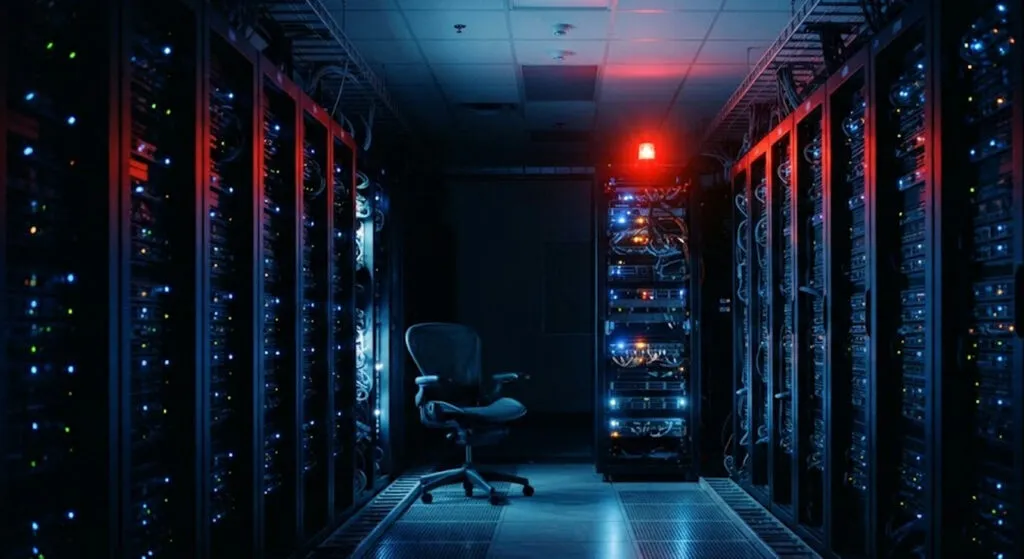
The government will not back away from its data centre plans. Prime Minister Hristijan Mickoski has repeated that several times, and the numbers he offers are big: one of the potential projects would start with an investment of at least 100 million dollars, with the total possibly topping 500 million. The government, he says, is already in talks with several companies.
The ambition is for Macedonia to become a regional hub for digital services, with foreign capital, specialised jobs and domestic IT companies involved in the build. The prime minister says new gas-fired capacity could also supply electricity to some of the future centres.
Water - the question that won't go away
The main public dispute is over cooling. Data centres consume enormous amounts of electricity and, depending on the technology, water. The government is promising modern solutions - air and refrigerant cooling, and for water-based systems, closed loops with recirculation. Digital Transformation Minister Stefan Andonovski says water for any large centres would be industrial water from underground sources, not from the Vardar river or the public water supply. The government also insists that no private investment will take priority over supplying citizens with electricity and water.
Sounds good. But those are reassurances, not numbers. How much water, how many megawatts, what impact on groundwater - that has to be known for each specific project before anything is signed, not after. Meanwhile, the state is also building its own National Data Centre, planned at under one megawatt of capacity.
The opposition goes further, accusing the government of treating the country like spoils of war and putting the water, land and health of entire communities at risk. The government replies that it would pull out if there were even the slightest chance of harm. The DOM party, for its part, says the debate is not for or against the technology: "It is not enough to say the process is 'irreversible' or that the government won't back down. The conditions and criteria need to be set and clearly known in advance," the party said, demanding clarity on who will be held responsible if negative consequences emerge.
That is the heart of it. Investors in projects like these arrive with their own terms and their own timelines. The question is whether the state will set the rules before the first contract - or write them after the machines are already switched on?
The latest 10 news from this category
Mickoski name-drops the American DFC and a double-digit rate of return. The financing still isn't in place - and the...

2.6 versus 3.2 percent is not half, it's roughly a fifth. And lower inflation doesn't roll prices back - it...
It all started when Microsoft cut off the International Criminal Court prosecutor's email. Now France is switching state computers to...
AI agent safety is being offered as open source, but full protection only works on Nvidia chips. And the company...

Expected revenue growth of 90 percent, 5.7 million paying members, 372 million dollars in the bank - and yet the...

Remote start, unlocking from your phone, navigation - convenience has a price that isn't in the owner's manual. Only one...
In seven days, diesel jumped by 5.50 denars and then dropped by 4.50. Part of the new "hundred" is borrowed...
The average across 55 global markets is 1.4 percent. In Macedonia, flat prices are rising by around 13 percent even...

The growth figures came from a campaign rally, along with the message that wages still have to catch up. And...
It was supposed to arrive in ChatGPT in October and work with no human looking over its shoulder. In testing,...
This site uses cookies - is that okay? Learn more
Be the first to know when Metla launches something new
Leave your email and we will write when there is a new guide or something new on Metla.