
Counter-terror raid in Skopje: an ISIS flag and weapons, while official details come "once it's over"
29.09.2026


29.09.2026

29.09.2026
29.09.2026

29.09.2026

29.09.2026

29.09.2026

29.09.2026

28.09.2026

27.09.2026
29.09.2026

29.09.2026
28.09.2026
29.09.2026

29.09.2026

29.09.2026

29.09.2026

28.09.2026

27.09.2026

29.09.2026

29.09.2026

29.09.2026

29.09.2026

29.09.2026

28.09.2026

09.03.2026

27.02.2026

19.02.2026

29.09.2026

28.09.2026

27.09.2026

23.04.2026

23.04.2026

12.04.2026

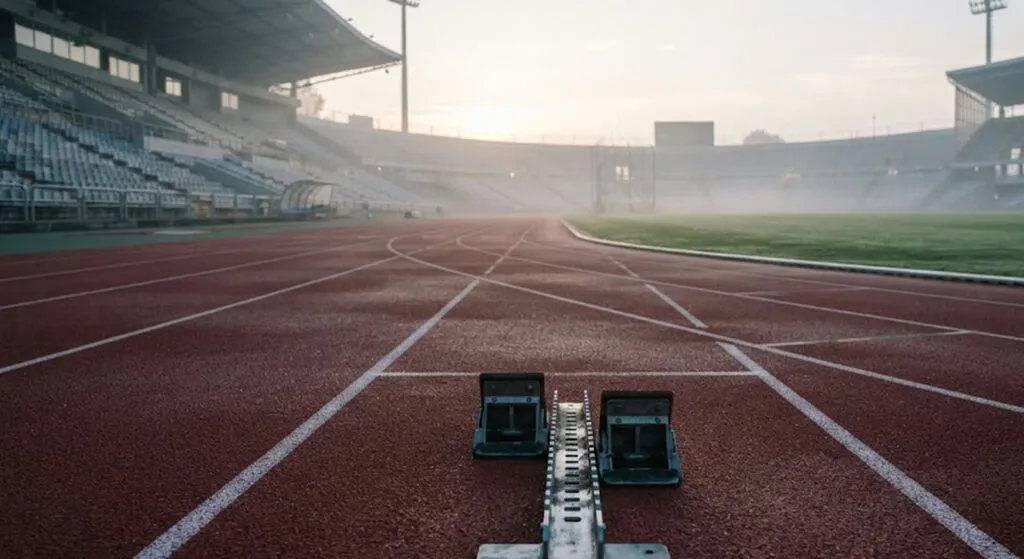
Athletes before a final don't wait for the nerves to pass on their own. They rehearse them. In their heads they replay the penalty kick, the last jump, the start of the race - so that when the real one comes, the body feels as if it has already been there. The technique is called mental rehearsal and, according to experts, it isn't reserved for stadiums.
"It prepares the nervous system to act, and you arrive at the moment with a body that tells you you've been here before," explains Toni Espigares, an expert in meditation and personal transformation. The idea is to anticipate difficult situations in advance and train how you'll react to nerves and to the unexpected. A job interview, a tough meeting, a speech in front of an audience - the principle is the same.
Worry is rehearsal - just the wrong kind
The sharpest part of the explanation is about anxiety. "Anxiety is visualisation without training. To worry is to rehearse the worst-case scenario," says Espigares. In other words, many people already do mental rehearsal every night before bed. They're just replaying the wrong recording, over and over.
The difference comes down to a few points. Worry starts with a body on alert; visualisation starts with a calm body, after a few deep breaths. Worry circles around the problem; visualisation rehearses the response. And positive affirmations are not the same thing: they're phrases, not experience. A real rehearsal has concrete details and sensory elements, and deliberately includes the obstacles that might come up.
Good news for those who can't picture an image: you don't have to "see" anything. Some people experience the rehearsal through a feeling in the body, through sound or through movement. Even people with aphantasia - the inability to form mental images - can use it. The most powerful kind, in fact, is kinaesthetic rehearsal: the kind you feel in your muscles, your breathing, the weight of your body.
Five minutes a day and 21 days of patience
The exercise takes five to ten minutes a day. According to Espigares, it takes 21 days of practice for new reactions to become automatic. Progress shows in three signs: the body reacts differently, so your pulse stays calm when you think about the situation; your behaviour changes, so you prepare better without long hesitation; and the unexpected throws you off less.
How many times have we heard "don't think about it" as advice before an exam or an operation? The idea that you should think about the hard moment deliberately, calmly and in detail runs in exactly the opposite direction. Are we ready to train stress instead of just putting up with it?
The latest 10 news from this category

The cheapest bar snack there is gets ruined by one mistake - an overcrowded pan. Ice-cold sparkling water, cornflour and...
Pilates stopped being slow stretching in the corner of the gym long ago. The new versions use springs and machines...

Here, a chestnut usually means a paper bag from a street vendor. But it can go into porridge, salads, cream...

A message, a video, an order - and the brain gets its reward without lifting a finger. Spanish psychiatrist Marian...

Everyone knows how to scramble eggs - or so we think. The difference between creamy, glossy eggs and a dry,...
Worse sleep, constant fatigue and a late period can mean your body has nothing left to recover with. A nutritionist...

Six tomatoes, two carrots, a leek, garlic and patience. The recipe is simple, and the only secret is the time...

There's even a term for it - leisure guilt. When we measure our worth in completed tasks, every empty afternoon...
The scandal lasted less than a decade; the cake has survived more than a century. The step that makes it...

An expert says Presley Gerber's death cannot be linked to ibogaine. But the substance he tried carries a risk that...
This site uses cookies - is that okay? Learn more
Be the first to know when Metla launches something new
Leave your email and we will write when there is a new guide or something new on Metla.