

They Rode In on Scooters, Torched the Shops and Left: The Fire in Shuto Orizari Burned for Three Hours, Setting It Took Fifty Seconds
13.09.2026


13.09.2026
13.09.2026

13.09.2026

13.09.2026

13.09.2026

13.09.2026
13.09.2026

12.09.2026

11.09.2026

13.09.2026

13.09.2026

12.09.2026

13.09.2026

13.09.2026

13.09.2026

13.09.2026

12.09.2026

11.09.2026

13.09.2026

13.09.2026

13.09.2026
13.09.2026

13.09.2026

12.09.2026

09.03.2026

27.02.2026

19.02.2026

13.09.2026

12.09.2026

11.09.2026

23.04.2026

23.04.2026

12.04.2026

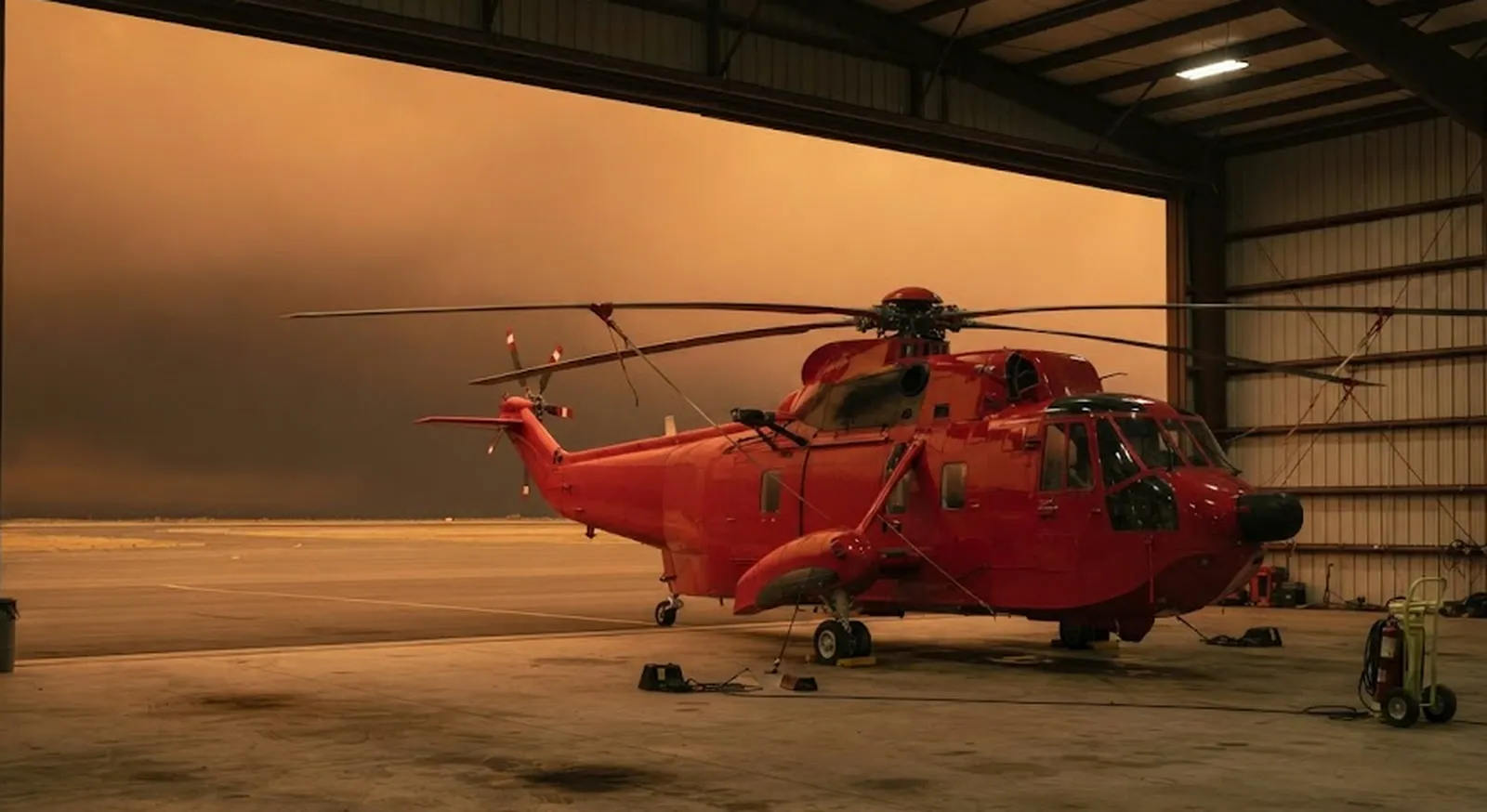
Spain is burning, and eight helicopters capable of dumping over 5,000 litres of water in a matter of seconds are sitting grounded in hangars. Not because of a fault. Not because of the budget. Because of the sanctions the European Union itself introduced.
These are the Russian Kamov Ka-32 11BC, machines that were the backbone of Spanish firefighting for years. The trade blockade imposed after Russia's invasion of Ukraine bars Russian technicians from carrying out the mandatory servicing and blocks access to spare parts without which flying is not safe. Without that, the helicopters do not get clearance to fly in European airspace.
The problem is neither new nor unknown
Madrid officially confirmed that eight such machines are out of service. They previously operated from bases in Andalusia, Aragon, Extremadura and Guadalajara - precisely the regions where summer means fire. Firefighters on the ground say the precision and power of these twin-rotor machines are crucial for getting a fire under control. The Western replacements are less agile and considerably more expensive.
And now comes the part that stings most. According to available accounts, the government never even requested a technical exemption from Brussels. A parliamentary proposal to lift the sanctions specifically for these helicopters was rejected. Over the past year, Spain has not filed a formal request with the European institutions.
So this is not a case of somebody trying and failing. This is a state that knew it was entering fire season with reduced capacity and did not file a single request. Who answers for that when the tally of burnt hectares is drawn up?
The private operators did not wait
Pegasus, one of the larger operators offering firefighting services, confirmed the Kamov is no longer in its fleet - because of legal and technical restrictions under civil aviation standards. The market adapted faster than the administration, which is close to a law of nature.
None of this justifies Russia's actions in Ukraine, or the logic of sanctions as an instrument. But it does show something every bureaucracy stubbornly avoids: every measure has side effects, and somebody pays for those effects. This time the bill is being paid by the forests of the Iberian Peninsula and the people who live beside them.
The question that remains is whether Brussels has any mechanism at all to distinguish a jet carrying an oligarch from a helicopter putting out a fire. If the answer is no, then next summer will not be any different.
The latest 10 news from this category

Nobody said they do not trust Washington. Everyone is behaving as though they do not - gold, weapons, the cloud...

The warning reached the president three years before 9/11. The problem was not a lack of information, but that nobody...

In 1976 tradition demanded the future king choose a bride with no past. Thirty years later that same king married...
Five institutions declined to comment on damaged infrastructure the global oil market depends on. When that many addresses have nothing...
One unidentified object on the tracks, 180 passengers on board, 140 firefighters on site. The difference between railways is not...
We are preparing for war so that it does not come, Lukashenko says. Put the neighbours' numbers side by side...

Three years ago the Polish army waited twenty days for satellite images, today it gets them in minutes. And one...

At 22 she had to become Norway's first lady because her mother had died. At 29 she married a divorced...

The tool lets you draw an area on a map and returns a list of everyone who posted to Instagram...

The Athens declaration of friendship lasted less than three years. Now the Aegean is being divided through ecological zones, while...
This site uses cookies - is that okay? Learn more
Be the first to know when Metla launches something new
Leave your email and we will write when there is a new guide or something new on Metla.
