
Six Men Brawled Outside the Police Station in Kočani: Now They'll Also Check What the Officers Were Doing
17.08.2026


17.08.2026

17.08.2026

17.08.2026

17.08.2026

17.08.2026

17.08.2026

17.08.2026

16.08.2026

15.08.2026

17.08.2026

17.08.2026

16.08.2026

17.08.2026

17.08.2026

17.08.2026

17.08.2026

16.08.2026

15.08.2026

17.08.2026

17.08.2026

17.08.2026

17.08.2026

17.08.2026

16.08.2026

09.03.2026

27.02.2026

19.02.2026

16.08.2026

15.08.2026

14.08.2026

23.04.2026

23.04.2026

12.04.2026
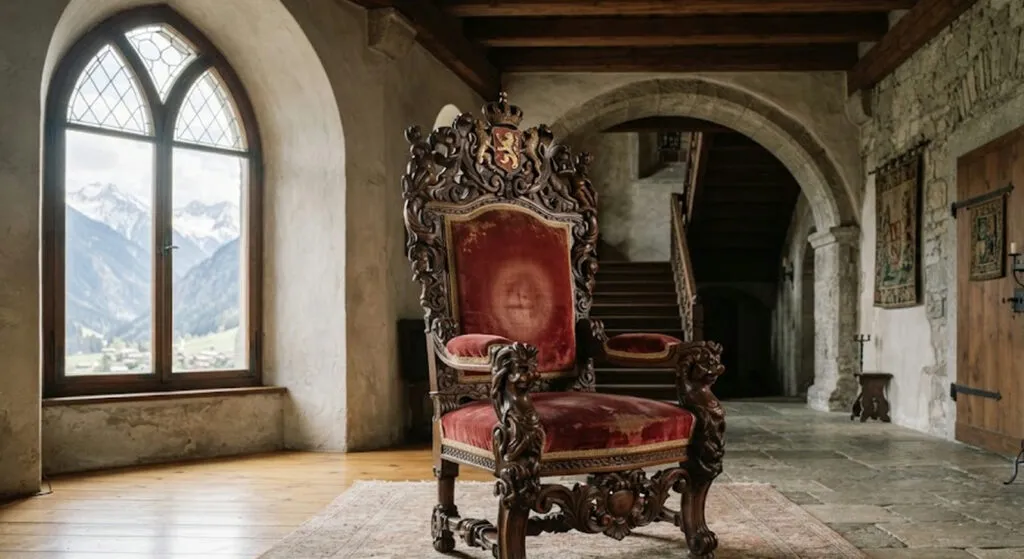
Liechtenstein is the sixth smallest state in Europe, has a little over forty thousand inhabitants and a monarchy that rarely makes the news. This week it did - with a decision far larger states avoided for decades.
Hereditary Prince Alois, who has effectively run the country since 15 August 2004, announced that the house is abolishing Salic law - the rule that barred women from taking the throne. In its place comes absolute primogeniture: the first-born child becomes the heir, regardless of sex. That simple, and that late.
Where the catch is
The rule applies only to future births. None of the current family members changes place in the line. So Alois stays where he is, his eldest son Joseph Wenzel, born on 24 May 1995, remains next - and his sister Marie Caroline, born in October 1996, still will not pass him. The reform is real for somebody's great-granddaughter, not for the woman already living under that rule.
„With these changes we want to guarantee that in future the responsibility for the house and for the state will fall to those best prepared for these roles,” the prince said. The sentence is carefully built - it speaks about preparedness, not about injustice. Nowhere does it say the previous rule was wrong; it says the new one will be better.
Why this is bigger news than it looks
Liechtenstein is not a decorative monarchy. Unlike Britain or Spain, its prince holds real powers - the right to veto laws, the right to dissolve parliament. Which means the question of who sits on that throne is not ceremonial, it is a question of power. That is exactly why the princely house was for decades among the last in Europe that would not even touch the subject.
Sweden did the same in 1980. The Netherlands, Belgium, Norway, Denmark, Britain - all went through the same reform far earlier. Liechtenstein takes the decision in 2026, and takes it with delayed effect. That is not a revolution, it is a scheduled appointment.
Still, it is worth noting what it means when a house that holds real power voluntarily changes the rule by which that power is transferred. It is rare for an institution to narrow its own pool of successors. When it happens, there is usually a reason - demographic, political, or simply a calculation that ignoring the issue had become more expensive than changing it.
The latest 10 news from this category

The Pentagon was ordered to scale back the manoeuvres the day before they began, because the drills were sending a...
The youngest Black professor in the university's history was given a home alarm and mail screening because of racist threats....

Netanyahu said a week ago that Trump's plan was unacceptable; today he is on the meeting schedule. Hamas accepted it...

NATO published cockpit footage - a flash in the night over allied skies. The drone carried no explosives. Anyone reading...

A Polish coach carrying 59 people left the M3 motorway near Mezokeresztes at one in the morning. The driver is...

Washington is preparing a letter that will force a dozen countries to pick a side in the artificial intelligence race....

Twelve MLRS launchers and 70 ballistic missiles would travel from Turkish warehouses to Kyiv - through private companies from Turkey,...

Europe cut its purchases of liquefied gas to the lowest level in two years while simultaneously increasing intake via TurkStream....
A two-thirds majority - but within the family itself, with no government and no referendum. And the reform applies to...

He said it at a rally and the crowd laughed. Two days earlier he posted that the US has full...
This site uses cookies - is that okay? Learn more
Be the first to know when Metla launches something new
Leave your email and we will write when there is a new guide or something new on Metla.