


Kratovo man stabs police officer mid-intervention: prosecutors want the 40-year-old detained
15.09.2026


15.09.2026

15.09.2026

15.09.2026

15.09.2026

15.09.2026
15.09.2026

15.09.2026

14.09.2026

13.09.2026

15.09.2026

15.09.2026

14.09.2026

15.09.2026
15.09.2026

15.09.2026

15.09.2026

14.09.2026
13.09.2026

15.09.2026

15.09.2026

15.09.2026

15.09.2026

15.09.2026

14.09.2026

09.03.2026

27.02.2026

19.02.2026

14.09.2026

14.09.2026

13.09.2026

23.04.2026

23.04.2026

12.04.2026


Psychiatrist Fernando Mora is not selling an app, a course or a seven-day transformation. He listed six things he does every day, and none of them takes longer than a few minutes. The routine is small, and that is exactly what makes it usable: two in the morning, two around midday, two in the evening.
Morning: breathing and the neck
The first thing he does the moment he opens his eyes is three to four minutes of deep breathing - around ten to eleven inhalations and exhalations, no app and no counter. The explanation is physiological, not mystical: deep breathing activates the parasympathetic system, the one that calms the body. In the final seconds he says one sentence to himself - to hold on to that feeling and call it back during the day when he needs it.
The second is simpler still: he rotates his head, moves his neck left and right, up and down. "You cannot imagine the effect that has on muscle relaxation and on brain health", Mora says. The neck is where stress is stored first and where its voices come out last - through headaches and through sleep that does not rest you.
Around midday: scanning and islands
The third habit is a body scan - he sits down, closes his eyes and goes mentally through every zone, releasing the parts where he notices the most tension. The point is not the relaxing in itself but the noticing: this way a tight shoulder is caught while it is still a shoulder, not after it has become exhaustion.
The fourth he calls "islands of time". A pause in which, as he puts it, "the world stops and that is my rest". It can be half an hour, it can be five minutes, it can be three hours. The duration is not the point - the point is that during those minutes nothing else is being done at the same time. Coffee without a phone. A short walk. Looking out of a window. None of it costs money.
Evening: gratitude and darkness
The fifth habit is a journal: three minutes, three reasons for gratitude. "It trains us to look at the good things. Instead of going to bed with worries, you go to bed with good things and that is wonderful." Note what he is actually saying - not that the problems disappear, but that the brain learns where to look.
The sixth is the one everybody knows and nobody applies: the phone leaves the room at least forty to sixty minutes before sleep, the room goes dark, the warmth stays. Blue light from screens interferes with melatonin production - that is not an opinion, that is mechanics.
What makes this list different from the hundred similar ones circulating online is that not one step requires an up-front investment. No equipment, no membership, no free weekend. Six things, none longer than three minutes. The question that remains is not whether they work - the question is why, for something that costs nothing, we still wait for somebody to tell us we are allowed.
The latest 10 news from this category

A kilo of courgettes, mint, garlic and eighty millilitres of vinegar. Not one expensive ingredient - and the water you...
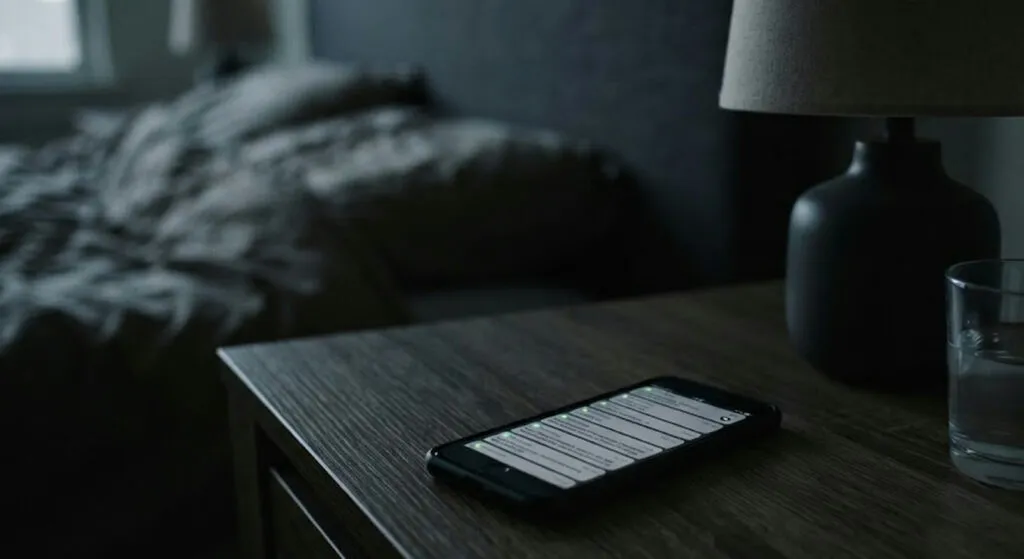
It is not the message that drains you, but the blank it opens until you read it. Response time has...

Whoever beat all the eggs together made a different cake. And the glaze must not pass 45 degrees, or the...

If your day revolves around what you are allowed to eat, maybe you do not need more willpower. Maybe the...

One rule applies to all three and it is the one most often skipped. It is not a recommendation to...
A psychologist explained the mechanism the food industry has no way of selling: the decision made in front of the...

One single ingredient separates melitzanosalata from mutabal - tahini. Three aubergines, one clove of garlic, and an oven at 220...

The algorithm gets it wrong and corrects itself on the next question. If the mistake is in your diet for...

The chicken ends up in the pan anyway. The salad that was sitting half a metre away does not.
Love can be there and there can still be distance and loneliness. A psychologist names the three things that die...
This site uses cookies - is that okay? Learn more
Be the first to know when Metla launches something new
Leave your email and we will write when there is a new guide or something new on Metla.
