Black Smoke Over Skopje: A Paint and Varnish Warehouse Burned Inside the Old Steelworks
23.09.2026


23.09.2026

23.09.2026

23.09.2026

23.09.2026

23.09.2026

23.09.2026
23.09.2026

22.09.2026

21.09.2026
23.09.2026

23.09.2026
22.09.2026
23.09.2026
23.09.2026
23.09.2026
23.09.2026
22.09.2026

21.09.2026

23.09.2026

23.09.2026
23.09.2026

23.09.2026
23.09.2026

23.09.2026

09.03.2026

27.02.2026

19.02.2026
23.09.2026
22.09.2026
21.09.2026

23.04.2026

23.04.2026

12.04.2026

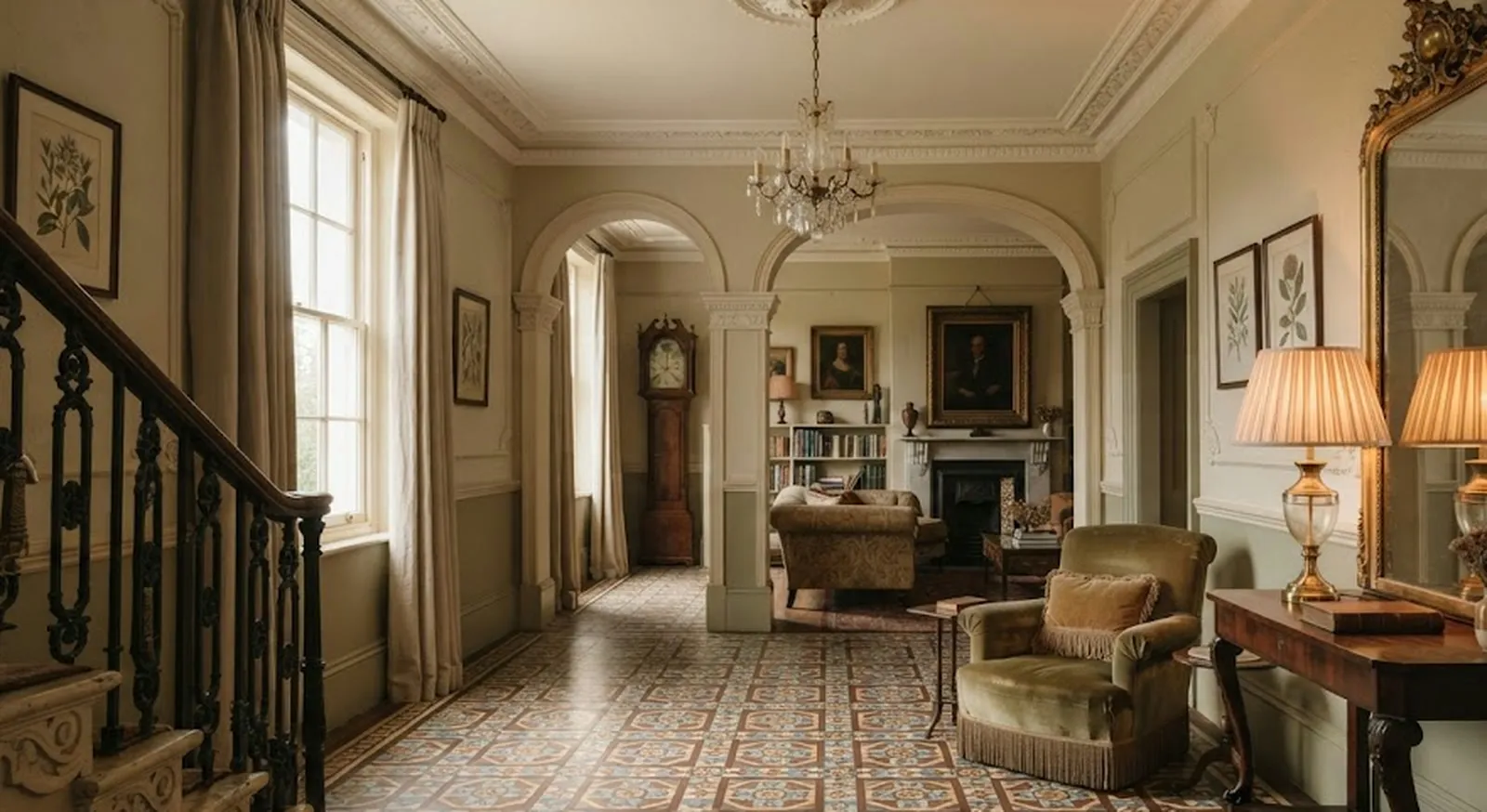
There are houses that get renovated, and houses that read like a book. This second kind is rare - an old city residence from the end of the nineteenth century, which for decades was a favourite location for film shoots, and has now gone through a renovation in which the hardest task was not to change it, but not to lose itself. The result is a home that holds the past and the present together without apologising for either.
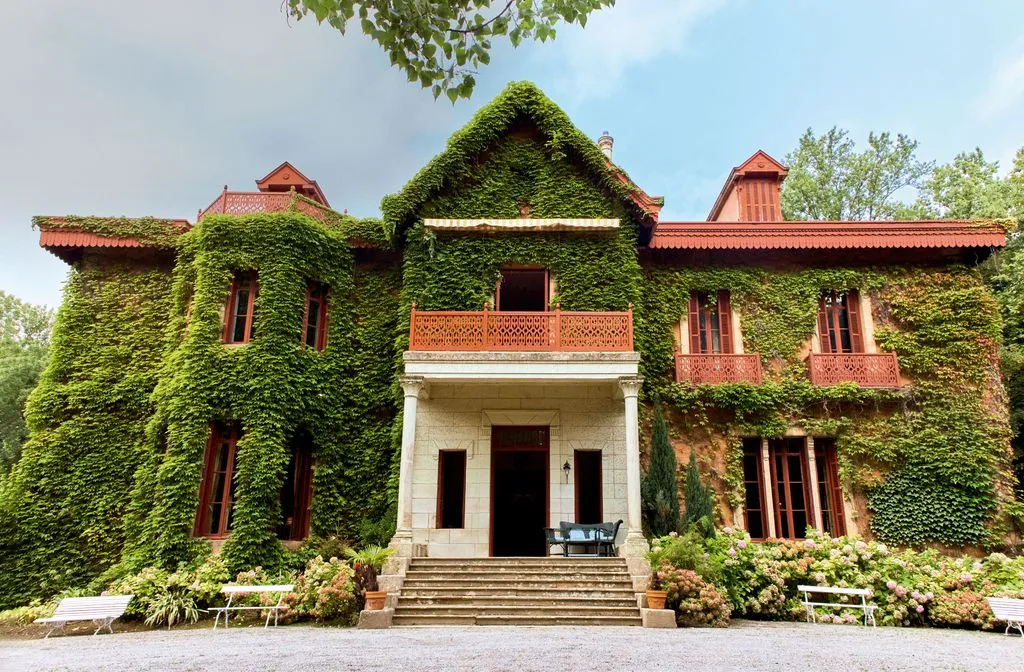
The house came to be when an old country house in the Gràcia district of Barcelona was transformed into a grand residence - with an added tower, galleries, decorative cornices and balusters. As the neighbourhood grew denser and the gardens disappeared for new buildings, this house kept its spacious courtyard and an almost untouched interior: original furniture, rugs, lamps and mirrors. It was no accident that it became a favourite place for directors and actors who filmed here.
When the new owners came, the classic dilemma appeared: how to modernise a home without erasing its character. Proposals for a complete gutting of the interior were rejected, and the Barcelona architecture studio h3o architects was chosen precisely for their sensitivity to preservation. „We started to imagine together a project that balances between transformation and permanence,” the architects say. Before drawing any plan, they watched the material filmed in the house, to understand how the rooms looked on screen.
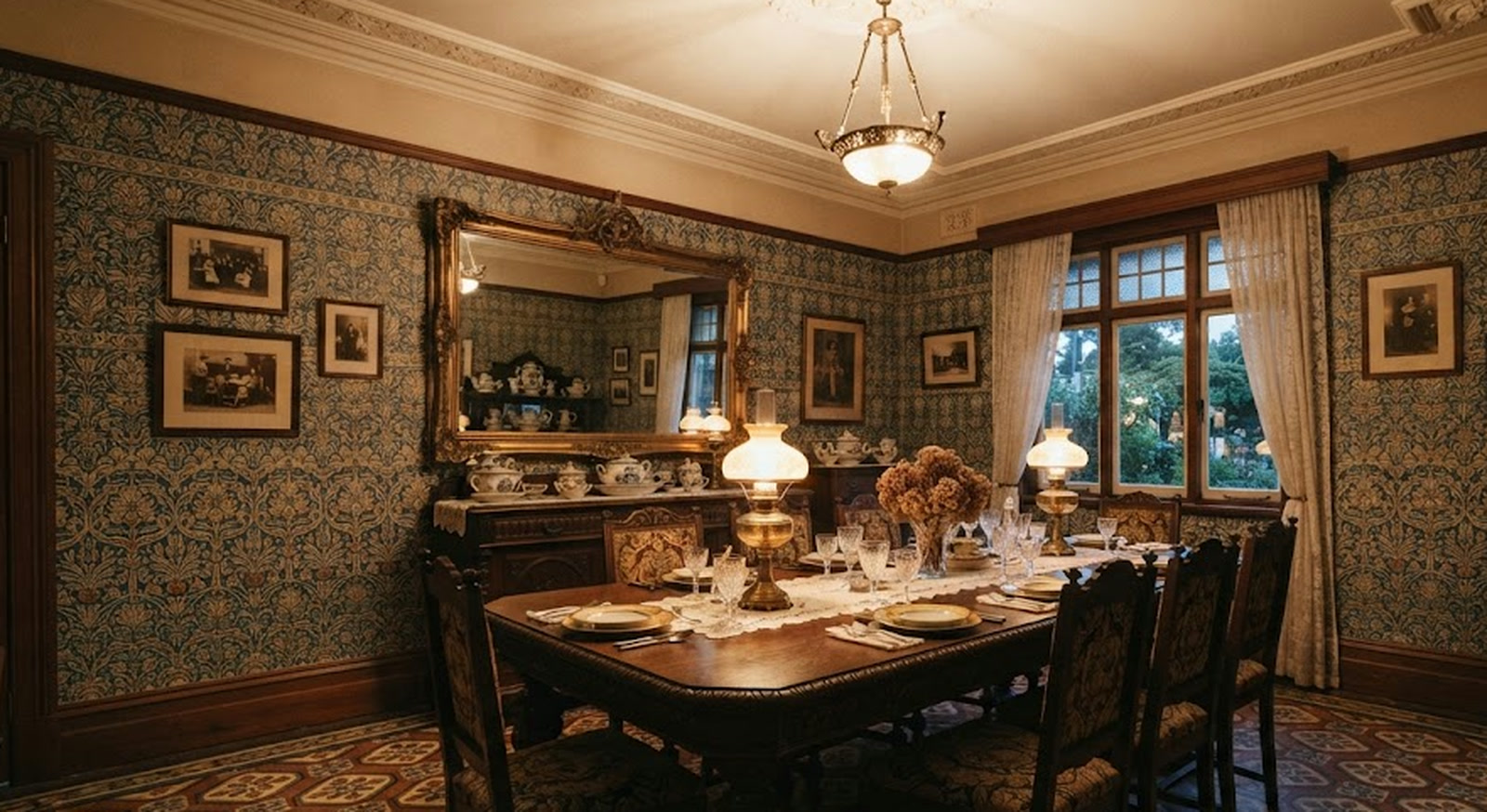
The dining room is the heart of that philosophy - almost untouched. The original wallpaper, plaster cornices, hydraulic tiles, rugs, lamps, mirrors and radiators stayed exactly where they had always been. The architects describe it as a „fossilised space that acts like a time capsule, keeping the emotional and aesthetic memory of the house intact”. The kitchen kept the same logic: the wooden cabinets and the marble sink remained as witnesses, and the intervention only carefully expanded the space.
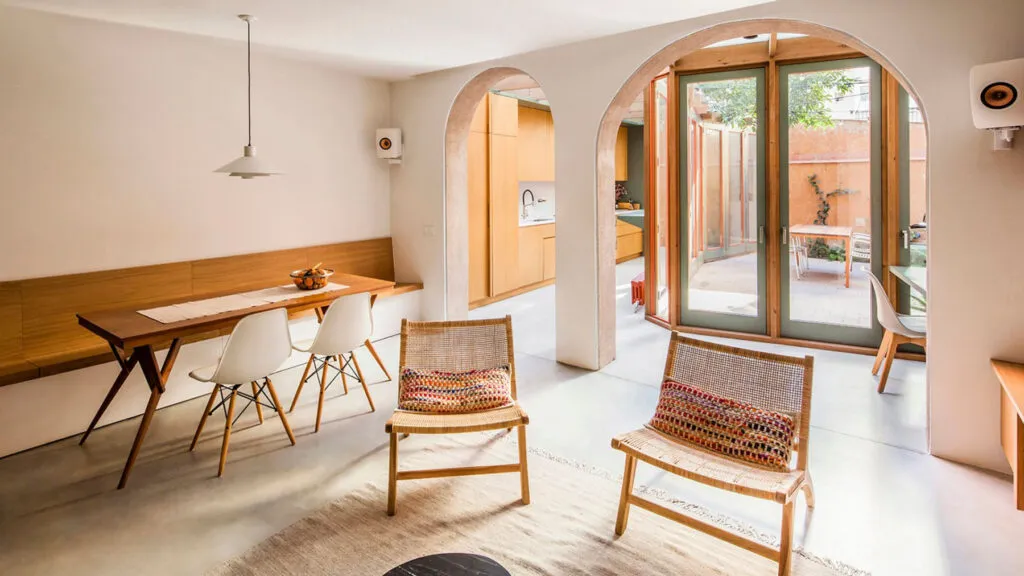
Most of the work concentrated on the ground floor and the outdoor spaces. A small terrace was built into the interior for a better connection with the garden, and the heritage elements - the hydraulic floors, the old radiators, the cornices and the original colour palette - were meticulously restored. Even the colours were not chosen by chance: the team studied the films shot in the house and created a chromatic palette that fits the tones immortalised on screen.
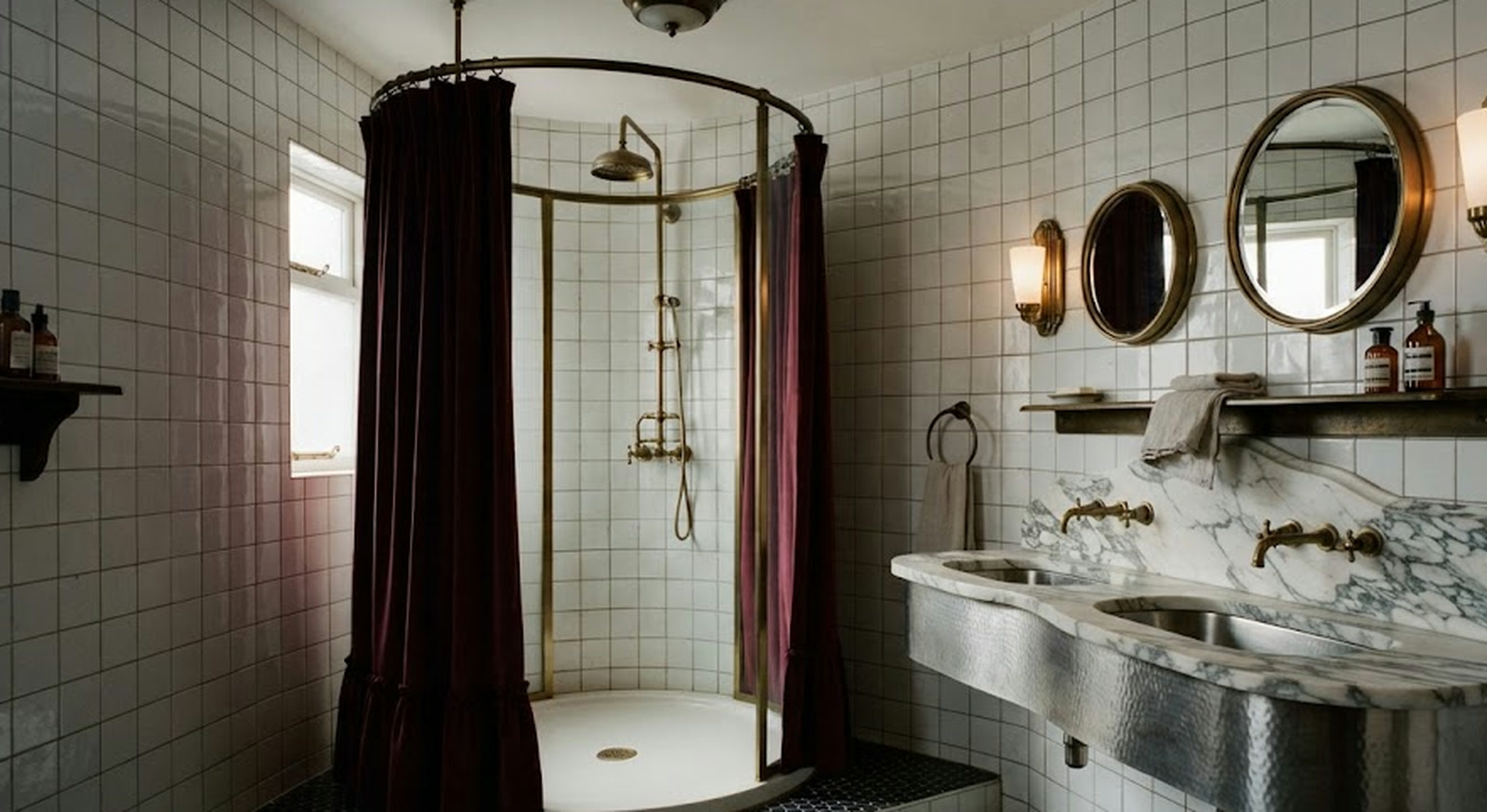
The bathroom is perhaps the most dramatic part. Inspired by the domestic spaces of the thirties and by the early hygienist ideals of modernism, it combines white walls, a dark floor and a wavy sink of stainless steel and marble. At the centre stands a circular shower surrounded by a curtain all the way around, which turns even the most ordinary act of showering into something almost theatrical. Circular mirrors and period lamps round off the atmosphere out of time.
And then come the details that reveal the house still keeps secrets. A round window with wavy shapes acts as a „hinge between two spaces”, like an eye that opens and closes and allows views from room to room. One of the new windows is hidden behind a fake painting - a direct reference to aristocratic homes where secrets are hidden behind canvas and books.
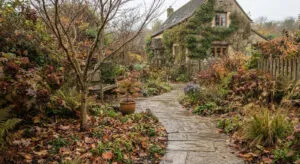
The whole story ends in the garden - one of the last green corners of the district, hidden behind stone walls and iron gates. Here are the shelters for geese, the blue ceramic rings and the fountain with grotesque details that have survived for decades. And that is exactly the lesson of this renovation: a modern home does not have to mean erasing the past. Sometimes the bravest decision is to let something stay as it is - and to live it, rather than hide it.
The latest 10 news from this category
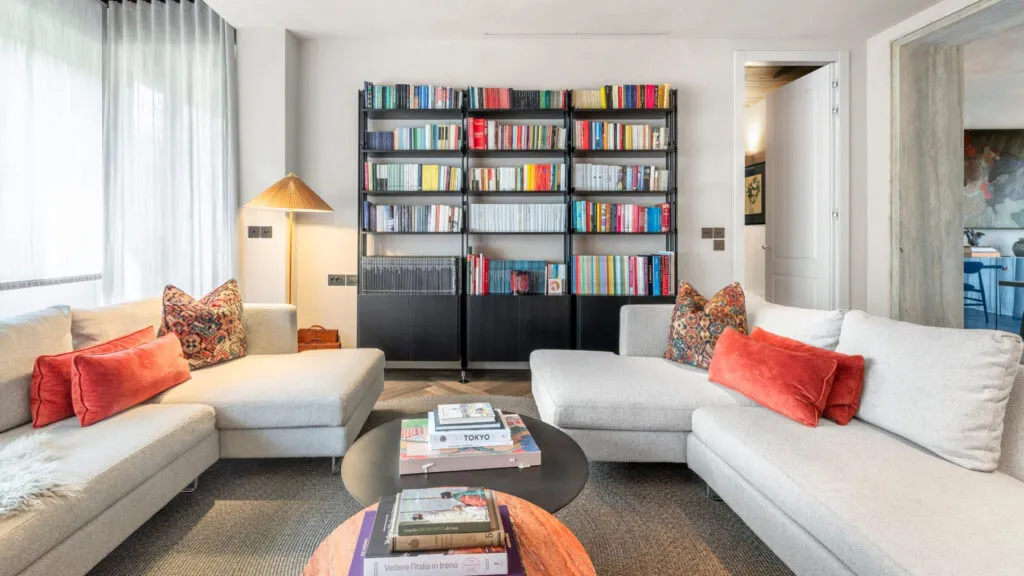
The exposed brick and ribbon windows stayed, and the entire palette came out of a single painting above the sideboard....

An Eames lounge chair from 1956, a Fratini shelving unit and a concave cobalt mirror that reflects the room curved....
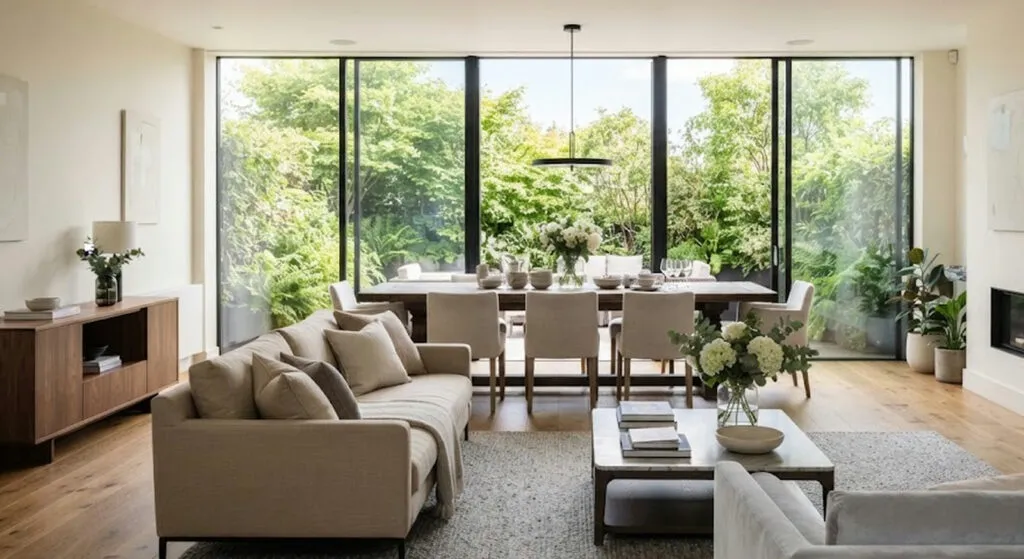
Four bedrooms, four bathrooms and one rug that keeps the dining area separate without a wall. Three things in this...
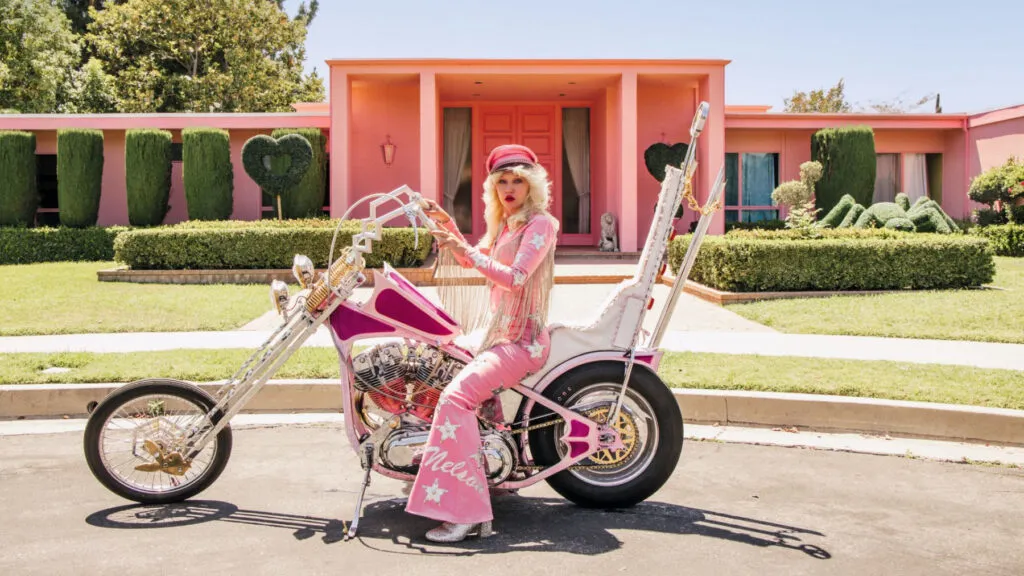
She did not decorate a house - she built a world. And behind all that fantasy there is no inheritance,...
The stairwell has been turned into a gallery, and in the bedroom there is not a single attempt at an...

In the vast majority of flats the ceiling stays white because that is how it was found - not because...
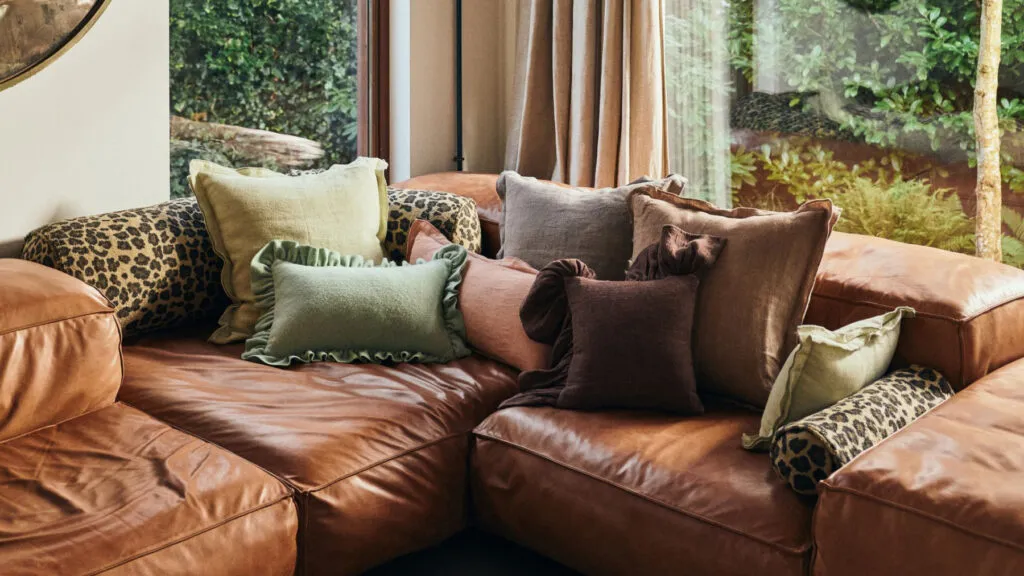
It is not hoarding and it is not maximalism. Ten things that used to be hidden when guests came and...
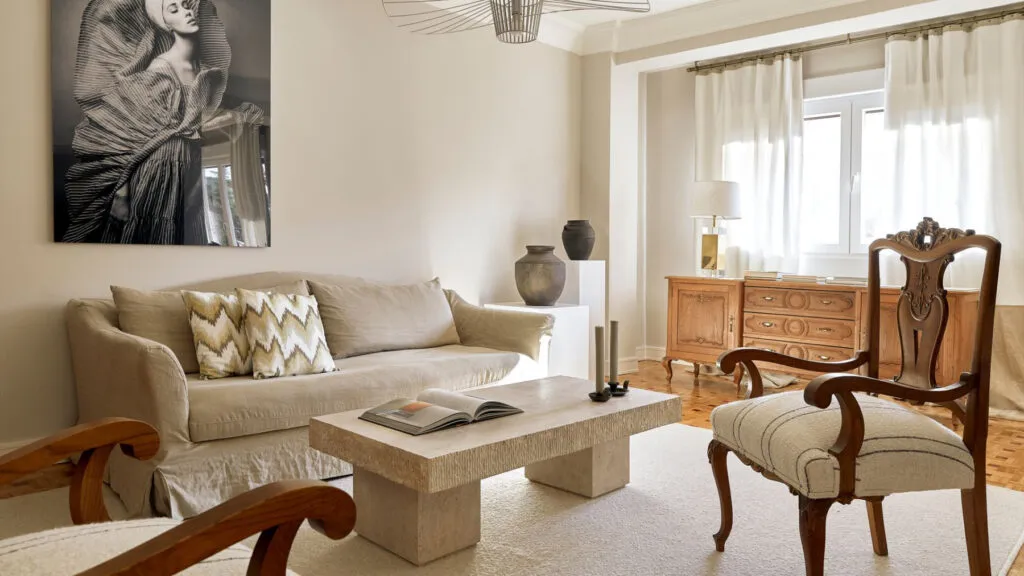
A bespoke console, reupholstered armchairs and wallpaper hung like art. The most expensive thing in the flat is the decision...
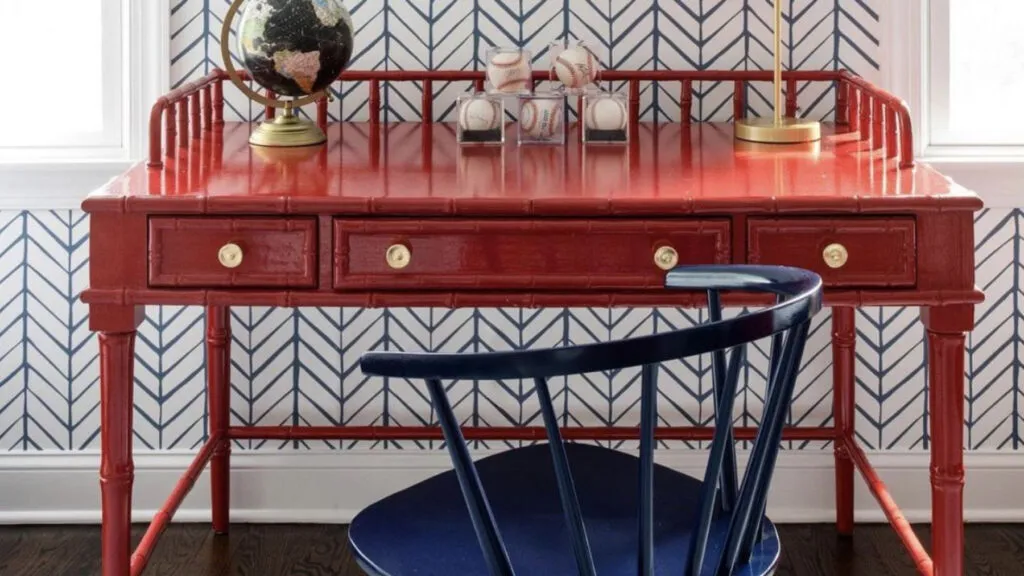
For years the rule was everything neutral and everything from the same collection. The result is a living room that...
Two doors between the living room and the bedroom. That is the whole arithmetic, and that is what you lose...
This site uses cookies - is that okay? Learn more
Be the first to know when Metla launches something new
Leave your email and we will write when there is a new guide or something new on Metla.