


Inmate Electrocuted Inside Idrizovo Prison: Who Ran a Live Wire Anyone Could Touch?
31.08.2026


31.08.2026
31.08.2026

31.08.2026

31.08.2026

31.08.2026

31.08.2026

31.08.2026

30.08.2026

29.08.2026
31.08.2026

31.08.2026
30.08.2026
31.08.2026

31.08.2026

31.08.2026

31.08.2026
30.08.2026
29.08.2026
31.08.2026

31.08.2026

31.08.2026

31.08.2026
30.08.2026
30.08.2026

09.03.2026

27.02.2026

19.02.2026
31.08.2026
30.08.2026
29.08.2026

23.04.2026

23.04.2026

12.04.2026
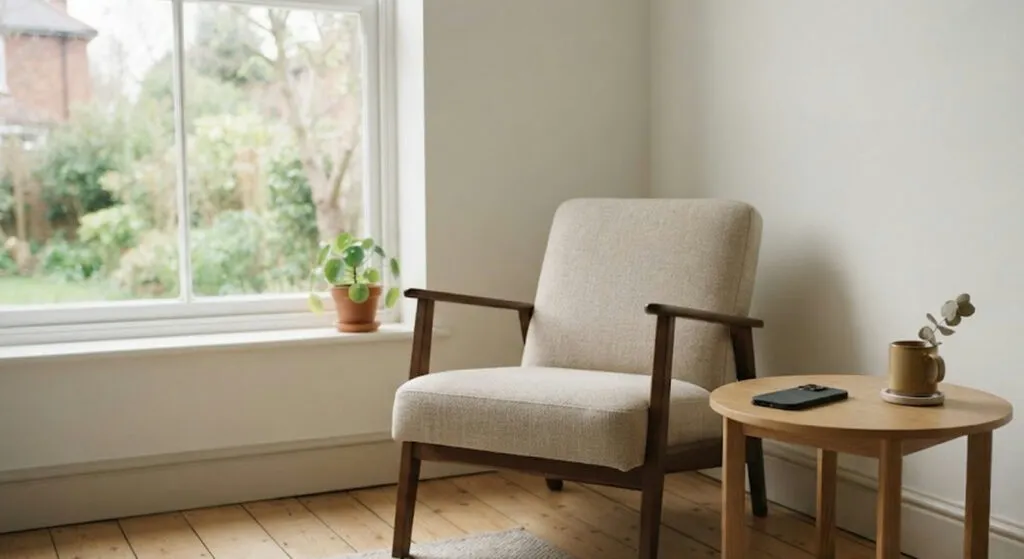
Blaise Pascal died at 39 in 1662, and before that he wrote a sentence that today reads like a diagnosis of the entire condition: all of humanity's unhappiness comes from a single thing - the inability to sit quietly alone in a room.
He had no phone, no screen, not one of our excuses. And yet he noticed exactly what psychologists now measure with experiments: the moment external stimulation disappears, something we do not enjoy shows up - our own thoughts.
Psychologist Violeta Acedo points to a study by Timothy Wilson in which participants preferred to receive an electric shock rather than be left alone with their thoughts. That is not a metaphor and not a joke. People pressed a button to shock themselves, purely to avoid sitting in silence.
What surfaces when we stop has names: boredom, restlessness, impatience, guilt. And behind them, the queue of things we have been avoiding - unresolved problems, postponed decisions, conversations we never had. It is no wonder we run. What is strange is that we are convinced the running is called productivity.
Pascal called this divertissement - the diversion we use to avoid facing questions with no comfortable answer. Around here the same thing is called "don't stop or you'll lose your mind". The Balkans have their own ways of running from themselves, and most of them happen in company, loudly, with music.
Acedo's advice is modest to the point of shyness: five to ten minutes with no phone, no television, no music, just to see what comes up. Not meditation, not a programme, not an app that measures your breathing. Just a chair and silence.
It is not much. But if a man who died almost four centuries ago identified the problem, and we still cannot last ten minutes without a screen, the question is not whether the advice is enough. The question is why we still have not tried it.
The latest 10 news from this category

The potato steams instead of frying, and the crispness you are after disappears. She speaks excellent Spanish - but technique...
Half of people do not know that so-called hypoallergenic cats exist. The problem is that they do not exist either...

Four ingredients and one rule that tolerates not a single step of delay. If the tomato is good, you need...
The one thing in the entire health industry that nobody sells you - which is exactly why you rarely hear...

From the same courgette you get spaghetti, lasagne, cannelloni and ravioli. Overcooked, it is none of those things - it...

The pace is set by whoever walks slowest, and the break counts as part of the route. The question is...
Greek cooking here gets reduced to two headlines. That is like presenting Macedonia with ajvar alone - and the point...
Training does not cover the debt from a sleepless night; it adds a risk of injury instead. The whole list...

Banderas bought the place he used to go out to at sixteen, and it was there he demonstrated the rice....

Rice and pasta last 48 hours, and they can be contaminated without a single visible sign. Smell is not a...
This site uses cookies - is that okay? Learn more
Be the first to know when Metla launches something new
Leave your email and we will write when there is a new guide or something new on Metla.
