


Kratovo man stabs police officer mid-intervention: prosecutors want the 40-year-old detained
15.09.2026


15.09.2026

15.09.2026

15.09.2026

15.09.2026

15.09.2026
15.09.2026

15.09.2026

14.09.2026

13.09.2026

15.09.2026

15.09.2026

14.09.2026

15.09.2026

15.09.2026

15.09.2026

15.09.2026

14.09.2026

13.09.2026

15.09.2026

15.09.2026

15.09.2026

15.09.2026

15.09.2026

14.09.2026

09.03.2026

27.02.2026

19.02.2026

15.09.2026

14.09.2026

14.09.2026

23.04.2026

23.04.2026

12.04.2026

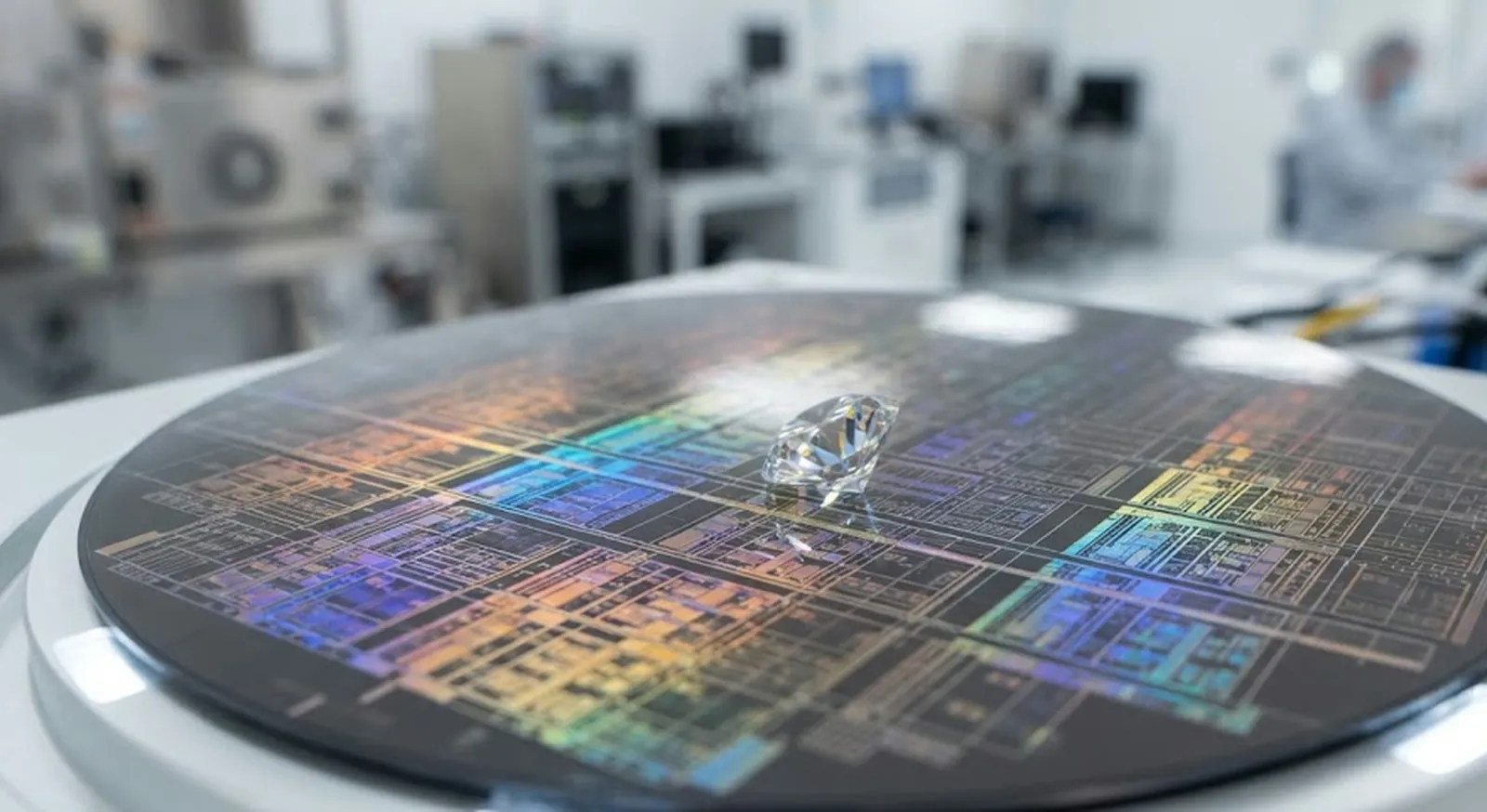
While everyone talks about artificial intelligence, the real battle is being fought at a level the eye doesn't see - in the microscopic layers of computer chips. The German startup QuantumDiamonds from Munich has received 76 million euros in grant support from the German federal economy ministry and the state of Bavaria, approved by the European Commission, for technology that promises to speed up the production of those very chips.
The idea is as unusual as it sounds. The company uses synthetic diamonds as quantum sensors that can see how electricity flows through a chip and detect defects across all layers - without destroying the chip. What used to take weeks, their system compresses into a two-minute check that doesn't halt the production line. For an industry where every faulty chip costs enormous money, this is no trifle.
Founded as a spin-off of the Technical University of Munich, with a team of 70 people and CEO Kevin Berghoff, QuantumDiamonds raised, alongside the European support, 15 million euros from investors led by World Fund. The total investment plan reaches 178 million dollars. The company claims its clients can save hundreds of millions of dollars, with a return on investment within a few months.
What's really interesting here for the European reader is who's paying. This isn't a private fund from Silicon Valley - it's public European money, consciously invested to keep chip production and know-how in Europe, rather than leaving them entirely in the hands of Asia and America. A continent that lagged for years in the semiconductor race has begun to throw serious sums at domestic solutions. The question the Balkans know well too is whether such state investments really produce winners - or just well-written reports on spent subsidies.
The latest 10 news from this category
A scientist at the same company puts the probability of human extinction above 10 percent within the next decade. The...

The president called in while the event was running, and the man who makes the chips answered that there would...

No virus attached, no suspicious file. Just a box that looks like the "I am not a robot" check and...

A researcher quit because the firms are gambling with our lives. Instead of denying it, Anthropic confirmed it - with...

Write a sentence, get a game. Until now it worked only in New Zealand, now in Belgrade too. Creators on...

When the two biggest firms in an industry ask for rules on how fast anyone may run, the rules rarely...

Not a single password fell. What fell was the assumption that a request from a government domain is automatically a...

The biggest names in mathematics have signed a letter against the AI labs. The dispute is not whether the machine...

Five campaigns, 200 million exchanges, and the defences fell to a request for a Japanese translation. The industry that harvested...

The hackers were inside for a whole year. The company confirmed it only after a journalist found his own licence...
This site uses cookies - is that okay? Learn more
Be the first to know when Metla launches something new
Leave your email and we will write when there is a new guide or something new on Metla.
