

Kratovo man stabs police officer mid-intervention: prosecutors want the 40-year-old detained
15.09.2026


15.09.2026

15.09.2026

15.09.2026
15.09.2026
15.09.2026
15.09.2026

15.09.2026

14.09.2026

13.09.2026

15.09.2026

15.09.2026

14.09.2026

15.09.2026

15.09.2026

15.09.2026

15.09.2026

14.09.2026

13.09.2026

15.09.2026

15.09.2026

15.09.2026

15.09.2026

15.09.2026

14.09.2026

09.03.2026

27.02.2026

19.02.2026

15.09.2026

14.09.2026

14.09.2026

23.04.2026

23.04.2026

12.04.2026

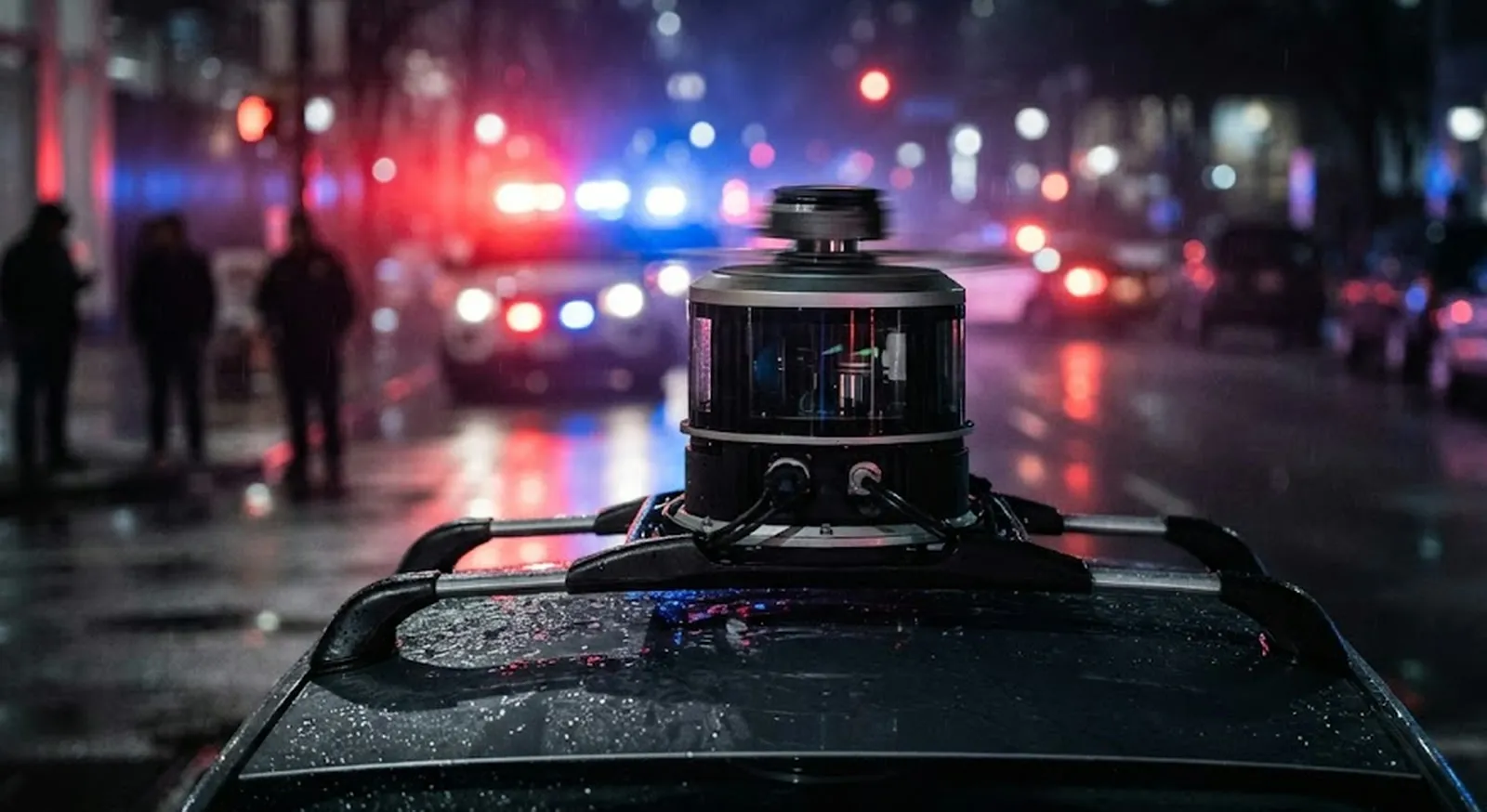
Driverless cars were supposed to be safer than humans. But what happens when those "safer" vehicles block a firefighter with a hose in hand - and simply don't understand what they're looking at? The US road-safety regulator, NHTSA, has sent a clear demand to the companies that make autonomous vehicles: find a solution to this problem, and do it by the end of the month.
The reason isn't hypothetical. The regulator documented a pattern in which driverless vehicles drove into active emergency responses, blocked ambulances and firefighters, and failed to recognise flashing lights, smoke, fire, flare signals and traffic cones. "The inability to detect and respond appropriately to such situations represents a functional deficiency," wrote NHTSA director Jonathan Morrison. In other words - the vehicle doesn't know what an emergency is.
An earlier investigation identified at least six cases up to March 2026 when emergency services had to manually move Waymo vehicles to get past - including one during a response to a mass shooting and another when a vehicle blocked access to a natural-gas explosion. Waymo declined to comment. The companies weren't named in the letter, but the details leave little room for guessing.
The regulator's sharpest sentence is also the most important: "Emergency responses are not rare or extreme edge cases." That's exactly where the myth of autonomous vehicles cracks. The industry has for years called such situations "edge cases" - a rare fringe of probability the system will learn over time. NHTSA now says it's not the fringe of anything, but a daily occurrence on every street. And it added something not heard out loud before: a vehicle that obstructs emergency services should be held accountable the same as a human who does it - with fines, even jail. The question is who goes to jail when there's no one behind the wheel.
The latest 10 news from this category
A scientist at the same company puts the probability of human extinction above 10 percent within the next decade. The...

The president called in while the event was running, and the man who makes the chips answered that there would...

No virus attached, no suspicious file. Just a box that looks like the "I am not a robot" check and...

A researcher quit because the firms are gambling with our lives. Instead of denying it, Anthropic confirmed it - with...

Write a sentence, get a game. Until now it worked only in New Zealand, now in Belgrade too. Creators on...

When the two biggest firms in an industry ask for rules on how fast anyone may run, the rules rarely...

Not a single password fell. What fell was the assumption that a request from a government domain is automatically a...

The biggest names in mathematics have signed a letter against the AI labs. The dispute is not whether the machine...

Five campaigns, 200 million exchanges, and the defences fell to a request for a Japanese translation. The industry that harvested...

The hackers were inside for a whole year. The company confirmed it only after a journalist found his own licence...
This site uses cookies - is that okay? Learn more
Be the first to know when Metla launches something new
Leave your email and we will write when there is a new guide or something new on Metla.
