
Six Years of Fake Licence Categories Issued From an Interior Ministry Desk: Six Charged, 21 More Under Investigation
21.09.2026


21.09.2026

21.09.2026

21.09.2026

21.09.2026

21.09.2026

21.09.2026

21.09.2026

20.09.2026

20.09.2026

21.09.2026

21.09.2026

20.09.2026

21.09.2026

21.09.2026

21.09.2026

21.09.2026

20.09.2026

19.09.2026

21.09.2026

21.09.2026

21.09.2026

21.09.2026

21.09.2026

21.09.2026

09.03.2026

27.02.2026

19.02.2026

21.09.2026

21.09.2026

20.09.2026

23.04.2026

23.04.2026

12.04.2026

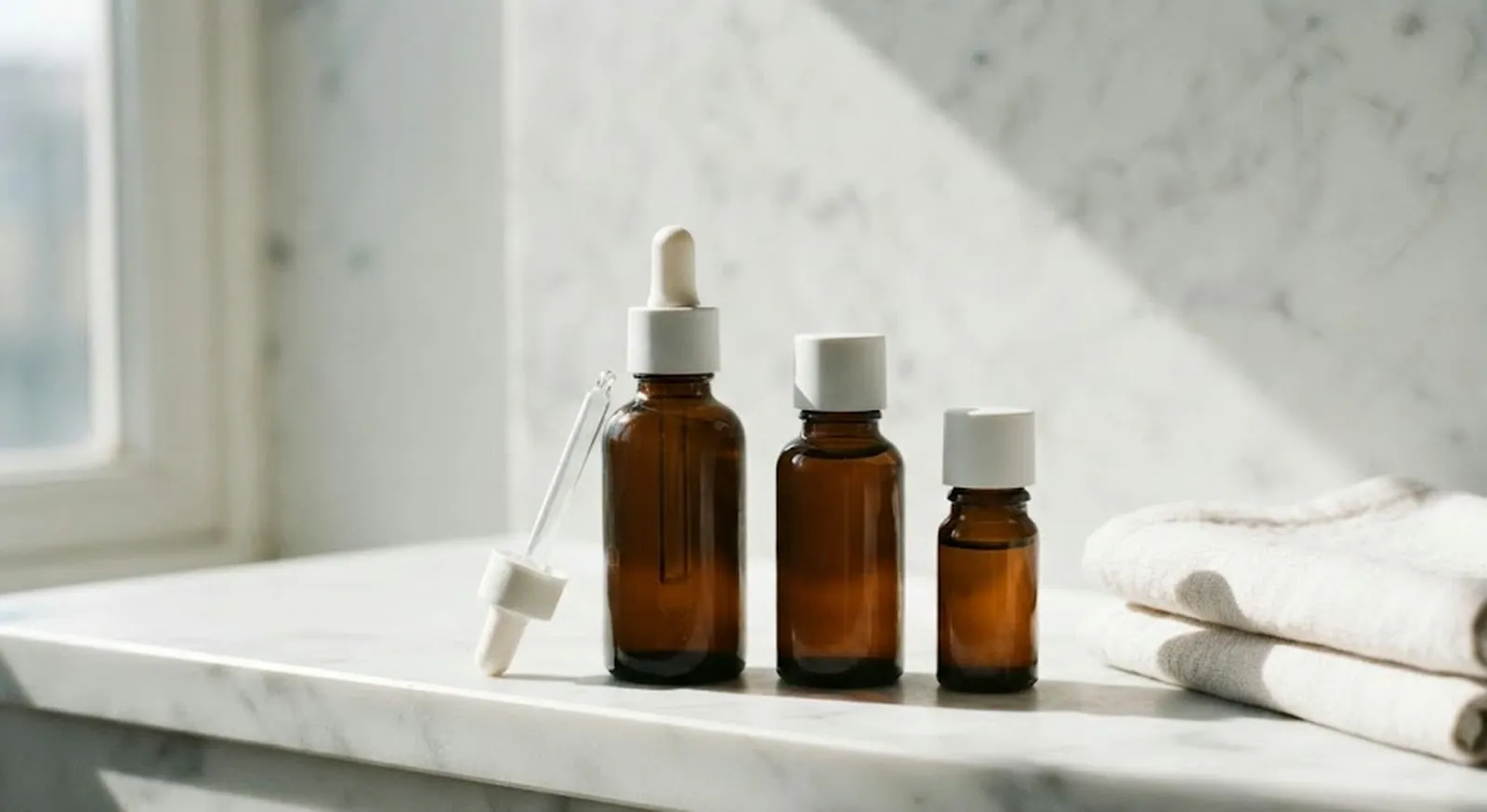
Retinol has become an ingredient people defend like a personal faith. The moment they see smoother skin and better texture, they are reluctant to give it up - even in July, when the skin is simultaneously taking sun, heat, sea, pool, sweat and a broken routine. Dermatologists say that is not automatically a mistake. There is only one moment when it becomes one, and it is recognisable.
Summer is not the reason, sunburn is
Dr Ana Marquez Garcia, a specialist in dermatology and venereology, is direct: "The fact that it is summer does not necessarily mean retinol should be stopped." The decision depends on the condition of the skin, on sun exposure and on whether protection is genuinely being used.
But when the skin is burnt, the story changes. "If the skin has been sunburnt or is clearly irritated, it is advisable to pause retinol temporarily until the skin barrier recovers," she says. The logic is simple: burnt skin is not a field for stimulating cell renewal. The priority shifts to repair.
For how long? With mild irritation a few days may be enough, until the redness, stinging and peeling are gone. With a stronger burn you should wait a week or longer if the sensitivity persists. A clear sign you can go back: when an ordinary moisturiser no longer stings.
The sign most people ignore
Mild dryness and fine flaking at the start are part of the skin adapting. The problem begins when the intensity rises. Redness, pronounced peeling, a feeling of tightness or stinging when applying other creams - that is already irritation rather than adjustment, and it most often appears at the start or when the concentration changes.
From this comes the most useful advice in the whole piece: summer is not the time to start retinol or to increase the strength. If your skin has tolerated it since winter, carrying on is fine. If you are starting now, in the middle of the heat and the swimming, the skin has less capacity to adapt.
When a pause is smarter than consistency
Celia Lucas, a therapist at an aesthetics centre, lists the days when skin is at a disadvantage: a beach holiday, long hours outdoors, extended swimming in the sea or a pool, dry climate, strong heat or irregular application of sun protection. If days with a lot of sun, sand and water are coming, those evenings are better spent giving the skin calm and hydration.
When you pause because of irritation, the routine should be shortened: gentle cleansing, hydration, repair and sun protection. No new active ingredient "to make up for it".
There are also conditions where the pause has nothing to do with the sun. Treatments such as chemical peels, microneedling, lasers or dermabrasion increase the risk of irritation in combination with retinol - the break usually runs four to seven days before and after the procedure. Dr Marquez adds that it is also better to stop during flare-ups of rosacea, lupus, facial eczema, reactive sensitive skin and skin infections.
All of this leads to one thing the skincare industry rarely says out loud: the most expensive ingredient on your shelf is worth nothing if your skin is in no state to receive it.
The latest 10 news from this category

Three days in a lab coat with colorimetry scientists to produce a collection in lime and tangerine. The design director...
Cream concealer instead of powder, a brown pencil instead of black eyeliner, and a curler before the mascara. Not one...

A boat-neck gown and wildflowers that deliberately refuse to compete with the jewellery. A fourth generation under the same diadem,...

A communications expert says the trouser suit sidesteps sexist readings of hemlines and necklines. The same expert warns that the...
Dermatologists explain why the shedding arrives with a two to three month delay and why iron and vitamins do not...

Silk bambula muslin, a hand-draped waist and a veil of crystal organza. The wedding was held in Cadiz, where the...

An industry that spent decades selling a flawless illusion is suddenly showing the shoot itself. That is not candour -...

The classic bob promised one perfect day. This version works against the salon business model - and that alone is...

The crowns were held by four men who would all later sit on thrones of their own. Nobody in that...

Kate Middleton dropped the beige and the same cut suddenly looked twice as expensive. The industry sells a new silhouette...
This site uses cookies - is that okay? Learn more
Be the first to know when Metla launches something new
Leave your email and we will write when there is a new guide or something new on Metla.