


Studeničani: 35-year-old dies after being electrocuted while washing his car with a pressure washer
18.09.2026


18.09.2026
18.09.2026

18.09.2026
18.09.2026

18.09.2026
18.09.2026
18.09.2026
17.09.2026
16.09.2026

18.09.2026

18.09.2026

17.09.2026

18.09.2026

18.09.2026

18.09.2026
18.09.2026
17.09.2026

16.09.2026

18.09.2026

18.09.2026

18.09.2026

18.09.2026

17.09.2026

17.09.2026

09.03.2026

27.02.2026

19.02.2026
18.09.2026
17.09.2026
16.09.2026

23.04.2026

23.04.2026

12.04.2026

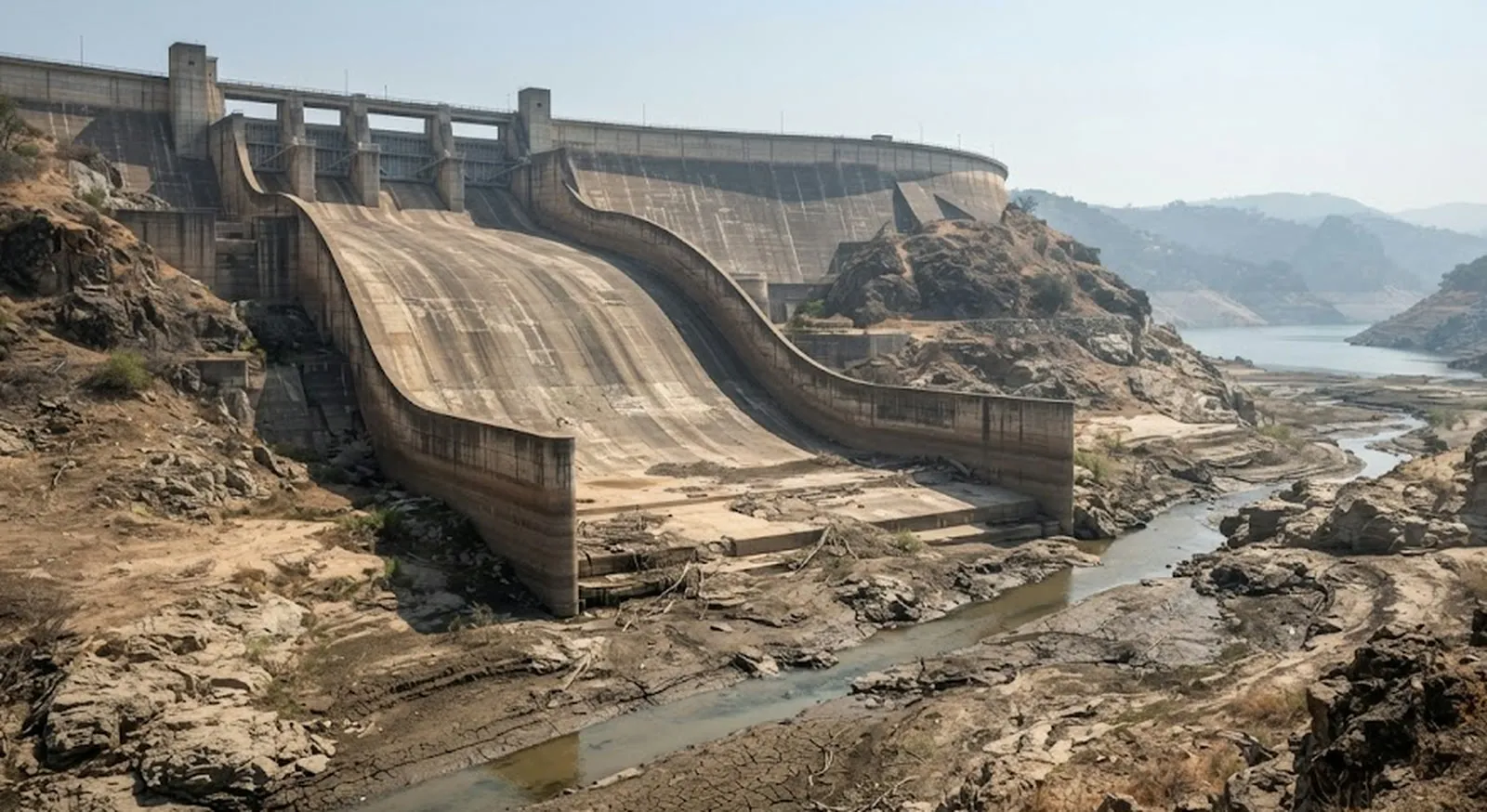
The Serbian government has called on citizens to save electricity. Not as an environmental recommendation, but as a measure for the next ten days, while temperatures run between 36 and 39 degrees. When a state with its own hydro plants and thermal power stations has to publicly ask people not to turn on the air conditioning, that is no longer a heatwave. That is a deficit.
The number that explains everything else comes from Đerdap. According to Minister of Mining and Energy Dubravka Đedović Handanović, Đerdap 1 is running at 20 percent of capacity and Đerdap 2 at 30 percent. Water inflow is 1,500 cubic metres per second, the lowest level since 2003, and before that since 1985. That means the largest hydro plant in the region is producing at one fifth of what it was built for, at the exact moment consumption peaks.
The Danube as a shared bill
The problem is not Serbian. Hungary and Romania are shutting down nuclear reactors because the Danube does not have enough water to cool their systems. So the same river is simultaneously cutting hydropower in Serbia and switching off nuclear power next door. If anyone wondered what climate risk looks like expressed in megawatts, this is the answer.
Prime Minister Đuro Macut convened a crisis staff meeting on the extreme temperatures and low water levels. The hydrological situation on the Drina is somewhat better - the water is below average, but above the biological minimum. That is a phrase worth remembering: "above the biological minimum" means the river has not yet reached the state in which it stops being a river.
What this says about the whole region
The Balkan power system is interconnected. When one state goes into deficit, it does not stop consuming - it buys. And it buys on a market where everyone else is in deficit at the same time, on days of 40 degrees. Serbia's hydrometeorological service forecasts temperatures around 40 degrees mid-week, with lows of 23 to 25.
For years the region has talked about the energy transition as something that will happen at some point, in some document with deadlines running to 2040. This heatwave shows something simpler: the systems were designed for a climate that no longer exists. The hydro plants were built for rivers with a different water regime, and the thermal plants for summers that used to be shorter.
The question for anyone paying a bill from Skopje to Belgrade is whether there is a plan behind the calls to save power, or only a hope that this wave passes faster than the next one.
The latest 10 news from this category
The call was about damaged furniture on a terrace. Armin Dzutovic died three days later. The internal investigation found first...
Four KLA leaders received 81 years in prison, and Albania's parliament immediately adopted a declaration calling the verdict unjust. The...
The court established responsibility for 96 killed, 303 tortured and 385 unlawfully detained. The prosecution asked for 45 years. Serbia...
Thaci and Krasniqi got 25 years each, Veseli 18, Selimi 13. The court established 385 unlawfully detained, 303 tortured and...
"If it is acceptable to the participants" - that is the entire offer. What gets negotiated is the format, not...
Thousands walked from the Rectorate to the electoral commission, and the signatures had to be queued for all weekend because...
Thousands of people under a digital clock and a banner asking for them to be found innocent. On Wednesday The...
The ruling list sailed through without a single problem, the student list was left waiting in line. Nobody banned anything...
The same firm that supplied ammunition to Ukraine for years is burning for the second time in a month. Seven...
A third attempt in three years, but this time the signatures came from the government benches too. Six MPs from...
This site uses cookies - is that okay? Learn more
Be the first to know when Metla launches something new
Leave your email and we will write when there is a new guide or something new on Metla.
