
Skopje Breathed Smoke From Two Mountains: 21 Fires in One Day, and Vodno Was Clean
25.08.2026



25.08.2026

24.08.2026

23.08.2026

25.08.2026

25.08.2026

24.08.2026

25.08.2026

25.08.2026

25.08.2026

25.08.2026

24.08.2026

23.08.2026

25.08.2026

25.08.2026

25.08.2026

25.08.2026

25.08.2026

25.08.2026

09.03.2026

27.02.2026

19.02.2026

23.04.2026

23.04.2026

12.04.2026
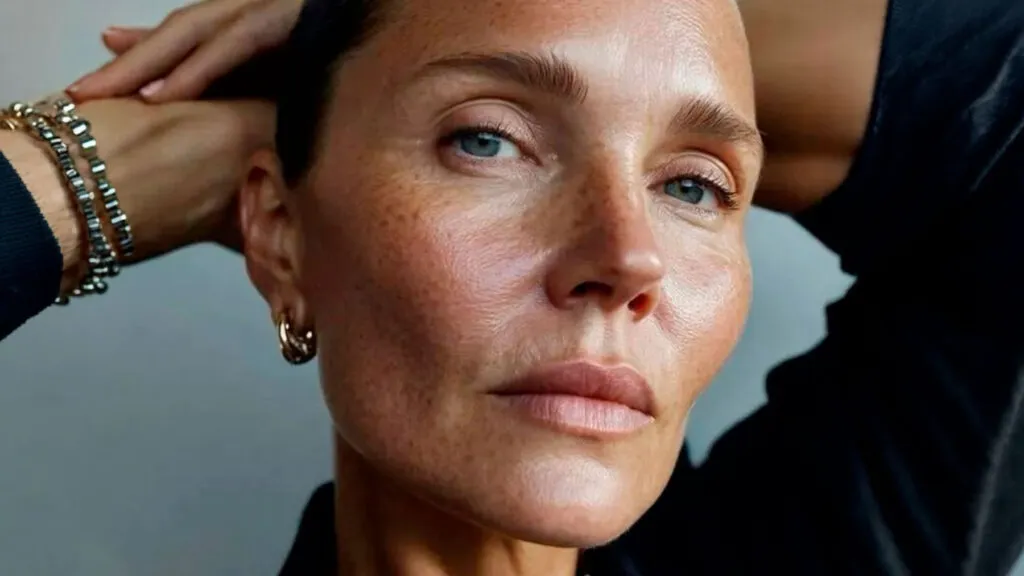
The sentence dermatologists rarely say out loud, because the industry lives on the opposite: after forty we do not need more cosmetic products, we need a better choice. It comes from Dr Cristina Garcia Millan, a specialist in aesthetic dermatology, and with it she topples an entire shelf of bottles bought out of fear rather than need.
First, the number itself is not a threshold. "Forty is not an exact boundary," Garcia Millan says. Skin does not change overnight - cell renewal slows, collagen production drops and the ability to hold moisture weakens. In women three processes overlap at once: chronological ageing, hormonal ageing and photoageing from sun collected over years.
The number that genuinely hurts arrives with menopause. When oestrogen falls more sharply, skin becomes thinner, drier and more sensitive, and collagen loss in the first five years after menopause can reach 30 percent. That is not an advert for a cream - that is physiology, and no bottle stops it. What can be done is to slow it and to avoid making it worse.
On endocrine disruptors, the subject people fear most, the doctor is measured: ingredients in cosmetics do not automatically alter the hormonal system, because dose, absorption and regulation all matter, and European rules restrict numerous ingredients. Pharmacist Amaia Frade adds the other side: "Skin is a remarkable barrier, but it is not an impermeable barrier," and points out that skin is also an endocrine organ with hormone receptors, so repeated exposure across years is not insignificant.
The routine they recommend comes down to five points and is almost insultingly simple: sun protection all year round, strengthening the barrier with glycerin, hyaluronic acid, ceramides and niacinamide, retinoids for texture and collagen in the evening, antioxidants in the morning and less aggressive exfoliation. Protect in the morning, repair at night - that is the whole philosophy.
"Small changes sustained over time usually have a far greater impact," Frade says. And that is the point that sells least: the answer is not to fear cosmetics, but to simplify the routine, choose brands that say what is inside, and focus on what you genuinely use every day. A shelf full of products standing untouched is not skincare - it is expenditure.
The latest 10 news from this category

The theme is the moment we like least in a wardrobe - the transition, when mornings are cold, afternoons are...

A long dress for the godmother, midi for the mother, French sleeves for both. And the most important advice is...

She inherited the visibility, then pointed it at work that has nothing to do with what made her visible. The...

When there is not enough material, the only thing that works is how it is cut. A fringe moves the...

The institution with the budget never to repeat a garment, repeats. Earrings from 2018, sandals from past seasons - and...
Two specialists say most people start at the wrong step. Comb first, fill second - the other way round means...

Solitaire, halo, trilogy, signet - names rarely said out loud here, yet every ring in the window is one of...

They show you the cheap part and photograph you with the expensive one. One linen blazer, three looks and one...
The technically perfect wave is not the one that looks best. The whole secret is that the eye must not...

The eighties came back to the shoulders, not to the whole dress. The question is not what is trending this...
This site uses cookies - is that okay? Learn more
Be the first to know when Metla launches something new
Leave your email and we will write when there is a new guide or something new on Metla.