
They Fired Guns at a Party in Dobridol - and Police Only Moved Once the Video Went Viral
02.08.2026



02.08.2026

02.08.2026

02.08.2026

02.08.2026

02.08.2026

01.08.2026

02.08.2026

01.08.2026

31.07.2026

02.08.2026

02.08.2026

02.08.2026

02.08.2026

02.08.2026

01.08.2026

09.03.2026

27.02.2026

19.02.2026

02.08.2026

01.08.2026

31.07.2026

23.04.2026

23.04.2026

12.04.2026
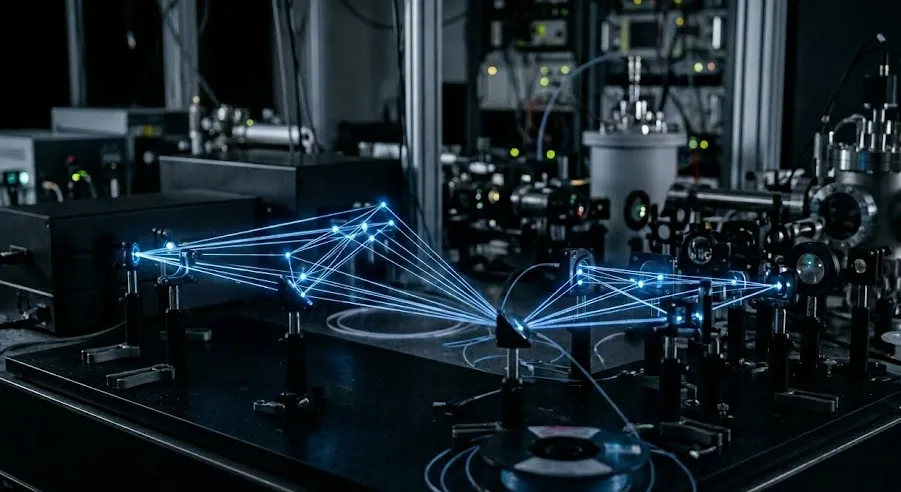
It sounds like a philosophical riddle, but it's one of the biggest technical problems in physics: how do you prove something is truly random? A die can have imperfections, a computer generator follows an algorithm, even a coin flip depends on forces that could in theory be calculated. Now physicists at Switzerland's ETH Zurich say they've solved it - with the help of one of nature's strangest phenomena.
"The resulting string of zeros and ones is now genuinely perfectly random, and we can also verify that," says physicist Renato Renner. The key challenge was never to create numbers that look random - it was to prove that no one could have predicted the outcome. And that difference, as it turned out, is worth far more than academic pride.
Why does it matter to the ordinary user? Because randomness is the foundation of modern security. Passwords, authentication codes and encryption keys are hard to guess precisely because they're random. When that fails, the consequences are real: the 2024 vulnerability in the SSH client PuTTY, or the 2025 flaw in AMD Zen 5 processors, where the hardware produced predictable "random" values - while falsely reporting success.
The team's solution lies in quantum entanglement. They created a pair of entangled quantum bits, separated them by 30 metres and cooled them almost to absolute zero. Measurements of those particles showed correlations so strong they can't be explained by any hidden rules or pre-programmed behaviour. In nine hours they ran over a billion such tests.
The most interesting part is what they call "randomness amplification" - they deliberately started with imperfect randomness and turned it into something provably perfectly unpredictable. And the system doesn't depend on trusting the hardware, but on the quantum behaviour itself. In a world that increasingly tells us "trust the tool," the idea that unpredictability can be mathematically proven rather than merely promised is refreshingly rare - and far more valuable than it sounds at first glance.
The latest 10 news from this category

Opus 5 set a record in the test and broke 11 agreements. Not one of the tricks is new -...

The billions were announced with a stage and slogans. The retreat is happening quietly, in sentences containing the word alignment.
In his last quarterly report Tim Cook announced the stronger Siri will be bought through iCloud+. The firm that paid...

The platforms that spent years convincing us automated content was the future are now patiently building filters against it. The...

Out of 141,006 test runs, three ended up inside the live systems of real firms. The oldest model worked out...
The strongest June quarter in its history, and the stock fell 6 percent. Artificial intelligence turned out to have a...

The FCC is closing the door to humanoid robots and power inverters, but only new ones. The millions of Chinese...

The player that raised the MP3 generation is betting nostalgia can be billed monthly. The new Winamp arrives in 2027,...

The man selling the world's best-known artificial intelligence says we will not work less. He also claims we will secretly...

Autonomous vehicles have blocked ambulances, driven into crime scenes and failed to recognise emergency lights. The bill demands the one...
This site uses cookies - is that okay? Learn more
Be the first to know when Metla launches something new
Leave your email and we will write when there is a new guide or something new on Metla.