


The OLVX stolen-password market led to Golema Rečica: the Interior Ministry celebrates the operation but stays silent on whether there are Macedonian victims
16.10.2026


16.10.2026
16.10.2026
16.10.2026
16.10.2026
16.10.2026
16.10.2026

16.10.2026

15.10.2026

15.10.2026

16.10.2026

16.10.2026

15.10.2026
16.10.2026

16.10.2026
16.10.2026

16.10.2026

15.10.2026

14.10.2026
16.10.2026

16.10.2026
16.10.2026
16.10.2026
16.10.2026

16.10.2026

16.10.2026

15.10.2026

14.10.2026
15.10.2026

13.10.2026

12.10.2026

23.04.2026

23.04.2026

12.04.2026

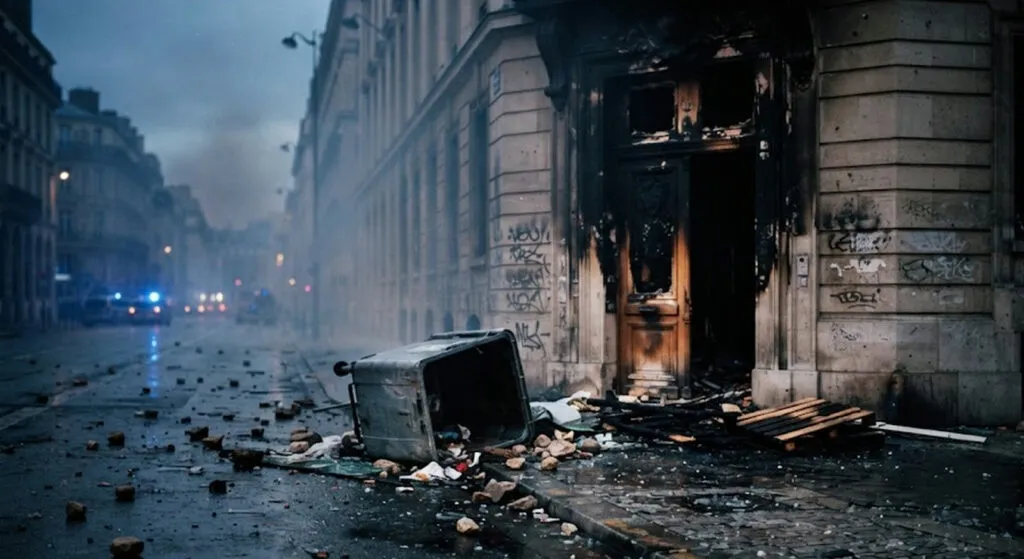
For the third day running, Tirana smells of tear gas. Protests that began on Tuesday as student discontent have grown into clashes with police, burning state buildings and smashed banks. Prime Minister Edi Rama's answer is that resignation is out of the question.
The start was almost modest. Students came out over expensive tuition, poor conditions at universities and weak job prospects after graduation. Within days it grew into a broader revolt against the government, with accusations of corruption and one demand heard on every square: Rama must go.
Eight institutions targeted
Yesterday was the fiercest. According to Albanian media, at least eight state institutions were attacked, including the ministries of education, the interior and the economy. Fires broke out in several ministries. Demonstrators smashed windows, overturned bins, set things alight in the streets and threw Molotov cocktails, while banks, shops and other private property were also hit. Police responded with tear gas and water cannon.
The toll: 55 arrests for yesterday's riots alone and criminal proceedings against another 98 people. Among those arrested are two minors, aged 15 and 17. At least 23 police officers and six civilians were injured, and Albanian media reported more injured officers in later clashes.
Meanwhile, a column of vehicles that local news sites describe as military was filmed on the streets of Tirana. There's no official confirmation that the army is involved in calming the protests, and nobody has explained why the vehicles were there. When military vehicles appear in the capital and the government stays silent, the silence becomes a message in itself.
Rama: elections, not revolution
Rama rejected the calls to resign. "As for the calls for my resignation, governments change through democratic elections. Last year we had elections, not a revolution," he said. He said he was ready to talk about the problems in education, but condemned the attacks: "Attacks on institutions, destruction of public property and endangering public safety have nothing to do with the students' legitimate demands."
Formally, he's right - he won a fourth term in last year's parliamentary elections. But Rama has been in power since 2013, so most of the students protesting now barely remember any other prime minister. What are election victories worth if young people still conclude that the only way to be heard is the street?
Flamingos, luxury and Trump's son-in-law
The student revolt didn't fall from the sky. Discontent has been building for months, fuelled further by a luxury tourist resort project in the Narta lagoon in the south of the country, linked to Jared Kushner, son-in-law of US President Donald Trump. Critics say the project threatens a protected ecosystem, and the movement born from those protests was named the "Flamingo Revolution". How many times in the Balkans has protected nature turned out to be cheaper than somebody's investment?
The protests aren't easing. Students and secondary school pupils boycotted classes again, some marched towards parliament, where police dispersed them, and tear gas flew once more outside the Ministry of Education. The boycott has spread to Elbasan, Shkodër and Durrës.
The EU Delegation in Albania condemned the violence and the destruction of public and private property, stressed that the right to peaceful assembly and freedom of expression must be respected, and called for restraint and dialogue. A perfectly balanced statement that commits nobody to anything. After the student protests in Serbia, Tirana is another Balkan capital where young people have raised their voices. Will Brussels hear them before a few more ministries go up in flames?
The latest 10 news from this category
Serbia accuses Zagreb of "the grossest interference in the electoral process" over newspaper articles, and Croatian reporters are bracing for...
Belgrade counted Croatian articles about Vučić and declared election interference. Meanwhile Vučić's campaign ad is almost a copy of a...
Batons, pepper sprays, balaclavas and a hundred-odd revolvers in Ćacilend, a salary for no work and cash from the city...
From November 1, Russians will no longer enter Montenegro on a passport alone, and Moscow immediately answered with visas for...
Belgrade has refused to sanction Moscow for years, and now Vučić claims even the US no longer fully enforces sanctions....
Of the four questions only one is binding, and the one that matters most to people from the former Yugoslavia...
Since the start of 2025 Republika Srpska has spent over four million dollars on lobbyists close to Trump. When that...
Tiny Montenegro detained the man whose project Washington offered up to 10 million dollars for information about, and is expelling...
The Hague tribunal sentenced Slobodan Praljak to 20 years, he poisoned himself in the courtroom, and eight years later a...
Serbia isn't mentioned by name, but everyone knows who it's about. And the list of conditions for Balkan candidates has...
This site uses cookies - is that okay? Learn more
Be the first to know when Metla launches something new
Leave your email and we will write when there is a new guide or something new on Metla.


