
The OLVX stolen-password market led to Golema Rečica: the Interior Ministry celebrates the operation but stays silent on whether there are Macedonian victims
16.10.2026


16.10.2026
16.10.2026
16.10.2026
16.10.2026
16.10.2026
16.10.2026

16.10.2026

15.10.2026

15.10.2026

16.10.2026

16.10.2026

15.10.2026
16.10.2026

16.10.2026
16.10.2026

16.10.2026

15.10.2026

14.10.2026
16.10.2026

16.10.2026
16.10.2026
16.10.2026
16.10.2026

16.10.2026

16.10.2026

15.10.2026

14.10.2026
15.10.2026

13.10.2026

12.10.2026

23.04.2026

23.04.2026

12.04.2026

The protest note that Serbia's Foreign Ministry sent to Croatia isn't dying down - quite the opposite. Now the focus is on the Croatian journalists due to cover the elections. The reason for the note, as reported by Serbian media, is "the grossest interference in the electoral process in Serbia, as well as increasingly frequent biased reporting on internal political circumstances" in the country. Translated into plain language: Belgrade doesn't like what Croatian journalists are writing.
The timing isn't accidental. Serbia goes to the polls next weekend, and a diplomatic note over another country's articles says more about the nerves in Belgrade than about Croatian media. The Croatian government can't tell editors what to publish tomorrow - and in Belgrade they know that very well. So who is the note really meant for?
Who is interfering in the elections?
Croatian communications expert Maro Alavanja, appearing on Croatian television, believes Aleksandar Vučić has "definitely lost control" and compares the move to Viktor Orbán's behaviour before the elections in Hungary. His explanation is more down to earth: many people from Serbia work and study in Croatia and follow Croatian media. That, he says, is the heart of it - the fear isn't of Zagreb, but of what Serbian voters might find out.
Alavanja also draws a line that Belgrade deliberately blurs. Interfering in elections, he says, means covert advertising and funding in the media, or installing editors-in-chief close to the government. Critical reporting isn't interference, it's journalism. He describes most Serbian media as a notice board for the ruling SNS and points out that the few critical voices got new owners and editors ahead of the elections, and that satirist Zoran Kesić's show was taken off air too.
The numbers Belgrade keeps quiet about
On Reporters Without Borders' 2026 press freedom index, Serbia ranks 104th of 180 countries and territories - last among the 40 countries the organisation counts in its EU-Balkans region. In August the same organisation raised the alarm about several Serbian journalists working from exile. In July the European Federation of Journalists counted at least 38 documented police attacks on journalists since the start of 2025, with death threats and threats of sexual violence that also target their families.
With that record at home, the note to Zagreb looks like blaming the mirror for your face. In the late nineties Vučić was information minister in Slobodan Milošević's government, so he knows perfectly well how media are brought into line. The difference is that Croatian editors don't answer to him.
The journalists are the real target
The Croatian Journalists' Association warned that the note is an alarming attempt at intimidation and could be a prelude to pressure on Croatian reporters covering the elections from Serbia. Alavanja expects harassment and longer holdups at the border, but not a major escalation, because Vučić, he says, doesn't want an open problem with Europe while it is watching the elections closely.
The pattern is familiar. Earlier this year Vučić claimed that Croatia, Albania and Kosovo were just waiting for a chance to attack Serbia. Now the enemy writes articles. When voters are told every day that the danger lies across the border, wages, corruption and an honest vote count sink to the bottom of the list. Whether it works again this time, the weekend will show - and Alavanja warns that if the result is close, even civil unrest can't be ruled out.
The latest 10 news from this category
It started with expensive degrees and poor conditions at universities, and has reached burning ministries and 55 arrests. Is the...
Belgrade counted Croatian articles about Vučić and declared election interference. Meanwhile Vučić's campaign ad is almost a copy of a...
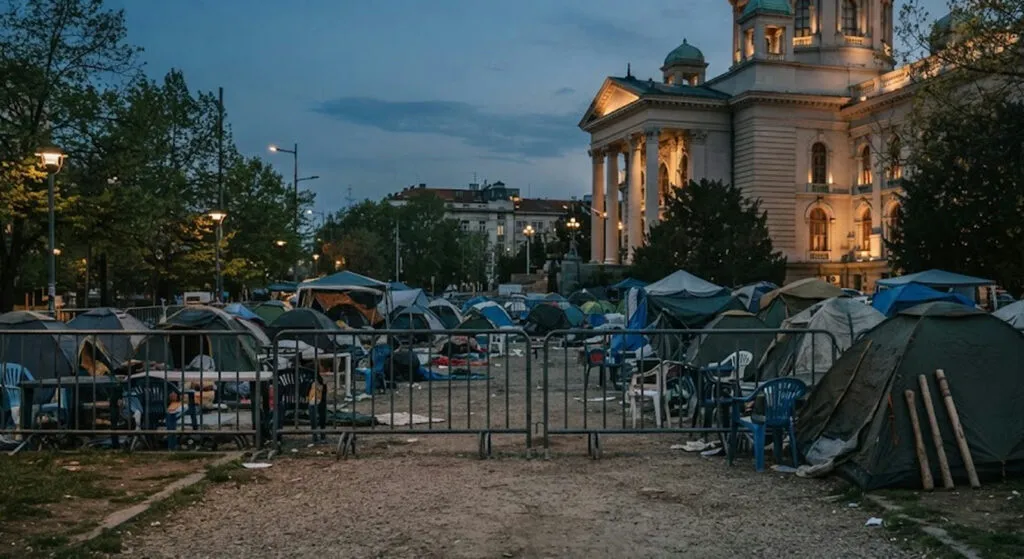
Batons, pepper sprays, balaclavas and a hundred-odd revolvers in Ćacilend, a salary for no work and cash from the city...
From November 1, Russians will no longer enter Montenegro on a passport alone, and Moscow immediately answered with visas for...
Belgrade has refused to sanction Moscow for years, and now Vučić claims even the US no longer fully enforces sanctions....
Of the four questions only one is binding, and the one that matters most to people from the former Yugoslavia...
Since the start of 2025 Republika Srpska has spent over four million dollars on lobbyists close to Trump. When that...
Tiny Montenegro detained the man whose project Washington offered up to 10 million dollars for information about, and is expelling...
The Hague tribunal sentenced Slobodan Praljak to 20 years, he poisoned himself in the courtroom, and eight years later a...
Serbia isn't mentioned by name, but everyone knows who it's about. And the list of conditions for Balkan candidates has...
This site uses cookies - is that okay? Learn more
Be the first to know when Metla launches something new
Leave your email and we will write when there is a new guide or something new on Metla.


