
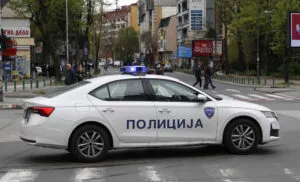
A week after the police brutality story, the Interior Ministry has its own version: the passenger took the officer's gun
15.10.2026


15.10.2026

15.10.2026
15.10.2026
15.10.2026
15.10.2026
15.10.2026

15.10.2026

14.10.2026

13.10.2026

15.10.2026
15.10.2026

14.10.2026
15.10.2026

15.10.2026
15.10.2026

15.10.2026

14.10.2026

13.10.2026
15.10.2026

15.10.2026
15.10.2026

15.10.2026
15.10.2026

15.10.2026

15.10.2026

14.10.2026

13.10.2026
13.10.2026

12.10.2026

10.10.2026

23.04.2026

23.04.2026

12.04.2026

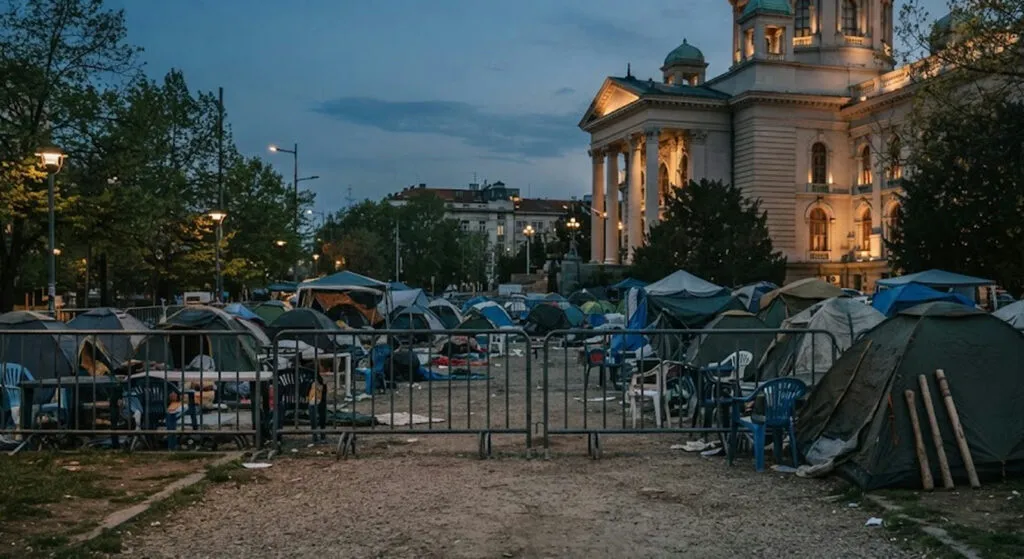
Momčilo Marjanović (54) spent more than ten years as an activist for Aleksandar Vučić's Serbian Progressive Party (SNS). Now, in an interview with the investigative journalism network BIRN, he says the party organised and paid groups of thugs, bought votes and planted its people among students and protesters to provoke clashes with the police. These are his claims, not facts established in court - but they are detailed enough that they can't easily be swept under the rug.
He says he personally led groups of men who guarded party offices, took part in clashes with protesters and stayed in the so-called Ćacilend - the camp of Vučić supporters outside the Serbian Presidency building. For his stay there, he claims, he received 500 euros a day, and the men he led 200 euros each. He was paid in cash, in the office of the director of a Novi Sad public utility.
Batons, sprays and "a hundred" revolvers
After the collapse of the canopy at Novi Sad railway station on November 1, 2024, which killed 16 people and ignited mass protests, his tasks, he says, became increasingly violent. Before the big student protest in Belgrade on March 15, 2025, he spent more than two weeks in Ćacilend. In the tents, he says, batons, pepper sprays and balaclavas were waiting for them. "If it comes to a clash, we don't pick our means, we have everything we need. We go all the way, no mercy."
"As I walked around Ćacilend, I saw plenty of people with revolvers they didn't even hide. A hundred for sure," Marjanović claims. He adds that the police cooperated with the people in the camp, and that he heard a police officer telling them that if the police couldn't hold back the protesters, they would let a certain number of them in - so the groups in Ćacilend could beat them up and scare off the rest.
Provocateurs among the students
The gravest claim concerns infiltration. "We organised guys from other towns, whom the locals didn't know, to slip into their ranks. They then attacked the police with stones and pyrotechnics, so that the students would get the blame," he says. He admits not all the clashes were staged, but claims he personally helped organise provocations at protests in Belgrade, Bačka Palanka, Bački Petrovac and Novi Sad.
Up to 400,000 euros from the city heating company
The most specific accusations are aimed at Nenad Barac, director of the public utility Novosadska Toplana and an SNS member. Marjanović claims Barac personally gave him instructions, approved the number of people hired and paid out the money - in his office, and when the director wasn't there, the cash was waiting with his secretary. He estimates that since the canopy collapse he has collected between 350,000 and 400,000 euros from that company. According to the journalists, Marjanović also handed over correspondence with Barac as evidence. Barac refused to answer questions, asked where they had got their information and ended the conversation.
A company that is supposed to heat Novi Sad's flats - and out of it, if the claims are true, came cash for the people in Ćacilend. Marjanović also admits that for years he drew a salary from the Novi Sad municipal company Lisje without ever turning up for work. "Those are phantom jobs, that's what they call them. I'm not the only one, unfortunately," he says. On vote-buying: "It was usually 100 euros, and now I hear they're paying 400 or 500 euros a vote."
He says he fell out with the party when he helped two students who had entered Ćacilend and when he refused to go to Kula ahead of the local elections on March 29 this year. Then the threats began. He blames them on former MMA fighter and SNS activist Bojan Mihajlović and his associate Vladimir Zukić, and claims Zukić threatened to hurt his child. Both refused to answer questions and deny knowing him.
This is the testimony of a man who admits he took part himself - and that he enjoyed the perks: "I never queued at the doctor's." That's exactly why it carries weight. The question is whether any institution in Serbia will call him to repeat it under oath, ten days or so before the October 25 elections - or whether Belgrade will keep itself busy counting Croatian articles about Vučić.
The latest 10 news from this category
Belgrade counted Croatian articles about Vučić and declared election interference. Meanwhile Vučić's campaign ad is almost a copy of a...
From November 1, Russians will no longer enter Montenegro on a passport alone, and Moscow immediately answered with visas for...

Belgrade has refused to sanction Moscow for years, and now Vučić claims even the US no longer fully enforces sanctions....
Of the four questions only one is binding, and the one that matters most to people from the former Yugoslavia...
Since the start of 2025 Republika Srpska has spent over four million dollars on lobbyists close to Trump. When that...
Tiny Montenegro detained the man whose project Washington offered up to 10 million dollars for information about, and is expelling...
The Hague tribunal sentenced Slobodan Praljak to 20 years, he poisoned himself in the courtroom, and eight years later a...
Serbia isn't mentioned by name, but everyone knows who it's about. And the list of conditions for Balkan candidates has...
The White House says lifting the sanctions averted a catastrophe, but won't say what kind. A company founded four days...
The bookmakers have him at 1.20 to become prime minister, and he wants more than 50 percent of the vote....
This site uses cookies - is that okay? Learn more
Be the first to know when Metla launches something new
Leave your email and we will write when there is a new guide or something new on Metla.


