Half His Welfare Money Just to Keep It: Prilep Official Took 18,000 Denars in Bribes
26.07.2026


26.07.2026

26.07.2026
26.07.2026

26.07.2026

26.07.2026
26.07.2026

26.07.2026

25.07.2026
25.07.2026

26.07.2026

26.07.2026

25.07.2026

26.07.2026

25.07.2026

24.07.2026

26.07.2026

26.07.2026

26.07.2026

09.03.2026

27.02.2026

19.02.2026

23.04.2026

23.04.2026

12.04.2026

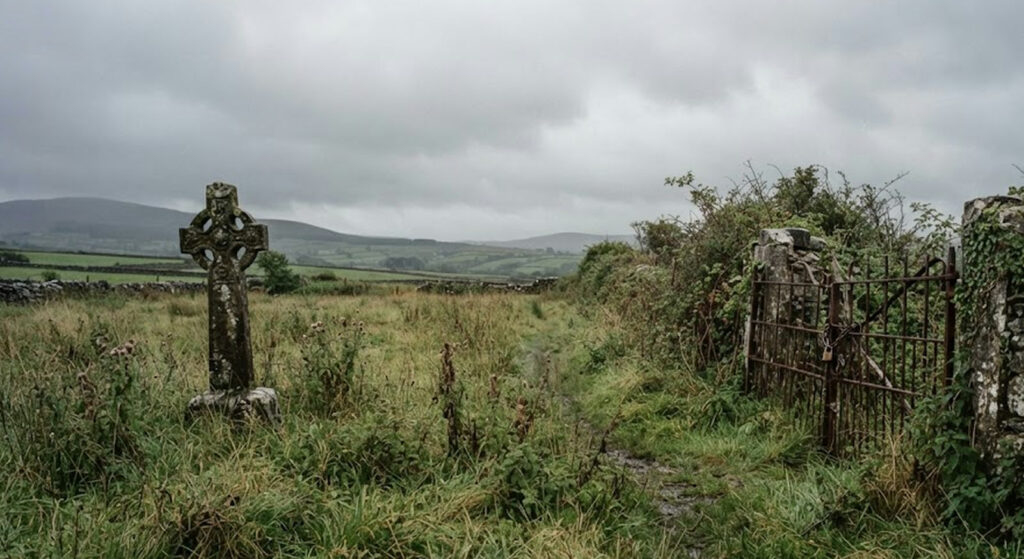
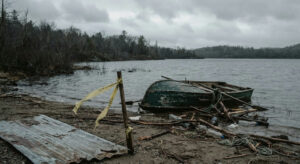
There are places where the past refuses to stay buried. In Tuam, in Ireland's County Galway, children's bones keep coming out of the ground - at the site of a former home for unwed mothers and their children, excavators recently found another 22 infant bodies. That brings the total number of remains found to 99.
The home operated between 1925 and 1961, run by the Catholic order of the Bon Secours sisters. Half a century later, the world is learning how the children who died there ended up - many of them, according to the investigation, thrown into a septic pit that locals simply call “the Pit”.
The story didn't break yesterday. As far back as 2014, local historian Catherine Corless found 796 death certificates for children and babies who died in the institution - and for not one of them was there a record of where it was buried. Nearly a thousand children, and not a single grave on paper. Who kept those books, and why did they suddenly stop writing down names?
The new findings were gathered over about six weeks of work, finished on 15 July. The bodies were taken out of coffins at the south-western corner of the site, in a section historically marked as a cemetery. All the remains are now being moved to a new mortuary and laboratory in Togher, where specialists will try, through X-rays and 3D scanning, to give the children back at least an age, a sex and a name.
So far, 62 people have given DNA samples to help with the identification. The Bon Secours order admitted the children had been buried in an “inappropriate and unacceptable manner”, apologised and paid 2.14 million pounds towards the cost of the excavation. Galway County Council, which owned the institution, also apologised - after an inquiry commission published its report in 2021.
An apology is easy once the witnesses are already dead. Fieldwork is due to last until 2027, and the analyses several years beyond that. And while the Irish state finally opens up what it covered for decades, one question remains that needs no laboratory to answer: how much did society know about this, and choose to look the other way?
The latest 10 news from this category
The general told Trump the stockpiles are seriously depleted. When a superpower suddenly wants to negotiate, it is worth checking...

Tokayev publicly proposed freezing the conflict. Moscow replied that peace is available immediately - provided Kyiv first loses everything it...

Spain declared a national state of emergency over wildfires for the first time. One person was arrested because the ban...

Machines that dump 5,000 litres of water in seconds are not allowed to fly because the spare parts are Russian....

The deadline for cutting off Russian gas is precise, set for the end of the year. The deadline for actual...
Everyone expected heavy artillery against the media, and got an hour-long speech of insults and reconciliations. And then came the...

Fake messages from the Royal Household, a PDF with the royal logo and packages up to 1.8 million euros. The...

Brent crossed the 100-dollar-a-barrel line for the first time since May. The Houthis strike ships, insurance costs jump - and...
Twenty years of talks, one signature - and one morning post online that brought it all down. Riyadh learned the...
Sentenced to 52 years for three murdered girls, he's now a patient, not a prisoner. The families learned of the...
This site uses cookies - is that okay? Learn more