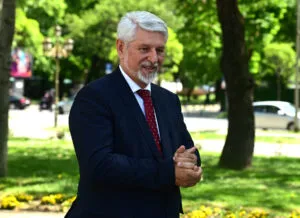
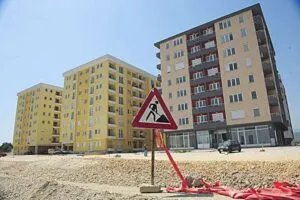
A New Criminal Complaint Against Jakimovski: A Building Permit Based on a Plan Struck Down Back in 2018
16.09.2026


16.09.2026
16.09.2026

16.09.2026
16.09.2026
16.09.2026

16.09.2026

16.09.2026

15.09.2026

14.09.2026

16.09.2026

16.09.2026

15.09.2026

16.09.2026

15.09.2026

14.09.2026

16.09.2026

16.09.2026

16.09.2026

16.09.2026

15.09.2026
15.09.2026

09.03.2026

27.02.2026

19.02.2026

16.09.2026

15.09.2026

14.09.2026

23.04.2026

23.04.2026

12.04.2026

Twenty years of negotiations, one signature - and less than 24 hours of life. That is how long the agreement on civilian nuclear cooperation between the US and Saudi Arabia lasted, signed on Wednesday at the US Department of Energy, before Donald Trump brought it down with a single post online.
The agreement was concluded with Energy Secretary Chris Wright and, after two decades of debate, finally opened Riyadh a path toward enriching uranium under certain conditions. By Thursday morning, at 7:52, Trump added a new condition on his Truth Social platform that no one had asked for: Saudi Arabia must join the so-called Abraham Accords and normalise relations with Israel.
“The arrangement requires Saudi Arabia to join the successful Abraham Accords,” Trump wrote, in order to achieve “true peace in the Middle East.” Translated from diplomatic into plain language: he signed, then changed his mind, and you learned the condition at the same time as everyone else.
Why suddenly? According to sources, Trump was unhappy with the way the deal had been presented. Conservative media, among them Fox News and The Wall Street Journal, criticised it precisely because it did not include normalisation with Israel - something the Biden administration had also wanted. When your own side complains, in Washington a post on social media comes faster than a diplomatic note.
The Saudis, understandably, were caught off guard. The original agreement allowed uranium enrichment without the strictest safeguards - and now the whole deal hangs on a question that has nothing to do with reactors, but with Tel Aviv. Reports suggest Israeli Prime Minister Benjamin Netanyahu hoped to influence the deal, although the White House claims he and Trump had no recent conversation on the subject.
This is the Middle East as we know it - where one signature is worth less than one morning mood. Nuclear technology is traded like a chip in poker, and the terms change while the ink is still drying. The question isn't whether Riyadh will give in, but how many such “final” deals we will see before anyone actually gets enriched uranium.
The latest 10 news from this category
Sanctions imposed over one war are being offered as currency in an entirely different dispute. Most member states are against...
El Nino in the Pacific shifts the currents that decide where snow falls. An area that usually gets a metre...
The easiest way to dismiss an uncomfortable argument is to point at who is making it. But that does not...

The appeals court ruled the entire trial must start over. The son of Norway's queen is waiting for it on...
Trump scaled back the military exercises to ease the tension, and Wonsan answered in the form of projectiles. What does...
The sanctions list got a seven-day extension instead of one measured in months, a move diplomats themselves call unprecedented. Two...
Switzerland offered a table for talks on Ukraine, Moscow replied that the table stopped being neutral once Bern adopted EU...
The will says one thing, a committee of twenty-one men decided another. The queen mother says the army pulled the...
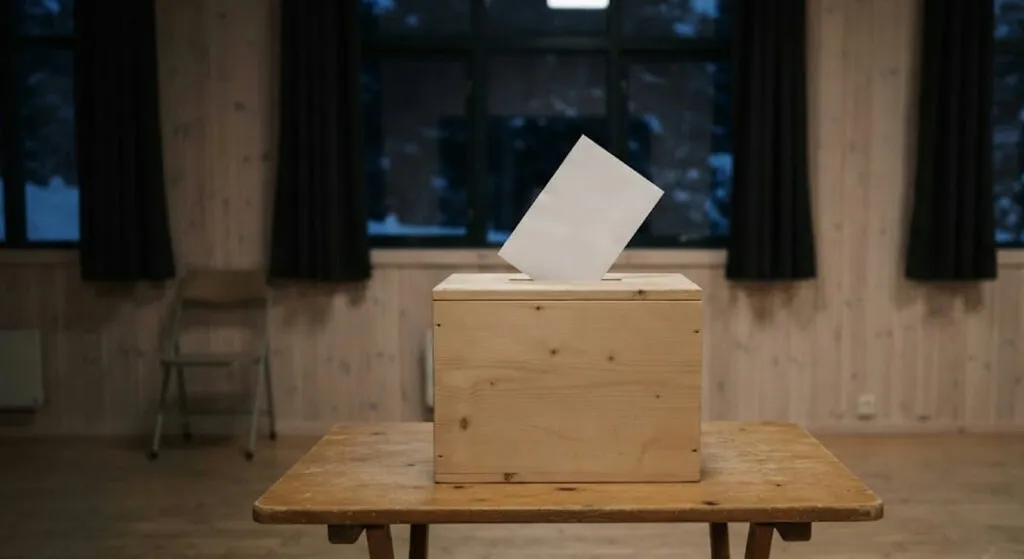
A country that was Europe's byword for stability for decades now has a parliament split into two blocs by a...

Sixteen years in power, defeat at a regular election, five months of quiet - and now the election result is...
This site uses cookies - is that okay? Learn more
Be the first to know when Metla launches something new
Leave your email and we will write when there is a new guide or something new on Metla.