


They Rode In on Scooters, Torched the Shops and Left: The Fire in Shuto Orizari Burned for Three Hours, Setting It Took Fifty Seconds
13.09.2026


13.09.2026

13.09.2026

13.09.2026

13.09.2026

13.09.2026

13.09.2026
13.09.2026

12.09.2026

11.09.2026

13.09.2026

13.09.2026

12.09.2026

13.09.2026

13.09.2026

13.09.2026
13.09.2026

12.09.2026

11.09.2026

13.09.2026

13.09.2026

13.09.2026

13.09.2026

13.09.2026

12.09.2026

09.03.2026

27.02.2026

19.02.2026

13.09.2026

12.09.2026

11.09.2026

23.04.2026

23.04.2026

12.04.2026

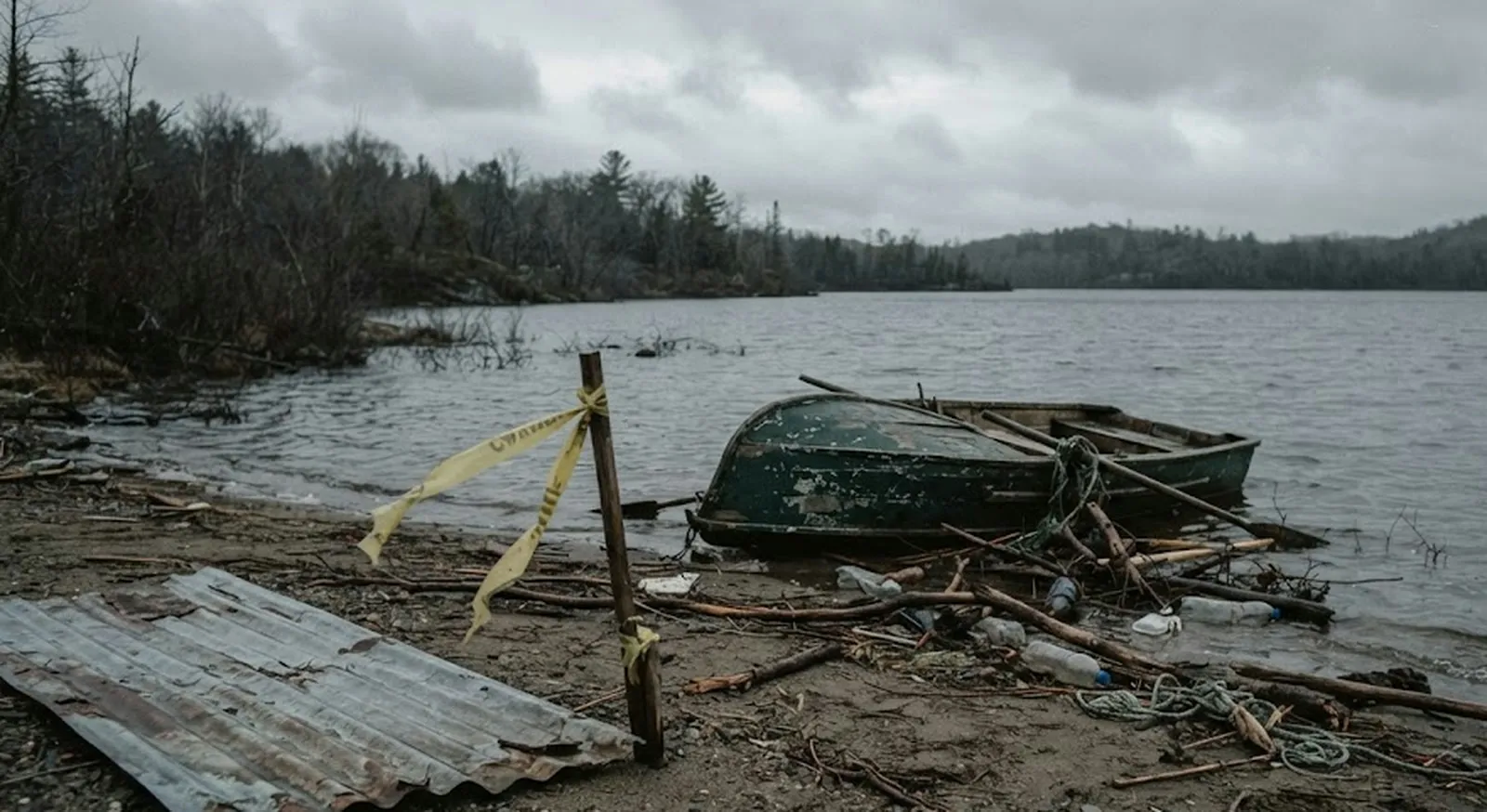
Lake Ohrid, which in summer we picture calm as glass, showed another face yesterday: strong waves tossed speedboats onto dry land and reached the first houses in Trpejca. The same unstable weather that felled trees across the country also left a sheet of metal dangling over pedestrians in Karpoš four days after the storm - the yellow tape around it is an admission that the problem exists, not a solution. And in the center of Skopje, firefighters climbed to height not to put out a fire, but to fix the stopped clock on the Museum of the City of Skopje. Time literally stood still - and we, as usual, react only once the damage is done.
UNESCO did not put Ohrid on the blacklist - it gave it another five years. That is not a victory, but a final warning before the most serious measure. The number that says it all: the Ohrid region is said to hold 4,847 illegal buildings, and between 2019 and 2024, 456 final demolition orders were issued. Carried out - not a single one. We have the law, we have the stamps and signatures; the only thing we lack is the will to enforce it. The rule of law does not begin with a bulldozer, but with no one being allowed to build where they must not.
In May, Macedonia produced almost as much electricity as it consumed - 96.5 percent of consumption covered by domestic production. A number that sounds like success, but behind it stands a less bright reality: 99.9 percent of the coal ended up in the boilers of the thermal plants. Our "domestic" energy independence still hangs on REK Bitola and on the coal we dig up and burn. Yes, the power is homegrown, but we pay the price in the air we breathe too - self-sufficiency from the last century.
Foreign Minister Timčo Mucunski said the protocols with Bulgaria are not part of the EU negotiating framework - the very thing for which former diplomacy chief Bujar Osmani was called a "Bulgarian pawn" for years. When an opposition minister claimed it, it was treason; when a governing one claims it, it is legal truth. The same sentence, two opposite reactions, and the only difference is the party card of the mouth it comes from. In a similar tone, VMRO boasted of reforms in the administration through a public call instead of party appointments - as honest as the commission that decides.
While at home we clear the wreckage of the storm, abroad it is literally on fire. After American strikes on a tanker and Saudi hits on the Houthis, oil jumped above 100 dollars, and an Iranian general claims Washington used what it had been saving for a third world war. Near Kyiv, one and the same Russian strike has two versions - Moscow says a military target, Ukraine counts ten dead. And in Washington, at a dinner fenced off with metal detectors, Trump announced a new term with a "Trump 2028" cap, a number the US Constitution forbids.
At home, summer brought back the old routine: at "Bogorodica" the wait for the exit toward Greece is once again around two hours, and the Ohrid - Kičevo highway, a synonym for standstill for years, "already sees the end" again - we will measure its worth on asphalt, not in a press release. Meanwhile, crime does not rest: near Murtino police caught three young men with cocaine and marijuana, but the question of who stands above them remains, while in Serbia two Macedonians scammed elderly women with the old "injured daughter" trick.
The heavier part of the day needs one lighter thread too. Exactly 63 years after the earthquake, the people of Skopje boarded an open-top bus and set off on a panoramic tour of the city we no longer have - to see what Skopje looked like before 1963. And on the Balkan peaks, in the middle of July, snow fell on Pelister, Musala and Bjelasica. The mountain has its own rules and does not sync them to our holiday schedule - just like the lake that yesterday did not apologize before it churned.
The latest 10 news from this category
The paperwork was complete, the decision unanimous, the statements went out the same day. And still the scheme ran six...
Three institutions made the news the same way today - somebody from outside had to force them to speak. A...

Three separate cases of influence for sale in a single day, and one final verdict over 16 deaths sent back...
One state-owned company turned up today both as the injured party in a 9.7-million-euro indictment and as the payer of...
Institutions took measures, issued warnings and made announcements today. The only story in which somebody actually decided something is a...
The day prosecutors admitted themselves they have no evidence for the heavier charge, and the city revealed it had been...
The eighth death came after the spraying was already over, the illegal dump burned after years of quietly piling up,...
Fires are set to cover up illegal logging, and one arrest stands against twenty active blazes. Everywhere the same pattern:...
In every one of today's cases the information existed before the failure. The dumps have a known address, the mosquitoes...
A day in which the state exists on paper, while fishermen, a vet from Bogdanci and one mayor are the...
This site uses cookies - is that okay? Learn more
Be the first to know when Metla launches something new
Leave your email and we will write when there is a new guide or something new on Metla.
