
After 19 Months on the Run, Bajrami Handed Himself In at Blace at 5:35 AM: Same Crossing, Same Early Hour as Grubi
10.09.2026


10.09.2026

10.09.2026

10.09.2026

10.09.2026

10.09.2026

10.09.2026

10.09.2026

09.09.2026

08.09.2026

10.09.2026

10.09.2026

09.09.2026

10.09.2026

10.09.2026

10.09.2026

10.09.2026

08.09.2026

07.09.2026

10.09.2026

10.09.2026

10.09.2026

10.09.2026

10.09.2026

09.09.2026

09.03.2026

27.02.2026

19.02.2026

23.04.2026

23.04.2026

12.04.2026

For years the rule in the software business was simple: you sign a three-year contract, the client gets locked into your system and the revenue flows on its own. That model held up the entire sector. A new set of research shows that artificial intelligence has broken precisely that model - and much faster than anyone wanted to admit.
The numbers contradict each other. Of 150 IT professionals surveyed at large companies, 74 percent plan to increase their AI budgets over the next twelve months. At the same time, fewer than half of all pilot projects ever reach full deployment. The money is growing, the results are not.
The key figure is the third: 77 percent of companies reassess their AI vendors every six months or continuously. Research by the Madrona fund calls this a "fast in, fast out" dynamic and says it is fundamentally different from the classic software business, where multi-year contracts functioned as a moat around revenue. That moat is now gone. Or, as they write: the cost of switching vendors is lower, and the pace of reassessment is merciless.
What does that mean in practice? A startup boasting fifty million in revenue today cannot guarantee those same clients will be there in six months. And valuations are built on precisely the assumption that they will. When an investor multiplies annual revenue by twenty or thirty, what they are really buying is an assumption of durability - and that assumption is now the weakest link.
The context makes this more interesting still. According to IDC projections, companies will spend 4.25 trillion dollars on technology in 2026, largely because of artificial intelligence. But an MIT report from last year found that 95 percent of corporate AI projects returned nothing on what was invested. An enormous river of money flowing through a channel with a hole in the bottom.
Which is why the billing model is changing too. Of 50 technical buyers surveyed, more than half want to pay by outcome - by what the tool actually completed - rather than by tokens consumed or number of users. Andreessen Horowitz partners Tuğçe Erten and Sarah Wang call this billing that is economically valuable to both sides. Translation: clients no longer want to pay for a promise.
Is this bad news? It depends which side of the table you are sitting on. For a firm that genuinely delivers - better, because the result now gets paid for directly. For a firm that lives off presentations - very bad, because six months come around fast.
The latest 10 news from this category

A signed term sheet in venture capital is treated as a word of honour. When the buyer offers sixty-seven years...

The queue for putting cargo into orbit is growing faster than the capacity, and one supplier holds almost all of...
Opendoor's founder raised 25 million dollars for an app that tells construction workers whether they installed something correctly. What the...
Twice they threw its game off the Indian market. Now the company is investing half a billion there, and outside...
The large models had the entire internet to learn from. Robots have nothing of the sort, and that very gap...

Revenue jumped from 697 million to 1.2 billion in a year, and 85 percent of subscribers stay after twelve months....

When HiddenLayer started out in 2023, nobody could point to a single real attack on artificial intelligence. This year companies...

It hires doctors and lawyers to teach the software how they work. A professional's knowledge is bought once and sold...

The company lost 97 percent of its value and 93 percent of its staff. The founder is putting in 5...
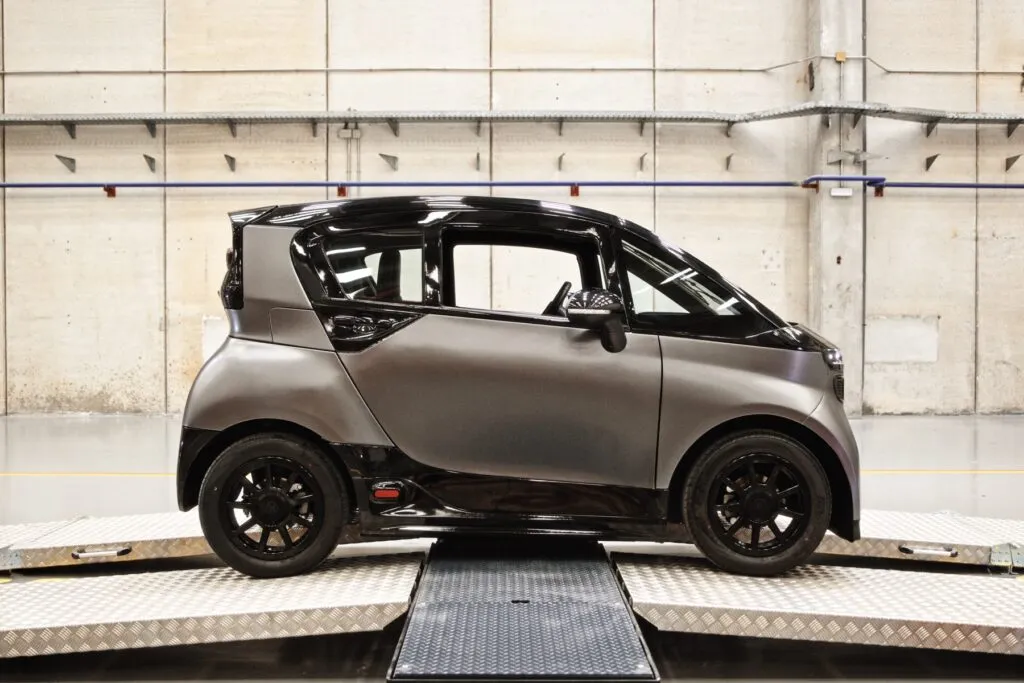
A startup with 65 people opens a factory to compete with Chinese electric vehicles. The co-founder says the idea of...
This site uses cookies - is that okay? Learn more
Be the first to know when Metla launches something new
Leave your email and we will write when there is a new guide or something new on Metla.