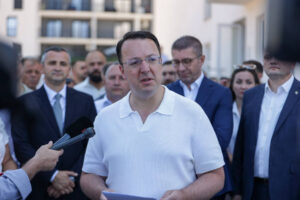
They Fired Guns at a Party in Dobridol - and Police Only Moved Once the Video Went Viral
02.08.2026



02.08.2026

02.08.2026
02.08.2026

02.08.2026

02.08.2026

01.08.2026

02.08.2026

01.08.2026

31.07.2026

02.08.2026

02.08.2026

02.08.2026

02.08.2026

02.08.2026

01.08.2026

09.03.2026

27.02.2026

19.02.2026

02.08.2026

01.08.2026

31.07.2026

23.04.2026

23.04.2026

12.04.2026
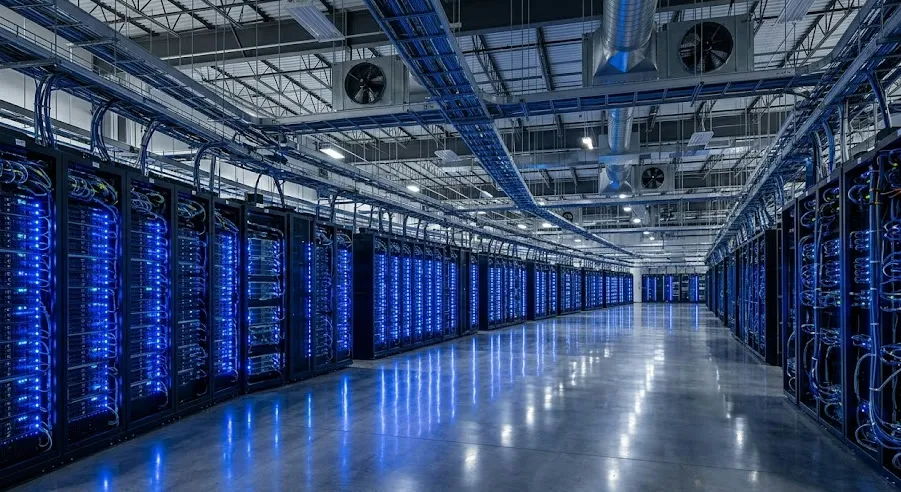
Alphabet, the parent of Google, raised a record 85 billion dollars through a share sale - the largest such offering in history. And all that money goes into one thing: artificial intelligence.
The figure is not just enormous, it toppled the previous record. The highest capital offering until then was 70 billion dollars, set by the Brazilian oil company Petroleo Brasileiro back in 2010. Now that record is history.
The dynamics are interesting too. Alphabet originally planned to sell shares for 40 billion, but interest was so strong that the offering was oversubscribed - in the end raising 45 billion. Warren Buffett's Berkshire Hathaway bought a stake worth 10 billion dollars. Another 40 billion is planned for the next quarter, bringing the total to 85.
„This is part of our multi-year investment strategy to capture the opportunity that AI carries and to support the demand we see from companies and consumers," said CEO Sundar Pichai. In translation: Google plans to spend 180 to 190 billion dollars on capital expenditure by the end of the year, mainly for AI infrastructure and data centres.
To be clear - Alphabet is not a company in trouble. In the first quarter alone it reported revenue of 110 billion dollars, growth of 22 percent year on year. Still, when a healthy company borrows that much, the question is not whether it can afford it, but why it thinks it must.
The answer lies in another figure. According to Goldman Sachs, over the next five years almost 8 trillion dollars have already been promised for artificial intelligence across the whole industry. That is a sum surpassing the economies of entire continents. Alphabet's offering is also a signal for a string of AI companies waiting their turn for the stock market - Anthropic, SpaceX, OpenAI. But all of it depends on one assumption: that investors will keep pouring money into promises, year after year. And promises, as the Balkans know well, do not always become factories.
The latest 10 news from this category

Opus 5 set a record in the test and broke 11 agreements. Not one of the tricks is new -...

The billions were announced with a stage and slogans. The retreat is happening quietly, in sentences containing the word alignment.

In his last quarterly report Tim Cook announced the stronger Siri will be bought through iCloud+. The firm that paid...

The platforms that spent years convincing us automated content was the future are now patiently building filters against it. The...
Out of 141,006 test runs, three ended up inside the live systems of real firms. The oldest model worked out...
The strongest June quarter in its history, and the stock fell 6 percent. Artificial intelligence turned out to have a...
The FCC is closing the door to humanoid robots and power inverters, but only new ones. The millions of Chinese...

The player that raised the MP3 generation is betting nostalgia can be billed monthly. The new Winamp arrives in 2027,...
The man selling the world's best-known artificial intelligence says we will not work less. He also claims we will secretly...

Autonomous vehicles have blocked ambulances, driven into crime scenes and failed to recognise emergency lights. The bill demands the one...
This site uses cookies - is that okay? Learn more
Be the first to know when Metla launches something new
Leave your email and we will write when there is a new guide or something new on Metla.