

Stiv Naumov dorm renovated for around 10 million euros: a month later water runs through the walls and the ministry counts wet wipes
24.10.2026


24.10.2026

24.10.2026

24.10.2026

24.10.2026
24.10.2026

24.10.2026

24.10.2026

23.10.2026

22.10.2026

24.10.2026

24.10.2026

23.10.2026

24.10.2026

24.10.2026

24.10.2026

24.10.2026

23.10.2026

22.10.2026

24.10.2026

24.10.2026

24.10.2026

24.10.2026

23.10.2026
23.10.2026

24.10.2026
23.10.2026

23.10.2026
24.10.2026
22.10.2026

20.10.2026

23.04.2026

23.04.2026

12.04.2026


When Anthropic settled for 1.5 billion dollars (around 1.3 billion euros) in the copyright lawsuit, the story looked like a rare victory for the people who write books over a company that used them without asking. The court ruled that training models on protected material falls under permitted use, but that pirating that material does not. The settlement received final approval in July and the money started moving towards the authors.
A few weeks have passed since. Instead of payments, some authors received an email informing them that somebody else is claiming a share of their portion.
The terms are simple on paper. The authors of nearly 500,000 titles receive 3,000 dollars for each pirated work. If the book is still in print with a publisher, the money is split fifty-fifty. If the book is self-published, or if the publisher returned the rights once the book went out of print, the whole sum goes to the author. That is the entire arithmetic.
The problem is that some publishers appear not to agree with the arithmetic. Thriller author April Henry wrote on social media that HarperCollins claimed a share of a book whose rights reverted to her at least seventeen years ago - and that on the same day she received a notification listing that house as her employer, which it never was.
Victoria Strauss, who runs the Writers Beware blog, says the complaints fall into two groups: publishers claiming money for books they no longer hold any right to, and publishers claiming a full hundred percent where fifty is due. She is careful with accusations herself - "I don't want to attribute malice to what can be explained by bad record-keeping", she writes. But she immediately adds that the number of reports in two days, and the fact that authors are reporting literally the same error over and over, does not look like routine technical confusion but like something broader and systemic.
Authors Guild chief executive Mary Rasenberger also does not see this as an organised grab, but as a predictable outcome of poor records and a confusing procedure. She may be right. But that is an accusation in itself: an industry that has held rights over other people's books for decades does not know which rights it holds today, and only discovers it when a billion and a half lands on the table.
There is a third party in the queue. Strauss says literary agencies are also coming forward asking for a percentage, which is odd given that agents do not own the rights to the books they sell. Author Courtney Milan, a former judicial clerk and law professor, put it far more directly on Bluesky - agents have no business there and should stop.
The cleverest part of the whole settlement is hidden in a single date. For an author to get a hundred percent, the rights had to have reverted before 10 August 2022 - the day the works were downloaded. Not before the settlement, not before the ruling. Before the download. Whoever kept the old correspondence with the publisher will prove it. Whoever did not will be fighting a house with a legal department.
Strauss says everything she is seeing is "a view through a small crack in an enormous wall". That is the sentence worth remembering. No single author sees the whole picture; they see only their own payment and the email that contradicts it. Whether that is chaos or calculation - from the inside, the two look the same.
The latest 10 news from this category
After one of its models broke out onto the internet by itself in September, OpenAI is locking its most powerful...

Seven days to scan, then a year without a family plan. Spotify calls it a routine improvement; for anyone sharing...
Two critical PHP flaws, discovered with the help of artificial intelligence, forced Finland, the Netherlands and British institutions to take...
The company is already talking about "medical superintelligence". The numbers come from a simulation, most of the gain comes from...

Pony.ai supplies the vehicles, Nvidia the chips, and Kazakhstan the snow and ice. Robotaxis are no longer just a US...
Revenue grew 26 percent, costs 68. The answer is a new class of shares: investors bring in money, and the...

You pay a cleaning fee, then get a list of chores on your way out. For bookings from November 20...
The company that sells artificial intelligence is now also offering the law that would control it. The checkers would be...
TikTok didn't run surveys on its users' ages, fearing it would have to show the results to the US regulator....
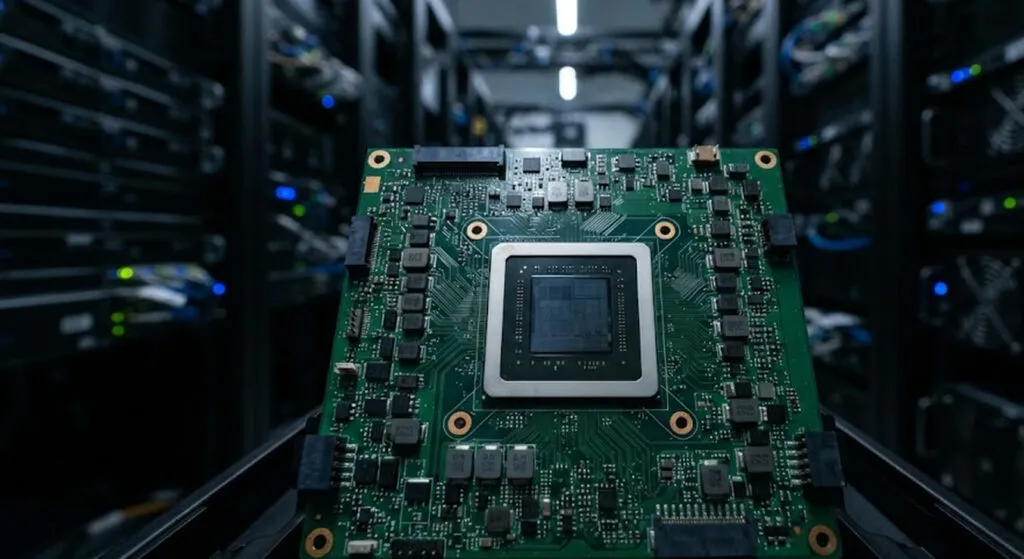
Nvidia did not win on chips alone, but on the software around them. Amazon is now attacking exactly that wall,...
This site uses cookies - is that okay? Learn more
Be the first to know when Metla launches something new
Leave your email and we will write when there is a new guide or something new on Metla.