Five Tonnes of Cannabis Straight Through Customs: A Medical Licence as Cover, at Least Five Runs
18.08.2026


18.08.2026
18.08.2026
18.08.2026

18.08.2026
18.08.2026

18.08.2026

18.08.2026

17.08.2026

16.08.2026

18.08.2026

18.08.2026

18.08.2026

18.08.2026

17.08.2026

16.08.2026

18.08.2026

18.08.2026

18.08.2026

18.08.2026
17.08.2026
17.08.2026

09.03.2026

27.02.2026

19.02.2026

18.08.2026
17.08.2026
16.08.2026

23.04.2026

23.04.2026

12.04.2026
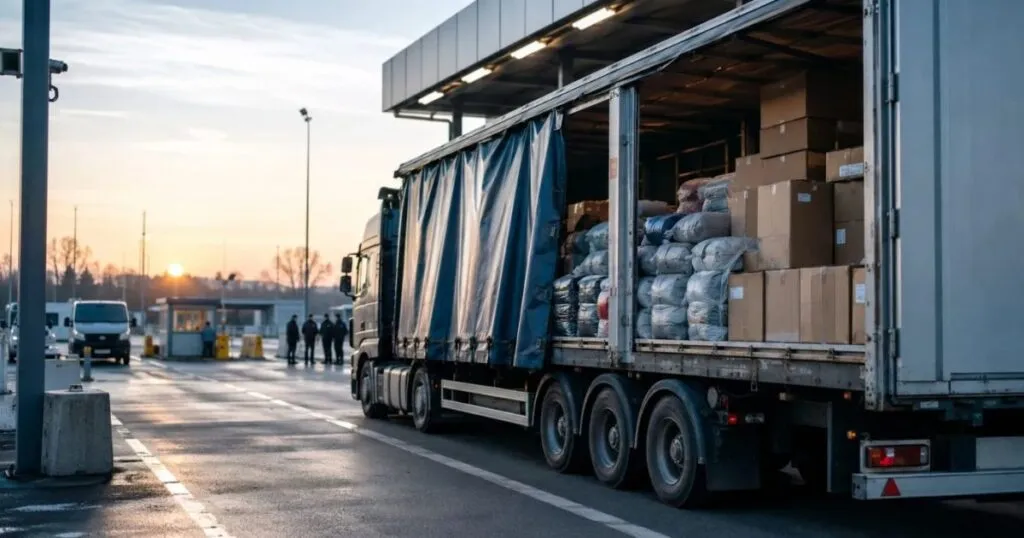
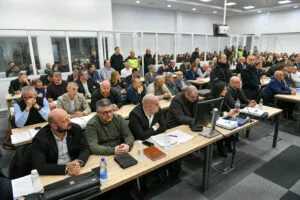
The five tonnes of cannabis seized in Serbia at the end of January stopped being a story about one shipment a long time ago. The prosecutor's office for organised crime and corruption has widened the investigation to another seven suspects, and the first verdicts have already landed at the Skopje Basic Criminal Court - two men pleaded guilty and took a deal.
The sentences are three years and six months, and three years and eight months. They were handed down on 10 August on the basis of plea agreements. When somebody admits guilt for unauthorised production and trafficking of narcotics, it usually means the evidence is solid enough that gambling on a trial is not worth it.
What cracks this case open now is not the quantity. It is the structure underneath it.
The legal licence as a front
According to prosecutors, a Skopje-based company holding a permit to grow cannabis for medical purposes and a licence to produce extracts was used for the illegal operation. In other words - a firm with the state's own written blessing. The owners, one of whom was also the manager, organised the procurement and transport towards Serbia, the investigation says.
It is worth being precise here: a medical cannabis licence is a lawful business framework, and abusing that framework is the subject of a specific criminal investigation. The two are not the same thing. But the question left hanging over the institutions is a different one - who was supervising the licensed company, and how often?
At least five runs through the ordinary customs system
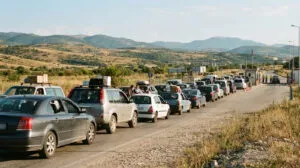
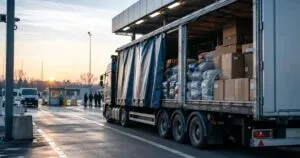
Prosecutors say the same method was used on at least five transports. On lorries carrying goods that had already cleared customs and been sealed, part of the legal cargo was removed and boxes of cannabis of roughly the same weight were put in its place. The vehicle then set off for Tabanovce, tailed by a passenger car. The customs declarations said textiles and foodstuffs; the drugs were disguised as food, pillows and duvets.
This is not smuggling in a car boot. This is logistics - paperwork, seals, freight forwarding, warehouses, people with assigned roles. The drugs were not slipping past the system. They were moving through it.
According to the court order, the activity ran from an undetermined point in 2025 until the end of January 2026, on Macedonian and Serbian territory. Once across the border, the goods were stored in the Konjuh area near Krusevac, where they were repacked for onward sale. That is where Serbian authorities announced the seizure on 29 January, describing it as the largest in the country's history.
Two states, one investigation, one open question
On 21 July, Serbian prosecutors filed an indictment against six people. In Macedonia the proceedings cover six suspects from February, plus the new seven, plus individuals who have not yet been identified. All of them are presumed innocent until guilt is established by a final ruling - worth repeating, because an investigation is not a verdict.
But there is a number the institutions cannot skip past: according to the February statement, 8,832 kilograms of dried cannabis flower were packed in December 2025, previously sourced from a company in Strumica. That is not the same shipment as the five tonnes. That is a separate quantity, in a separate document.
The real test is not how many kilos get seized. The test is whether anyone reconstructs the whole chain - from the licence and the paperwork to the money and the organisers. Until then, every next case will look like the first one.
The latest 10 news from this category
472 square metres, when the legal ceiling for a cabaret is 300. The polyurethane foam that spread the fire fastest...
The Berovo case happened on 6 July and only reached the public now. The police filed the reports - not...
35 confirmed cases, six critical, the youngest hospitalised patient is 25. The inspectorate is checking whether municipalities actually sprayed the...
22 fires in a single day, seven still burning. Where three firefighting aircraft flew, the fire was broken. Where there...
Four prime ministers, three caretakers and eight health ministers failed to finish the hospital in Stip. The initial estimate was...
Two schools from September, two more in 2027/2028. Single-shift teaching does not hinge on a decision but on a construction...
The walls are already structurally compromised after decades in water. Citizens are asking for signs and patrols, not a fence....
Five cotton items per pupil and a backpack for every first-grader. The difference between a market T-shirt and a branded...
A fight between two men is one thing. A group that shows up within minutes and attacks with hard and...

The lowest rating of his career, but the damning detail is elsewhere: 71 percent of Republicans expect the war to...
This site uses cookies - is that okay? Learn more
Be the first to know when Metla launches something new
Leave your email and we will write when there is a new guide or something new on Metla.