The defence in the Puls case has called 244 witnesses, and the nightclub owner's detention runs out on Saturday
01.10.2026


01.10.2026

01.10.2026

01.10.2026

01.10.2026
01.10.2026
01.10.2026
01.10.2026

30.09.2026
29.09.2026

01.10.2026

01.10.2026
30.09.2026

01.10.2026

01.10.2026
01.10.2026
01.10.2026
30.09.2026
29.09.2026

01.10.2026

01.10.2026

01.10.2026

01.10.2026
01.10.2026

01.10.2026

09.03.2026

27.02.2026

19.02.2026

01.10.2026

01.10.2026

30.09.2026

23.04.2026

23.04.2026

12.04.2026

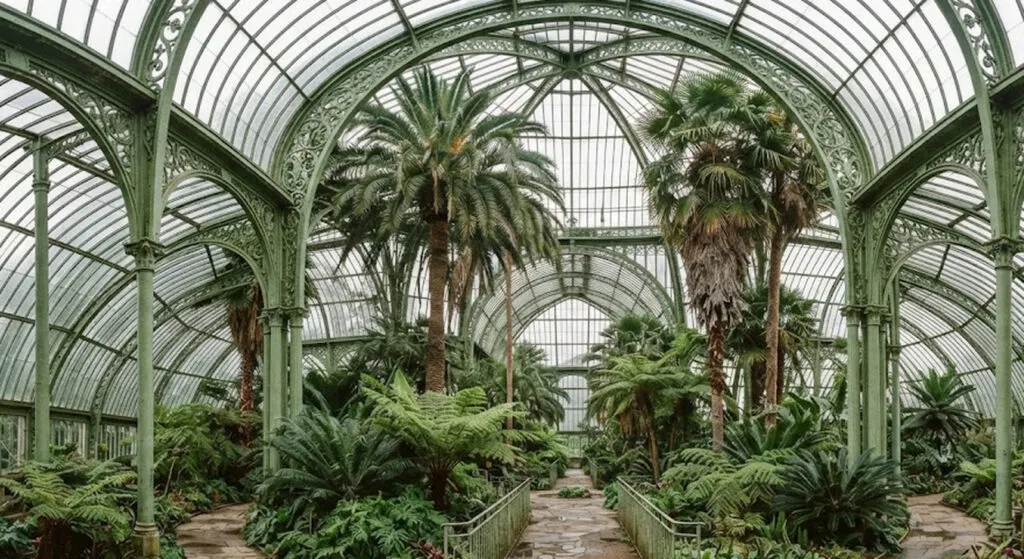
It all began with a moth that never came out of its cocoon. In 1829 London doctor Nathaniel Ward sealed a cocoon and a little soil in a glass jar to see how it would hatch. The moth never appeared, but a fern sprouted from the soil and lived for years without anyone watering it. Ward had discovered by accident that glass can create its own climate.
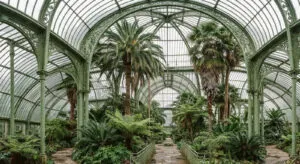
Soon his glazed cases were crossing the oceans full of living plants. Tea, rubber and quinine travelled between continents in small portable greenhouses. The great capitals filled with exotic species brought from the colonies, which needed an artificial tropical zone to survive. The nineteenth century, before concrete and steel took over architecture, had a brief love affair with glass and iron. That fever left behind pavilions that today look like cathedrals of light - and many of them are photographed far less than the famous Palm House at Kew.
The imperial jungle in Vienna
The great Palmenhaus at Schönbrunn was commissioned by Emperor Franz Joseph I to give the court's plant collections a worthy home. When it opened in 1882 it was the largest greenhouse in the world, and it still impresses: 111 metres long, 25 metres high and around 45,000 glass panes. In the early years the Viennese could only get in on certain days and for a small fee. Today the path runs through three climates linked by tunnel-like corridors. The central pavilion houses species from the Mediterranean, the Canary Islands, South Africa, the Americas and Australia. The cooler northern wing keeps plants from China, Japan, the Himalayas and New Zealand, and the southern one is pure tropics.
The oldest resident is a Spanish olive tree around 350 years old, far older than the building itself, and beside it grows a palm nearly 23 metres tall. In spring and summer the star is the giant water lily, with leaves up to 1.20 metres across, while the side paths hide a section of carnivorous plants. Directly opposite is the Wüstenhaus, the Desert House, with succulents and wildlife from arid lands. From October to April it is open from 10:00 to 17:00, and admission is 9 euros, 13.50 euros combined with the Wüstenhaus and 38 euros together with the zoo.
Barcelona: the greenhouse that came back to life
The Hivernacle in Ciutadella Park was built for the 1888 World Exhibition, as part of a small scientific complex alongside the Umbracle and the Martorell Museum. It was meant to grow tropical plants that could not cope with Barcelona's weather outdoors. The first design was by Josep Fontserè, but the building went up to plans by Josep Amargós, in what were then the most modern materials - iron and glass. Although it was intended for plants, during the exhibition it served as a hall for parties and conferences. Later it hosted shows of canaries, pets and mushrooms, in the nineties it was a bar and restaurant, and once stands were even put up inside for a concert.
After 17 years closed, it reopened in December 2023 - with a surprise. During the restoration, the original floral panels by Alexandre de Riquer, one of the great names of Catalan modernisme, emerged from under later coats of paint, and the ironwork got its original green back. Today more than 100 species grow inside, some the same as those that graced the 19th-century exhibition greenhouses in France, Germany and Britain. Admission is free, every day from 10:00 to 20:00.
The Belgian king's city of glass
For almost the whole year the Royal Greenhouses of Laeken are hidden away on the estate where the Belgian royal family lives. In 1873 Leopold II commissioned the complex from architect Alphonse Balat, teacher of Victor Horta, and the result looks like a city of glass in the middle of a rolling park - with domes, pavilions and long galleries that wind like covered streets. Visitors can walk through it for only about three weeks each spring, a tradition a century old. The gardeners prepare for those weeks with a watchmaker's precision: speeding up some flowers and slowing down others, so that everything is in full bloom when the public arrives.
The route passes pavilions of azaleas and a gallery of geraniums, and at the landing stage where the king used to receive guests, Philippine medinillas still grow in Chinese vases that Leopold brought back from a trip to the Far East. The jewel of the complex, the Winter Garden, is currently closed for delicate restoration, but even from outside you can see its dome of 36 arches on Doric columns. A modern curiosity: since 2021 the royal estate has been heated with surplus heat from a nearby incinerator, delivered through 4,500 metres of pipes. A royal residence heated by rubbish. How far are we from the day when a landfill heats homes instead of burning? Dates for spring 2027 will be announced at the start of the year.
Paris's last winter garden
At the edge of the Bois de Boulogne, where Louis XV was already growing plants in greenhouses in 1761, Paris decided at the end of the 19th century to build a large municipal nursery. The commission went to architect Jean-Camille Formigé, and it was completed in 1898 - the last great greenhouse complex built in France that century. Iron structures painted blue, green and turquoise surround a French parterre. On the wall at the entrance are 14 masks said to have come out of Rodin's workshop, and at the far end stands a fountain by Jules Dalou.
The most memorable moment is stepping into the palm house, where the tropical heat hits you all at once. Under the vault grow a Canary Island palm and tropical trees, Japanese carp swim in the pond and exotic birds fly in the aviary. The garden has around 6,000 plants and something is always in flower. It also has an unexpected neighbour: since 2019 modern greenhouses have wrapped around a Roland Garros tennis court, so you stroll between four tropical landscapes with a 5,000-seat stand right next to them. Admission is free.
Dublin and Glasgow: the iron that held and the palace that sailed
The Curvilinear Range at the Glasnevin Botanic Gardens was born of necessity: by 1842 the old wooden greenhouses were so decayed they were beyond repair. The new one was designed by Richard Turner, the Dublin ironmaster who also built the palm houses at Kew and Belfast. Completed in stages between 1843 and 1869, it is considered the finest greenhouse in Ireland and has even appeared on postage stamps. During its restoration in the nineties it turned out that less than a fifth of the original iron could not be saved - something its siblings at Kew and Belfast, restored with steel, cannot say. Admission is free.
The Kibble Palace in Glasgow has an origin story worthy of a novel. It was commissioned in 1865 by the eccentric Victorian engineer, astronomer and photographer John Kibble as a private conservatory for his house at Coulport, on the shore of Loch Long. He is said to have used photographic plates so huge he moved them by horse and cart, and to have crossed the loch on a bicycle fitted with floats. In 1872 he dismantled the palace, shipped it by water and reassembled it at Glasgow Botanic Gardens, enlarged with a dome around 45 metres across. In 1873 it opened as a concert hall lit by 600 gas lamps that could change colour, and Disraeli and Gladstone both spoke there. Today the national collection of tree ferns, planted in the 1880s, grows under the great dome. Admission is free.
All these greenhouses share the same basic idea: glass becomes architecture and botany becomes spectacle. Most of them don't even charge for a ticket. Next time you are caught in the rain in a European capital, you know where a free tropical zone is waiting for you.
The latest 10 news from this category

A Spanish actor went back to Canada decades after the trip he took as a child following his father's death....
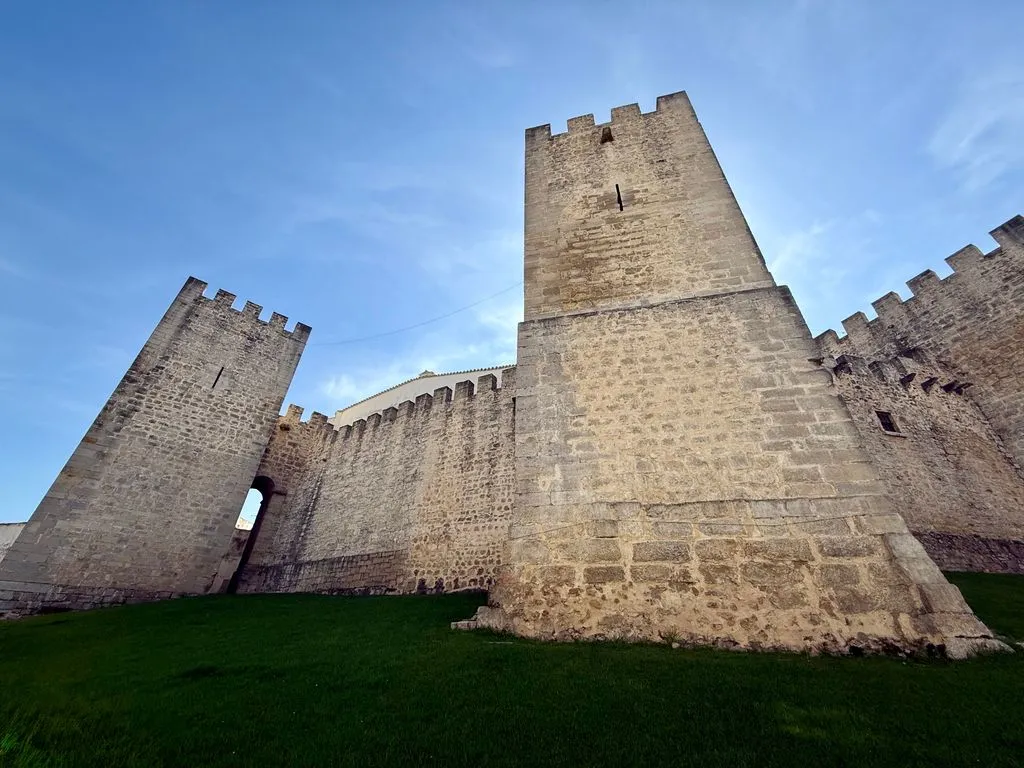
The Algarve isn't just beaches. Less than 20 kilometres from Faro there's a town where market eateries have to buy...
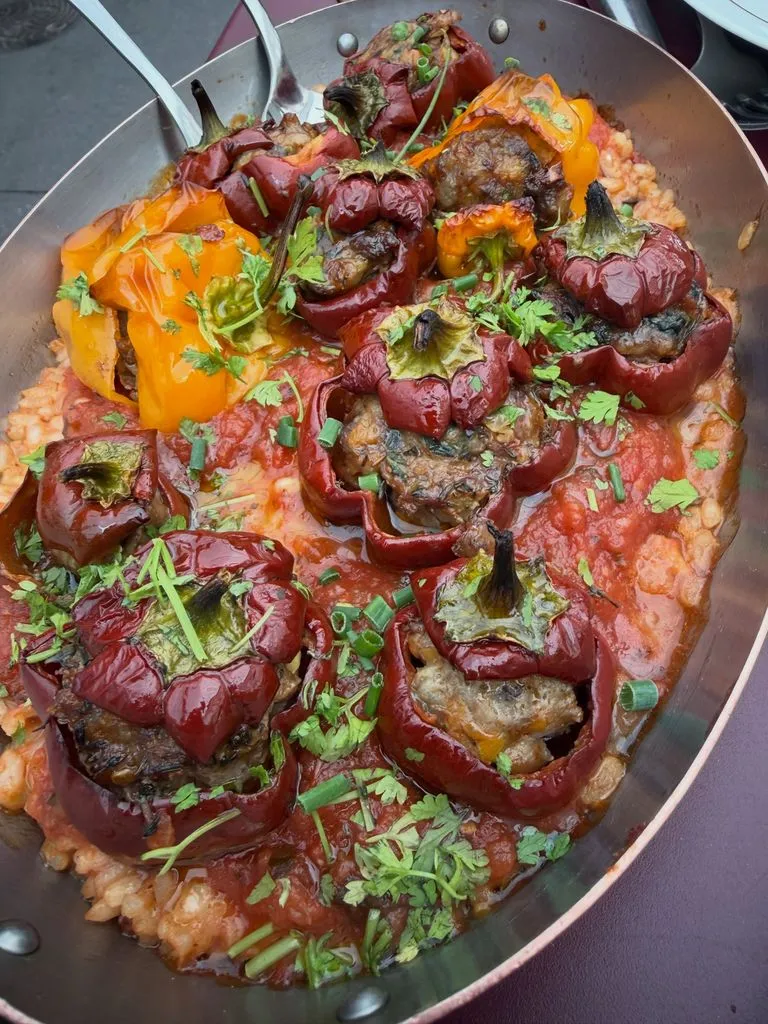
From 28 September to 6 October, Paris is a runway. And after the shows, the stars go looking for pepper...
Around 1,500 residents, 12.9 square kilometers and a seven-kilometer road through another country. One of Europe's oldest pharmacies and the...
Cologne, Zurich, Lugano and Lake Como in one night, with stations in the centre of every city. Europe's night train...
UNESCO-listed stone towns, Ottoman bazaars, bunkers turned into museums and beaches compared to the Caribbean. A neighbour that deserves more...
Brad Pitt fights to survive the Alaskan wilderness, while the camera stood in New Zealand the whole time. Where exactly...
UNESCO protected the tradition in 2023, and the song sung there is documented as far back as 1545 - it...
Miraflores sits on the edge of cliffs above the Pacific and has a fourth-century ceremonial centre in the middle of...
A castle with a banquet every night, a pub from 1620, a dolmen with an arrowhead still in a pelvis,...
This site uses cookies - is that okay? Learn more
Be the first to know when Metla launches something new
Leave your email and we will write when there is a new guide or something new on Metla.