
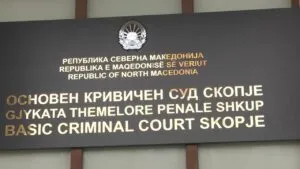
The defence in the Puls case has called 244 witnesses, and the nightclub owner's detention runs out on Saturday
01.10.2026


01.10.2026
01.10.2026
01.10.2026
01.10.2026
01.10.2026
01.10.2026
01.10.2026

30.09.2026
29.09.2026

01.10.2026

01.10.2026
30.09.2026

01.10.2026

01.10.2026
01.10.2026
01.10.2026
30.09.2026
29.09.2026
01.10.2026

01.10.2026
01.10.2026

01.10.2026
01.10.2026

01.10.2026

09.03.2026

27.02.2026

19.02.2026

01.10.2026
01.10.2026
30.09.2026

23.04.2026

23.04.2026

12.04.2026

The celebration of 35 years of independence was supposed to cost citizens nothing from the Budget. In the end it cost 5.5 million euros, after a five-day public call that drew exactly one bid. Of 340 million denars, only 40 were private - the rest was paid by the State Lottery. The timeline needs no interpretation: the Government assigned the job to the Lottery on 28 April, the tender notice came out two days later, and the only bidder was a company owned by the daughter of Avalon's owner. The payments are not visible on Open Finance - the very portal the prime minister pointed citizens to.
The chairman of the committee that assessed the sole bid later turned up as the author of the concert's arrangements. The organiser of a month-long celebration across 11 cities is a company with a frozen bank account, and when asked about public money its boss replied: "Do I look like an idiot to you?". David Guetta, meanwhile, was announced three days after the call had closed. The outlet Megafon has asked the anti-corruption commission to examine the whole procedure, and the case it already has open concerns, so far, just one name.
In September the Lottery was also in court, for a different reason. Prosecutors raised the estimated damage from 8.2 to 9.7 million euros, but downgraded the charge from embezzlement to abuse of office, so the possible sentence is one to five years. Bajrami surrendered at the Blace crossing after 19 months on the run, at the same border post as Grubi, and the interior ministry never explained where he had been hiding. The defence says everything was done on the Government's orders. Prosecution and defence, in other words, are pointing at the same table.
A trial witness says the director of the State Inspectorate demanded a hundred thousand euros to let trucks of fertiliser through; 50,000 in marked banknotes were found in his car, and the defence says someone else asked for the money. In Skopje a food-safety inspector was detained over a positive report that allegedly came with a price tag. On the bribery at the Customs Administration and the searches inside the interior ministry, the institutions spoke only once someone from outside forced them to. And a counter at the interior ministry that issues driving licences spent six years adding truck and bus categories for people who never sat an exam - and some of them drove buses. The clerk had already been removed once, in 2021, and reinstated by a court ruling in 2025. A job as a firefighter allegedly went for 1,500 euros.
Where there was no bribe, there was an audit - and it arrived after the money had already been spent. At the state power utility ESM, auditors found a 2.48-million-euro gas engine that never worked and a 2.29-million additive past its expiry date; the procurement plan was changed 19 times in one year, and six companies hold over 70 percent of the value. A 337-megawatt solar plant got a municipal permit instead of a government one. The Market Inspectorate has a vehicle in the scrapyard and only 5 of 14 product-safety posts filled. And the electricity distributor EVN cannot be audited by the State Audit Office at all, because the state owns no stake in it. The same month the Government scrapped the automatic lowest-price rule in public procurement. From now on, somebody will judge quality. After the celebration, the question of who that somebody will be is no longer theoretical.
The detailed urban plan for Barutana foresees 29,000 square metres of construction where the General Plan allows 6,500. Of 9,500 square metres of greenery, 268 would remain, on a slope with an 80-metre height difference and no erosion study. When planners from the Centar municipality were handed blank statements to sign confirming it was safe, nobody signed. At the public hearing the argument for the ground's stability was that the place is called Barutana. Over 1,500 citizens signed against it, and the plan was voted through without an opinion on the hazard - on a hillside where the forest was planted precisely so that Skopje would not flood. Most telling of all is the municipality's own document, which says that urbanising Vodno triggers landslides. The mayor, for his part, demanded an apology for the filming of the hearing.
A few hundred metres higher up, the cable car showed the same pattern, just with a later date. The repair bill jumped from 20 to 45 million denars, and there is still no contract with a contractor. The Austrian inspection found that three of four sensors were not working and that a full service had not been done in fifteen years. The state's own check last August found nothing. The mayor says the cable car was on the brink of tragedy, yet the City is now looking for a firm to assess the damage and leaving responsibility to investigators. Who signed the paperwork for fifteen years, nobody said.
At the trial over the Puls nightclub fire in Kočani, expert witnesses established that the building had run for years as a disco on a light-industry permit, and that the inspector could have, and should have, shut it down. The first official record of the club's condition was written after it had burned. An inspector asked the owner for a licence in 2023, never got it, and simply noted that in a report. The system worked. It just didn't act.
Then the clock did its part. The first defendant walked out of detention because the time limit ran out - a year and a half without a single final conviction. "Our children have no time limit; justice must not expire," said the association of families from Kočani. The parliamentary inquiry committee, voted unanimously nine months ago, still does not exist, and the trial of 13 police officers restarted from scratch because the panel changed - eighteen months on, the court is reading page one again.
Laskarci got the same treatment, seven and a half years after the crash. The Supreme Court quashed the verdict and sent the case back to the first instance, reasoning that the causal link was never properly established. Meanwhile people sit in prison on verdicts that no longer exist, because the written reasoning has not been written yet. The families of the dead will hear it all again from the start.
For the threat against the prime minister there was a complaint, an indictment and detention within days, and the police moved on hearsay, without the prime minister even filing a report. The same mechanism exists for every citizen. For the man who walked into a surgery in Karpoš and broke a gynaecologist's second cervical vertebra, prosecutors are seeking only precautionary measures. Police bulletins on domestic violence end every day with the same sentence about an appropriate filing, and in two cases a court restraining order had already been breached.
In the case of Ljupčo, after a month without a trace, his family is asking why he is not even on the interior ministry's list. "We search on our own, we gather information on our own," his nephew writes. The "Safe City" camera system counted 151 offences in a day and a half; the family asks whether anyone has looked at the footage. In Čair, one of the men who opened fire a hundred metres from a police station was already serving a prison sentence. For the two Taiwanese nationals, thirteen hours passed between the missing-persons report and the discovery of the bodies - and it was the daughter herself who found them. And the trail to the group with an ISIS flag, according to the police, had been sitting in the files of another court case.
The "city train" from Zelenikovo launched at 40 denars, on a line that had been running on sleepers from 1959. On day one the prime minister rode in the first carriage in the morning, and in the evening the train lost power before Lisiče. The ride takes 28 minutes, but getting to the station in Dračevo means half an hour on foot. Between Kumanovo and Skopje the track and the fare already existed - all that was missing was a decision. The boulevard through Keramidnica, waiting since 1965, is finally being pushed through - but only halfway. The railway to Bulgaria, a project begun in 1990, is 40 percent done. And the Čebren hydropower plant is an idea from 1964, with 14 failed tenders, which the state will now build on its own - the financing, for now, is nowhere to be seen. On another railway line, an advance payment ended up as an invoice for chicken feet.
The buses are a new chapter of the same novel. 150 electric buses after two cancelled tenders, with no explanation of why they failed. The contract with Ikarus, worth almost 60 million euros, was published only after a month of questions, with the first 30 buses due by March 2027. Meanwhile passengers on Skopje's public transport fell from 52 to 22 million a year, and a second city bus caught fire within two weeks. The month's biggest announcements came from Washington: data centres, Čebren, a gas pipeline. Checked against the numbers, the only thing signed is a study worth up to five million dollars. In Pehčevo councillors from the ruling party voted against their own government's data centre, and the minister admitted there was no project, no study and no figure for how much power the facility would use.
A kilogram of peppers costs 26 denars to grow and is bought up for 15 to 18, even though the agreed price for first class is 40. In Obršani and Debrešte the harvest is rotting unsold. Industrial apples in Prespa fell to 4 denars a kilo, while they cost ten to produce, with subsidies unpaid for two years.
Everything people buy went the other way. VAT on fuel was cut to 10 percent, and petrol still got more expensive. Diesel hit 104.50 denars and became pricier than both grades of petrol while crude oil was falling, and heating oil is up 78.91 percent since January. When the reduced VAT was about to expire, all the Government had to say was "we're discussing, we're looking at it". Flat prices rose more than 16 percent in a year, even though the census counted 307,187 uninhabited flats. The unions' household basket reached 69,432 denars, and almost 85,000 with rent. The prime minister says inflation is "50 percent lower" than Europe's - the numbers say about a fifth.
While the fields lose, ownership moves out. Foreign firms make up 4.7 percent of companies but create 37 percent of the value. The supermarket chain Tinex is passing to a group from Pristina, and the competition commission saw no problem because the buyer had not a single denar of turnover in Macedonia. After Ohridska Banka, Sparkasse has now gone after UNI Bank too.
The Hague gave Thaçi 25 years in prison for 96 killings, and both Serbia and Kosovo are unhappy with the same verdict. Albania's parliament immediately adopted a declaration calling the verdict unjust, while Brussels, which set up the court, stayed silent. In Belgrade Ratko Mladić, convicted with final effect of genocide in Srebrenica, received state and military honours, and Plenković took the issue to the UN General Assembly. Vučić resigned as president and, the same evening, put himself at the top of an electoral list.
Macedonia appeared in all this only in the margins. Marta Kos listed four countries getting a timeline - we were not among them. Skopje asked for the EU to sit at the table with Bulgaria, and Sofia replied that it could, but the obligations remain. The meeting with Rubio lasted fifty seconds in a corridor, and the same week the State Department redirected 52 million dollars of military aid away from Macedonia and three other countries. In Athens, the US ambassador reportedly said America could do it to any country. The Greek minister replied that governments are chosen by voters, not embassies.
In 2016, 23,266 children started first grade; this year, 14,952, and 148 school buildings are left without pupils. In Bitola two schools are running for one child each, and 188 first-graders on the interior ministry's lists never showed up. In Kumanovo 1,300 children were born, and 898 sat down at a desk. The education minister told first-graders to ask for a little brother, and when her figure missed by 3,400 children, on emigration she had an "impression". According to PISA 2025, only 26 percent of fifteen-year-olds reach the minimum in reading, and in science not a single one reached the top levels. The minister says these are the results of earlier reforms, and hers will show in ten years.
Those who did sit down at a desk are not always safe there. Older children attacked, stripped and filmed a first-grader in a school changing room, and the question of where the supervision was still has no answer. At Bit Pazar a 14-year-old was attacked with a sharp object in the school toilet, and it was his mother who reported it to police, four hours later. After the fights in Volkovo and Čair the police promised measures, and the education system stayed silent.
In Mavrovo foreigners shoot strictly protected chamois for 3,000 to 6,000 euros a head - legally, because the park has been waiting more than 15 years for a law to re-designate it. The video of the hunt sat online for eight months before anyone asked who issued the permit. The country's largest national park is run on boundaries from 1952 and zoning from 1988, and the ministry is offering a "public debate". Four kilometres of illegal nets and 117 kilograms of dead Ohrid belvica trout were pulled from the lake, with no culprit. In the upper Treska river the fish were floating dead, and the alarm was raised by anglers.
Summer was ending, the fires were not. The Pelister fire, fought for 72 hours with army helicopters and volunteers, was most likely set deliberately, according to the park. Of 1,696 fires over the three summer months, 1,627 burned on grass, stubble and dumps. For the first time, a Macedonian helicopter fought a fire outside the country, near Gračani in Kosovo, and for a single fire near Jasen, all three firefighting planes the state owns were in the air. The head of the protection and rescue directorate said the motive out loud: fire appears where the forest has already been cut. In Šuto Orizari they arrived on scooters, set the shops alight in fifty seconds and left, and the evidence came from social media. At the end of September the crisis centre was still counting fires - this time mostly burning rubbish.
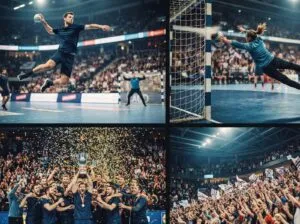
Vardar played its first home Champions League match in five years and lost 32:33 to Nantes, but one fan measured 100 decibels in the Jane Sandanski hall, and instead of a press release the club posted verses by the poet Aco Šopov. The women's national team crushed Serbia in the new coach's debut. Six cyclists rode 930 kilometres from Nova Gradiška to Kruševo, to Toše Proeski's grave, for the ninth time, and Svetlana Mojsov, the scientist behind today's diabetes and obesity drugs, was finally honoured at home too.
The calendar is filling up to December: SEMPRE staged The Smiley Calls, the first home-grown open-air festival, outside the Boris Trajkovski arena, Stefan Nikolovski is heading to T Arena, the biggest hall a Macedonian stand-up comedian has ever played, and Lepa Brena returns to Skopje after eight years. Štip's famous pastrmajlija pie stayed at 250 denars despite the price rises. And anyone coming back from Greece waited up to four hours at Bogorodica, while the Thessaloniki ring road was closed at night in exactly the direction of home.
September revealed no secrets. The tender notice, the audit, the inspection report, the cable-car survey - the documents existed, stamped and signed. What was missing was someone willing to stand behind their own signature.
The latest 3 news from this category
A month in which not one story was a surprise. The landfills burned where they burned last year, the water...
Not one of July's stories happened outside the procedure. Every one had a document, a signature and a deadline -...
A month in which nearly every domestic story ended with the same sentence - "it's all by the book" -...
This site uses cookies - is that okay? Learn more
Be the first to know when Metla launches something new
Leave your email and we will write when there is a new guide or something new on Metla.