

Two Reports in One Day: an 80-Year-Old Beaten in Her Own Yard in Tearce, an 82-Year-Old from Veles Detained for Years of Beating His Wife
22.08.2026


22.08.2026

22.08.2026

22.08.2026

22.08.2026

22.08.2026

22.08.2026
22.08.2026

22.08.2026

21.08.2026

22.08.2026

22.08.2026

21.08.2026

22.08.2026

22.08.2026

22.08.2026

22.08.2026

21.08.2026

20.08.2026

22.08.2026

22.08.2026

22.08.2026

22.08.2026

22.08.2026

21.08.2026

09.03.2026

27.02.2026

19.02.2026

22.08.2026

21.08.2026

20.08.2026

23.04.2026

23.04.2026

12.04.2026
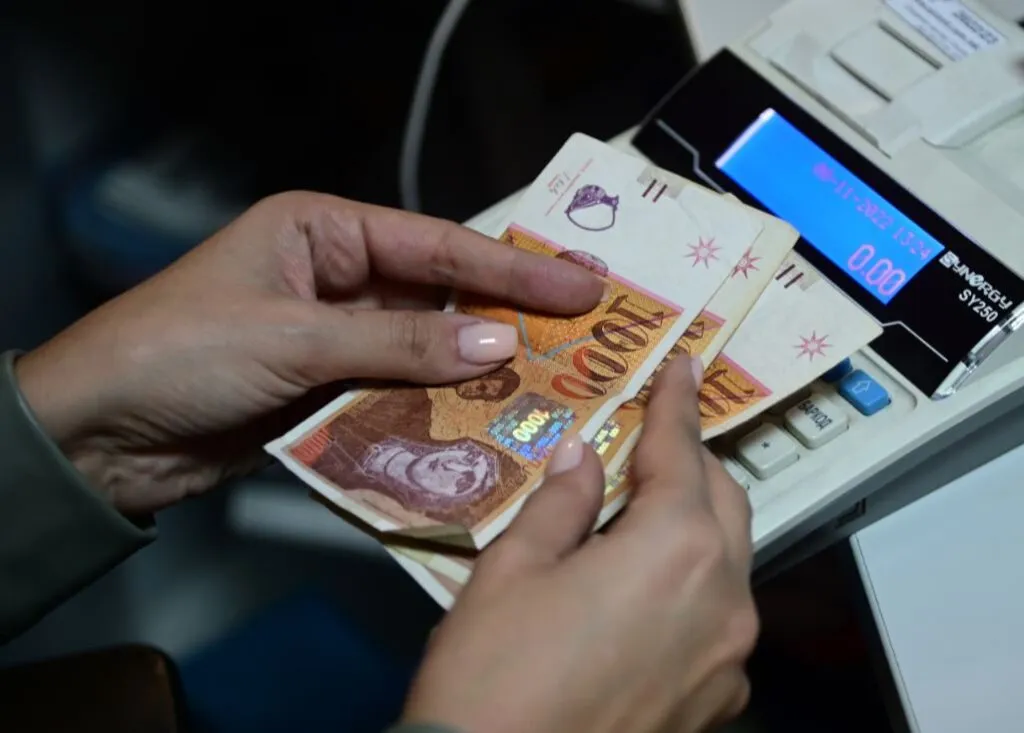
The National Bank published its monetary data for July, and one figure in it is worth pausing on: loans are growing 13.3 percent a year, deposits 8.8. Borrowing is growing faster than saving, and not since yesterday.
Total loans to the non-government sector reached 595.6 billion denars at the end of July. Over one year the banks' loan portfolio grew by more than 73 billion denars. Total deposits stand at 673.1 billion - up 8.8 percent year on year, but down 0.4 percent compared with June.
Companies pulled out 8.7 billion denars in a single month
That entire monthly drop in deposits comes from one place. Corporate deposits fell 4.6 percent in just one month - from 190.4 to 181.7 billion denars, roughly 8.7 billion. The decline was registered in both denar and foreign-currency accounts.
In the same month, corporate loans rose to nearly 296 billion denars, with annual growth of 14.5 percent. The fastest growth is in denar corporate loans - up 19.6 percent over a year.
So companies are emptying their accounts and borrowing more at the same time. That could mean an investment cycle. It could also mean pressure on liquidity. The figure alone does not say which - but withdrawing 8.7 billion denars in one month is not routine.
Households save and borrow simultaneously
Among citizens the trend is different and, at first glance, contradictory. Household deposits reached 462.4 billion denars in July - up 1.6 percent monthly and 11.1 percent annually. Over a year, savings grew by more than 50 billion denars.
At the same time, household loans reached 297 billion denars, with annual growth of 12.2 percent.
The hottest item is housing loans: 119 billion denars, 16.6 percent more than in July last year. Consumer loans are up 12.1 percent. Car loans fell 0.3 percent month on month but are 5.6 percent higher year on year.
What is falling is equally interesting: credit-card lending dropped 4 percent annually, and current-account overdrafts by 5.4 percent. Expensive short-term borrowing is being abandoned. Long-term borrowing, tied to a flat over twenty or thirty years, is accelerating.
What it all says together
A housing loan portfolio growing 16.6 percent a year in a country where the average net wage has fallen to 48,381 denars is not a sign that people have got richer. It is a sign that flat prices are rising faster than wages, so the same square metre now requires a bigger and longer debt.
Part of that arithmetic is explained by the rising savings - households are assembling their down payments. The rest is explained by the banks, which in a cycle like this earn on both sides of the balance sheet.
As long as interest rates stay stable, the construction holds. The question nobody wants to ask is what happens to those 119 billion denars of housing loans if that stops being true.
The latest 10 news from this category
Serbia 945 euros, Croatia 1,500, Slovenia 1,630. Once the percentages are converted into euros, the conversation about growth ends quickly.

Part of Europe's industrial growth is being pulled by defence spending and precautionary stockpiling. Today that counts as an order,...

Eurostat published July's figures: fuel is more expensive in 25 of 27 member states. Two of the four biggest jumps...
The same company paid 5.7 million for the same violation in 2019 and promised to stop it. Seven years later...

Eleven manufacturers in China are recalling vehicles because the manual emergency handle is hidden where nobody looks for it. The...

The company was not seeking investment - the board met, messages started flying and two days later it was worth...

The State Audit Office counted 21 million denars of equipment missing from the books, 250 mattresses that do not fit...

Eurosuper rose by 4.5 denars, diesel by 6.5. The excise duty has already been cut, VAT is off the table...

The government decides on Tuesday about capping margins on school supplies. The measure runs until 15 September. The bills run...

Every third page published after ChatGPT carries traces of having been assembled by a machine. On government and university addresses...
This site uses cookies - is that okay? Learn more
Be the first to know when Metla launches something new
Leave your email and we will write when there is a new guide or something new on Metla.
