


They Rode In on Scooters, Torched the Shops and Left: The Fire in Shuto Orizari Burned for Three Hours, Setting It Took Fifty Seconds
13.09.2026


13.09.2026
13.09.2026
13.09.2026

13.09.2026

13.09.2026

13.09.2026

13.09.2026

12.09.2026

11.09.2026

13.09.2026

13.09.2026

12.09.2026

13.09.2026

13.09.2026

13.09.2026

13.09.2026

12.09.2026

11.09.2026

13.09.2026

13.09.2026

13.09.2026

13.09.2026

13.09.2026

12.09.2026

09.03.2026

27.02.2026

19.02.2026

13.09.2026

12.09.2026

11.09.2026

23.04.2026

23.04.2026

12.04.2026

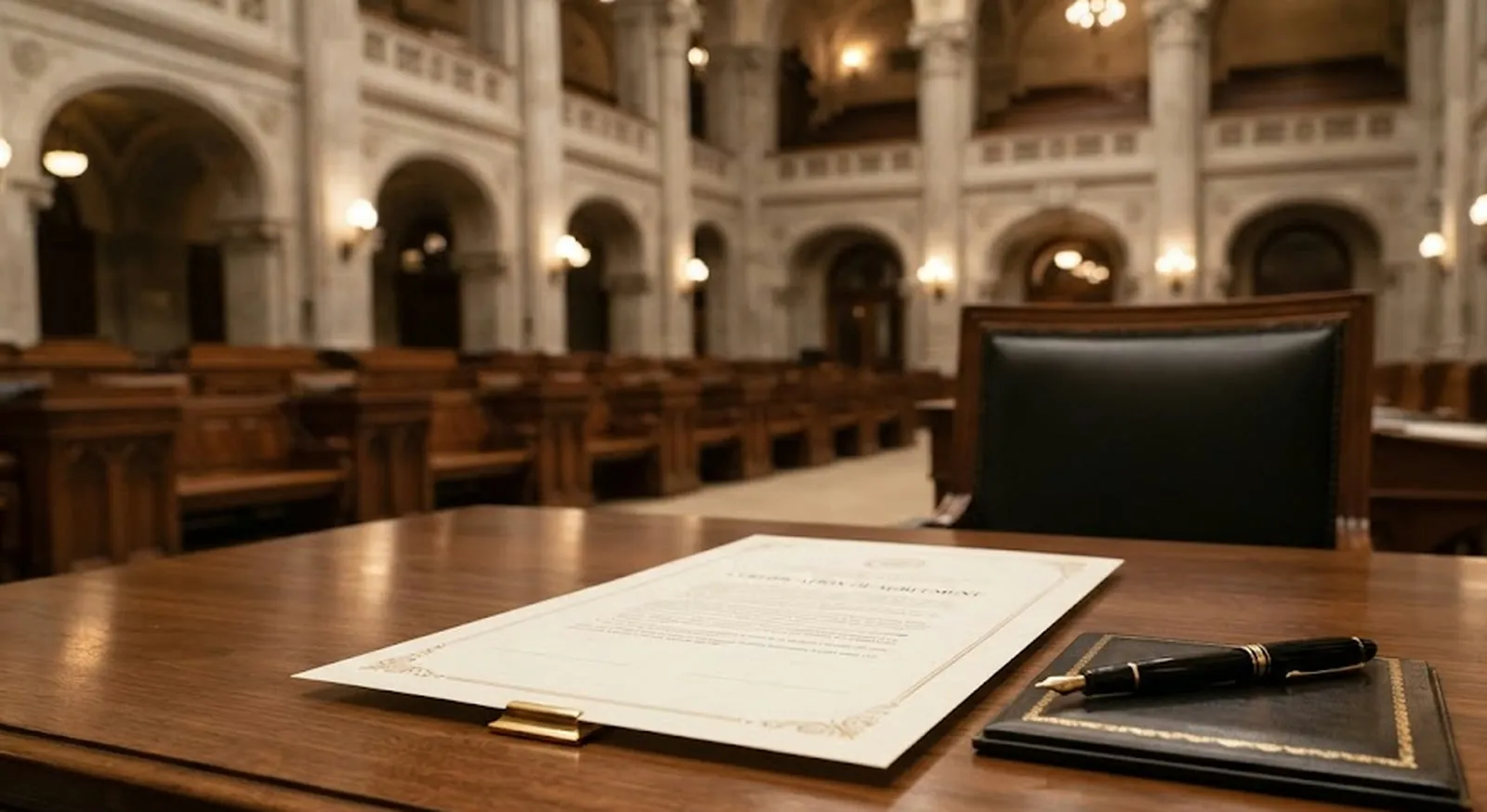
Hungary has quietly closed a chapter that for years kept its government's hands tied. President Tamas Sulyok signed the seventeenth constitutional amendment - a document that officially marks the end of his presidential powers and his departure from office.
Sulyok was seen as the last remnant of the Orban era at the top of the state. While he sat in the presidential palace, the new government of Prime Minister Peter Magyar hit a wall every time it wanted to push through its reforms - the presidential veto stood like a dam. With his signature, that dam has fallen.
An institutional dead end, solved with a signature
The constitutional change cleared precisely that dead end between the executive and the president. Now Magyar's government can carry out reforms without waiting for approval from the palace. According to the description of the change itself, Hungary is entering a „new political epoch” in which the new authority gains „an open path to implement radical reforms without a veto from the presidential court”.
Sulyok, it is reported, resisted at first - but in the end gave in under pressure. A classic scene: the man guarding the last lock hands it over once he realises he stands alone against an entire political machine.
The Balkans know this story
Amending the constitution to unlock a political blockade - that is a move that needs little explaining around here. Everywhere the constitution is treated as a tool of the current majority rather than a fortress over everyone, such overnight realignments become the norm. The question that remains is not whether Magyar got a clear path - he did. The question is what a government does when nobody tells it „no” anymore.
Because „radical reforms without a veto” sound great as long as the reforms are the ones you want. And then, one day, someone else sits in the same seat - now without the dam that once could have stopped them.
The latest 10 news from this category

Nobody said they do not trust Washington. Everyone is behaving as though they do not - gold, weapons, the cloud...

The warning reached the president three years before 9/11. The problem was not a lack of information, but that nobody...

In 1976 tradition demanded the future king choose a bride with no past. Thirty years later that same king married...
Five institutions declined to comment on damaged infrastructure the global oil market depends on. When that many addresses have nothing...
One unidentified object on the tracks, 180 passengers on board, 140 firefighters on site. The difference between railways is not...
We are preparing for war so that it does not come, Lukashenko says. Put the neighbours' numbers side by side...

Three years ago the Polish army waited twenty days for satellite images, today it gets them in minutes. And one...

At 22 she had to become Norway's first lady because her mother had died. At 29 she married a divorced...

The tool lets you draw an area on a map and returns a list of everyone who posted to Instagram...

The Athens declaration of friendship lasted less than three years. Now the Aegean is being divided through ecological zones, while...
This site uses cookies - is that okay? Learn more
Be the first to know when Metla launches something new
Leave your email and we will write when there is a new guide or something new on Metla.
