
Six Years of Fake Licence Categories Issued From an Interior Ministry Desk: Six Charged, 21 More Under Investigation
21.09.2026


21.09.2026

21.09.2026

21.09.2026

21.09.2026

21.09.2026

21.09.2026

21.09.2026

20.09.2026

20.09.2026

21.09.2026

21.09.2026

20.09.2026

21.09.2026

21.09.2026

21.09.2026

21.09.2026

20.09.2026

19.09.2026

21.09.2026

21.09.2026

21.09.2026

21.09.2026

21.09.2026

21.09.2026

09.03.2026

27.02.2026

19.02.2026

21.09.2026

21.09.2026

20.09.2026

23.04.2026

23.04.2026

12.04.2026

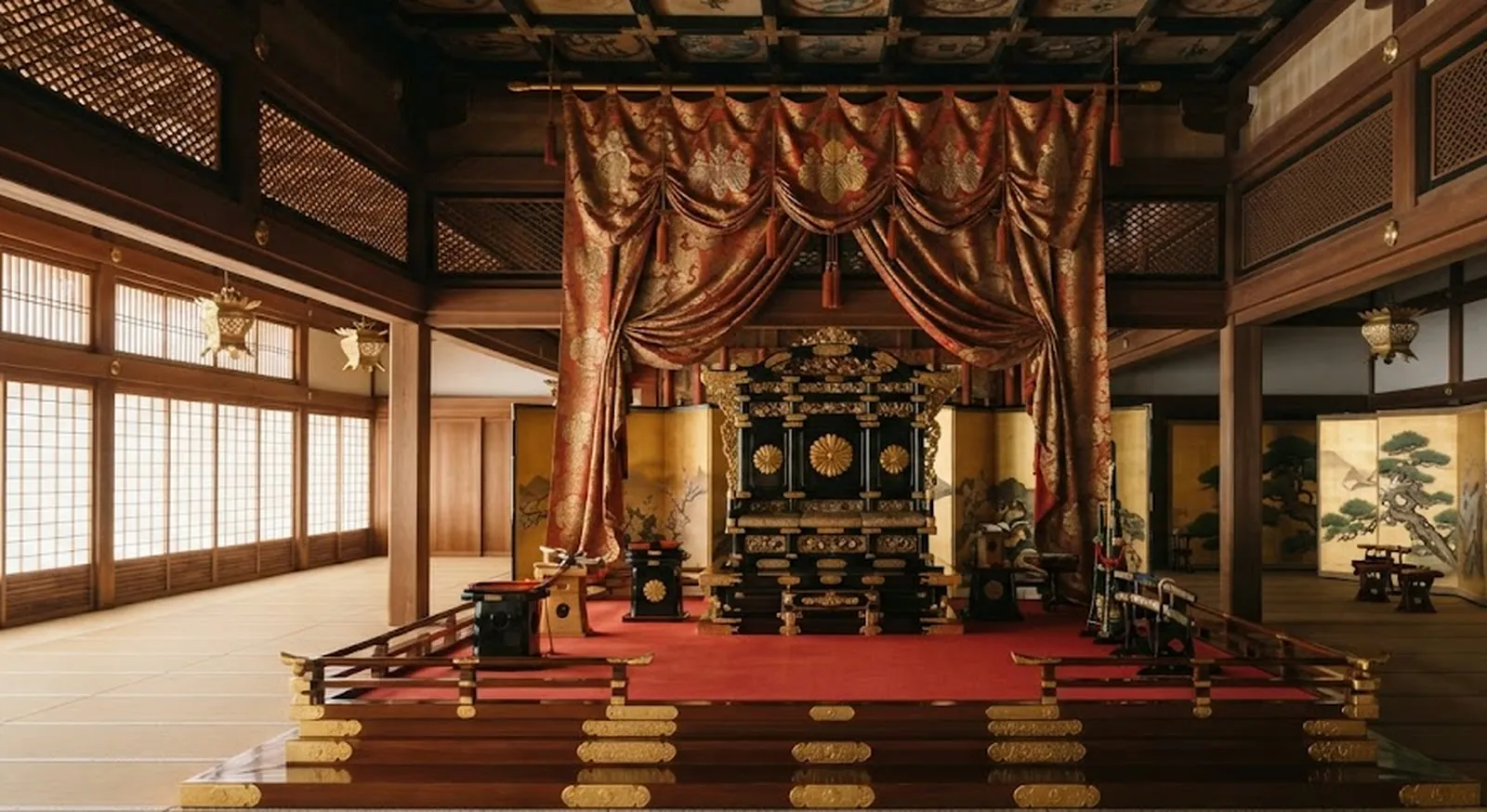
Japan's parliament has ended a years-long debate over the future of the Chrysanthemum Throne in a way many did not expect: instead of opening the door to the female line, it entrenched the male, paternal line of succession alone. And it did so despite strong public support for the opposite.
The new law brings two changes. It lets more distant male relatives over the age of 15 return to the imperial family through adoption, provided they are unmarried. And it lets princesses keep their imperial status after they marry a commoner - but their husbands and children remain unrecognised as members of the imperial family. Half-measures, carefully designed to keep the real door locked.
A crisis right at the top
The measure is trying to solve a demographic crisis at the heart of the monarchy: of sixteen adult members of the imperial family, only a fifth are men, and there are no children. Prince Hisahito, 19, the emperor's grandson, is the first male child born into the imperial family in four decades. If he ends up without a son, under the current rules there is no heir - and the imperial line simply ends.
The political irony is hard to miss. It was Japan's first woman prime minister, Sanae Takaichi, who led this reform. Takaichi and the conservative wing of the Liberal Democratic Party argue that the male bloodline is „the sole source of imperial authority and legitimacy". Professor Hideya Kawanishi of Nagoya University judged that the proposal „does not reflect the public will".
Cold air in the royal palaces
Princess Aiko, 24, the only child of the emperor and empress, enjoys huge popularity - but as a woman she cannot inherit the throne. Ahead of her in line stand her uncle Akishino (60) and his son Hisahito, and third is 90-year-old Prince Hitachi. Empress Masako, a Harvard-educated diplomat, developed depression and anxiety after Aiko's birth, over criticism that she had not produced a boy. Feminist theorist Chizuko Ueno says the system treats male members as studs and demands that women function as machines for producing male heirs.
Sweden, the Netherlands, Norway, Belgium, Denmark and Luxembourg introduced full succession regardless of sex long ago. Japan remains among the few constitutional monarchies that exclude women entirely - stricter even than Monaco. The institution has existed for around 1,500 years historically, or 2,600 by the traditional count. Historically, concubines bore roughly half of Japan's emperors, until that practice ended. Without that mechanism, and with an ageing, shrinking birth rate, historians warn the male line cannot survive in the long run - many of the possible adoptees are as far as 36 generations removed from the current emperor.
While the Balkans argue about plenty, they rarely argue about who may sit on a throne purely because of their sex. And Japan, one of the world's most modern economies, in 2026 consciously chose tradition over arithmetic. The question is not whether the line will survive - it is how long a state can keep pretending the numbers do not apply to it.
The latest 10 news from this category

Three options on the table in Washington - military pressure, economic strangulation or a deal - and the president frames...

The party of Adenauer and Kohl slid to the electoral threshold in Mecklenburg, the AfD is already demanding the chancellor's...

Two prime ministers in the same Union, the same month, completely opposite diagnoses of who is provoking whom. There is...

A broken aircraft in a field usually ends up in a police note. This one ended up with federal investigators,...

Beijing will easily find another supplier. The harder question is what Washington is actually testing: whether private Chinese companies will...

The law lets Washington hit the five biggest buyers of Russian oil with tariffs of up to 100 per cent....
Measures imposed over the war in Ukraine are now being offered as currency in an entirely different dispute. If the...

A smaller dose and more needles does not mean a safer vaccine, it means an ineffective one. Science has had...

Harald designed the sarcophagus himself, and it is shaped like a ship. The stone is 400 million years old and...

Von der Leyen proposed a status that does not exist in European law, the Canadians distanced themselves, and Washington announced...
This site uses cookies - is that okay? Learn more
Be the first to know when Metla launches something new
Leave your email and we will write when there is a new guide or something new on Metla.