Black Smoke Over Skopje: A Paint and Varnish Warehouse Burned Inside the Old Steelworks
23.09.2026


23.09.2026
23.09.2026
23.09.2026

23.09.2026

23.09.2026
23.09.2026
23.09.2026

22.09.2026

21.09.2026
23.09.2026

23.09.2026

22.09.2026

23.09.2026

23.09.2026
23.09.2026

23.09.2026
22.09.2026

21.09.2026

23.09.2026

23.09.2026

23.09.2026
23.09.2026

23.09.2026

23.09.2026

09.03.2026

27.02.2026

19.02.2026

23.09.2026
22.09.2026

21.09.2026

23.04.2026

23.04.2026

12.04.2026

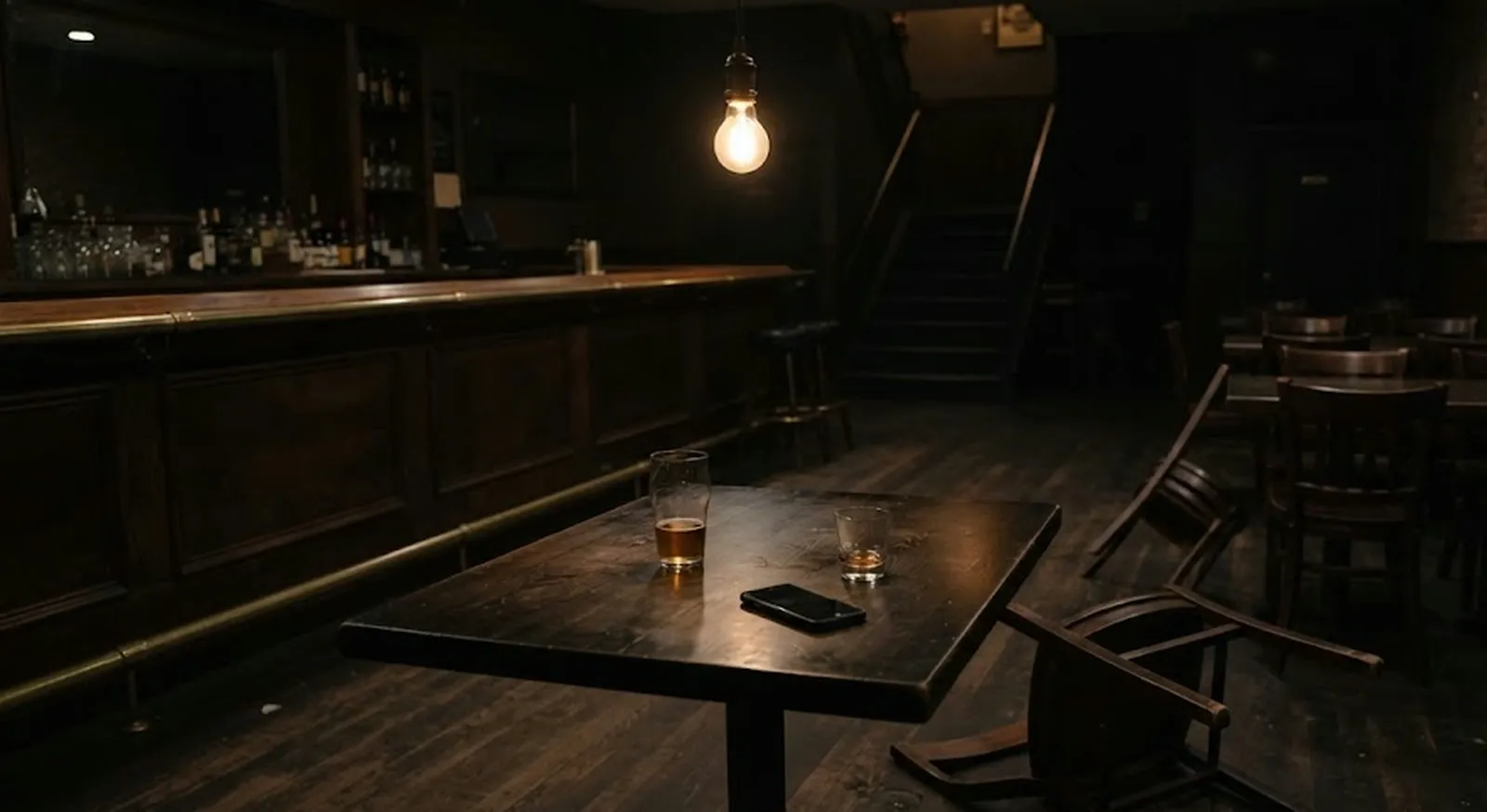
The video appeared on the Facebook page of HOS, then disappeared almost the moment regional media picked it up. That's the part that says the most. Not the singing itself - somebody filmed that and posted it themselves, proudly. It's the speed with which the same hand pulled it down once it registered how the thing looked from the outside.
The footage, according to Croatian media - "Jutarnji list" among the first - shows Croatian President Zoran Milanović in a tavern in Knin together with Marko Skejo, former commander of the 9th HOS battalion. Ustaša songs were being sung, including the one about the commanders of the Black Legion. Censored versions of the video kept circulating - in those you see Skejo with his men, but not the president.
What holds up, and what doesn't
What holds up is that the video existed, that it was published publicly by the organisation itself, and that it was then withdrawn. It also holds up that the president spoke in Knin that same day, where the country's leadership was marking "Storm".
What doesn't hold up is the simpler reading offered immediately - that the man in power is part of the choir. The video shows he was in the room. That is not the same as him singing. That distinction gets erased both by people who want a scandal and by people who want this to pass unnoticed - just for opposite reasons.
And that's exactly why the reaction, or rather its absence, is the real story. When a video surfaces of a song glorifying the Black Legion, with the head of state in the room, institutions have exactly two options: say what happened, or stay quiet and wait it out. The second option always looks cheaper - until it becomes a habit.
The Balkans know this scene by heart, in every direction and in every language. There's always a tavern, always a song that makes somebody's hair stand up, always someone explaining that it's folklore and concerns nobody. And always an institution that ought to say something and says nothing - and then that same institution wonders why nobody believes it.
The question isn't whether one man in a tavern should be the state's problem. The question is whether the state will even attempt an answer when it's asked.
The latest 10 news from this category
The question is not emotional but institutional: what does accepting European criteria mean if the verdicts of a court whose...
An economic normalisation signed in 2020 is now filed as a finished war before the General Assembly. A conflict does...
Under the trailer there is not one claim that anything in the film is untrue. There is a ledger: you...
Regimes do not spend tabloid artillery on candidates they are not worried about. Ilija Srdanović got that treatment ahead of...
The president who dissolved parliament himself is now resigning too, promising a cabinet of no more than 12 ministers and...
Eight countries, 120 million people, a motorway to Timisoara and energy connections. And one cancelled visit that says more than...
The call was about damaged furniture on a terrace. Armin Dzutovic died three days later. The internal investigation found first...
Four KLA leaders received 81 years in prison, and Albania's parliament immediately adopted a declaration calling the verdict unjust. The...
The court established responsibility for 96 killed, 303 tortured and 385 unlawfully detained. The prosecution asked for 45 years. Serbia...
Thaci and Krasniqi got 25 years each, Veseli 18, Selimi 13. The court established 385 unlawfully detained, 303 tortured and...
This site uses cookies - is that okay? Learn more
Be the first to know when Metla launches something new
Leave your email and we will write when there is a new guide or something new on Metla.