

Black Smoke Over Skopje: A Paint and Varnish Warehouse Burned Inside the Old Steelworks
23.09.2026


23.09.2026
23.09.2026
23.09.2026

23.09.2026
23.09.2026
23.09.2026
23.09.2026
22.09.2026
21.09.2026

23.09.2026

23.09.2026

22.09.2026

23.09.2026

23.09.2026

23.09.2026
23.09.2026

22.09.2026

21.09.2026
23.09.2026

23.09.2026
23.09.2026

23.09.2026

23.09.2026

23.09.2026

09.03.2026

27.02.2026

19.02.2026
23.09.2026
22.09.2026

21.09.2026

23.04.2026

23.04.2026

12.04.2026

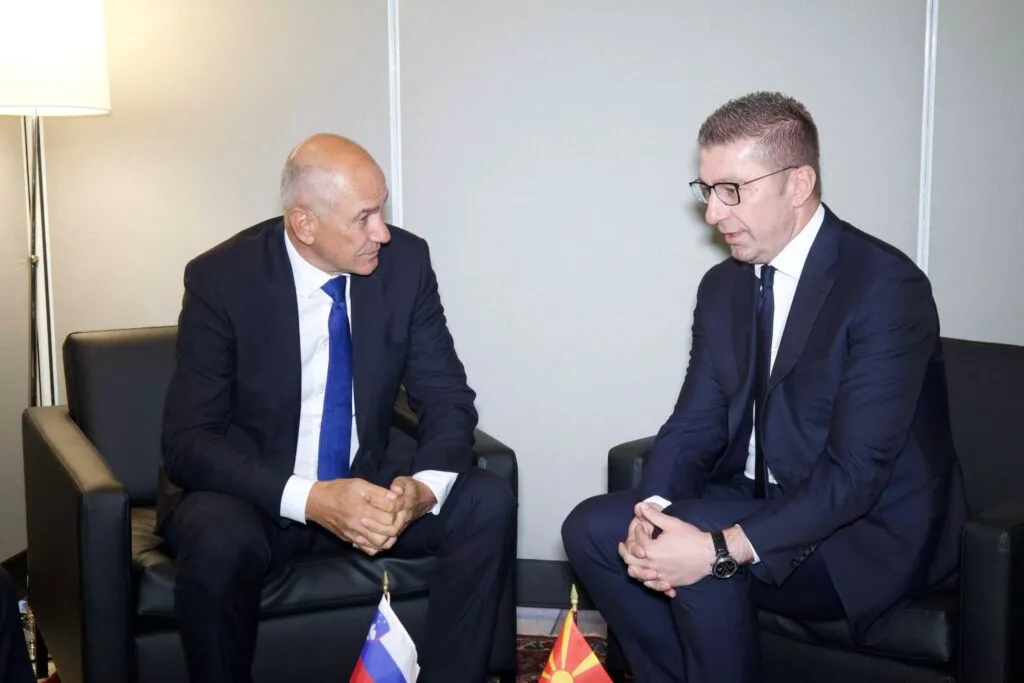
"We changed the flag, we changed the Constitution several times, we even changed the constitutional name." That is what Prime Minister Hristijan Mickoski said from New York, at a panel discussion during the "Concordia" summit held alongside the United Nations General Assembly.
His point: "We began our journey almost two and a half decades ago. And unfortunately, because of some artificial reasons, we did not manage to become part of the EU... the frustration among Macedonian citizens is enormous because in the past we made too many concessions."
He described the pressure as a form of bullying: "Some member states are trying to resolve certain bilateral issues, and not to change our institutions but to change our identity. And we are the victim of a kind of bullying: either you are in or you are out, and if you want in - here are the conditions."
The meeting with Jansa
In New York, Mickoski also met Slovenian Prime Minister Janez Jansa. The topics: Macedonia's European perspective, deepening political and economic cooperation, and current geopolitical challenges.
The message from that meeting was sharper than usual: "Our position is clear - European integration must be based on merit, on criteria met and real results, not on new bilateral conditions that have no substantive connection to European values. We are not asking for privileges and we are not asking for a shortcut. We are asking for a fair and predictable process."
The positive signals he listed
The prime minister also pointed to something he considers encouraging - the messages from the EU-Western Balkans summit in Tivat, which he said were exceptionally positive, along with a joint French and German presentation of an informal document.
"From Brussels we hear that at the next Council conclusions, this document might become something that is official EU policy. We shall see," Mickoski said.
In the meantime, he added, the country has fully aligned its foreign and security policy with the EU, and its legislation is more or less harmonised.
The other half of the visit
Most of the New York agenda was in fact not about the EU but about Washington. Mickoski met US Deputy Secretary of State Christopher Landau, having previously spoken with Marco Rubio. Also present were Assistant Secretary of State for Europe Brendan Harnahan and Deputy Assistant Secretary Daniel Lawton, whose brief covers the Balkan states.
The prime minister also met business representatives from the US defence industry.
His formulation on relations with Washington was unambiguous: "At the United Nations we vote shoulder to shoulder with our allies, the United States of America, so we would like to be - and our ambition is to become - an example for the United States of America."
What is missing from the whole list
The prime minister's diagnosis is accurate and most citizens would sign it. The flag really was changed. The Constitution really was amended. The name really was changed. And the EU really is no closer.
But nothing said in New York produces a single concrete step with a deadline. There is a description of the situation, there is a precisely named problem, there is one informal French-German document about which "we shall see", and there is a strengthened partnership with an administration that has no authority in the accession process.
The frustration is real and it is shared. The question left unanswered is what comes after it has been announced to the world - because frustration is not a policy, it is the consequence of an absent one.
Mickoski is due to address the UN General Assembly on Friday. That is the next chance for that answer to acquire some content.
The latest 10 news from this category
Andonovski admits there was no project, no study, and no figure for how many megawatts the facility would draw. The...
The video has no room, no table, no flags. In the same week the State Department redirected 52 million dollars...
The right to an opinion is not in dispute. The problem is that in certain offices the line between personal...
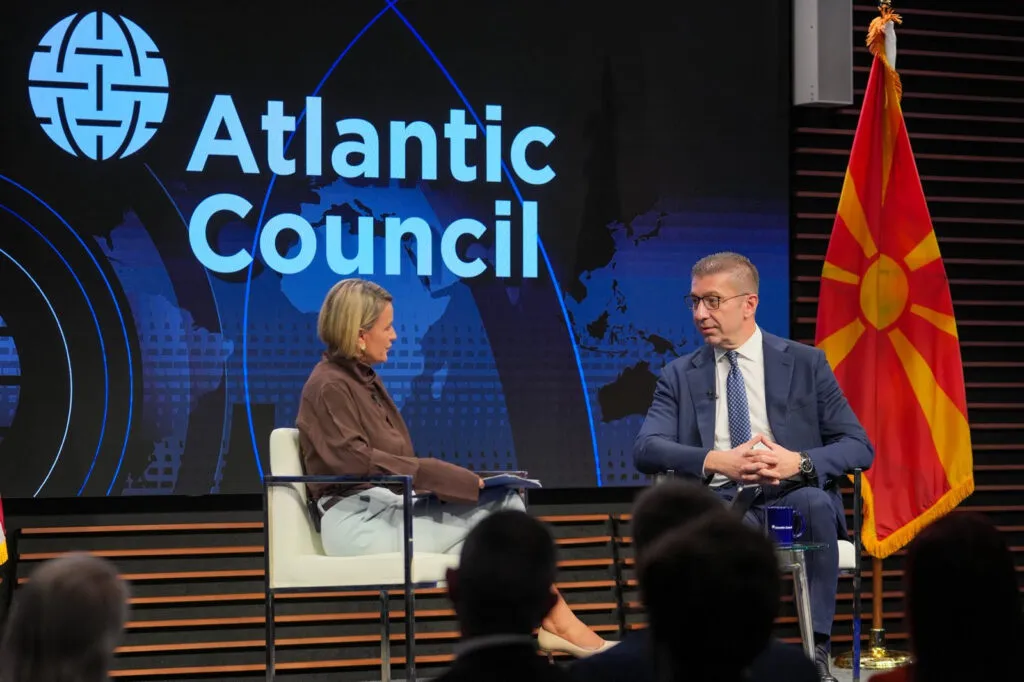
America sees us as a close friend, the prime minister says. A 200-billion portfolio, six data-centre companies, Chebren and Galishte....
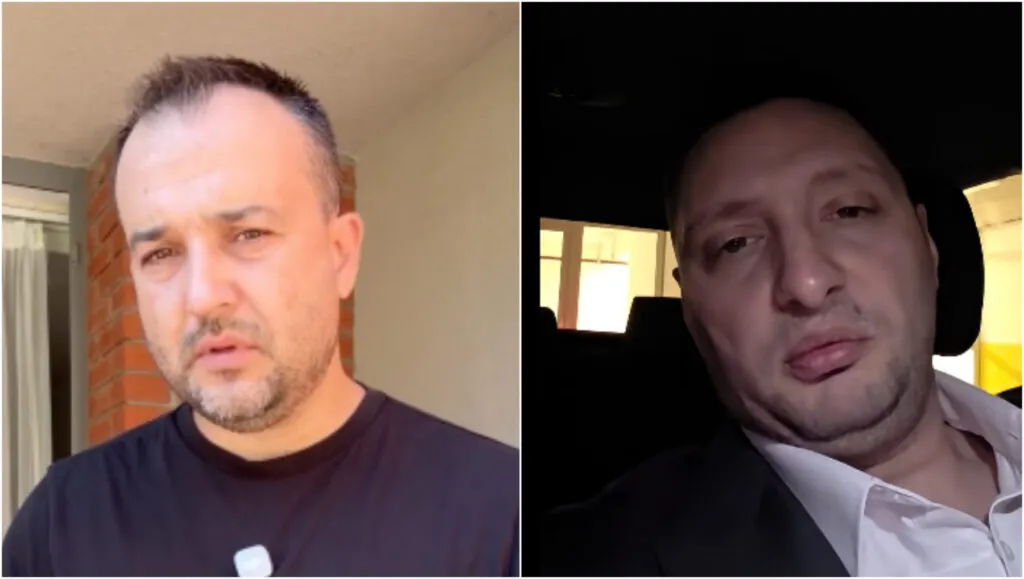
Eight days of invitations to a joint test, then "report your dealers", then a criminal complaint over photographs and the...
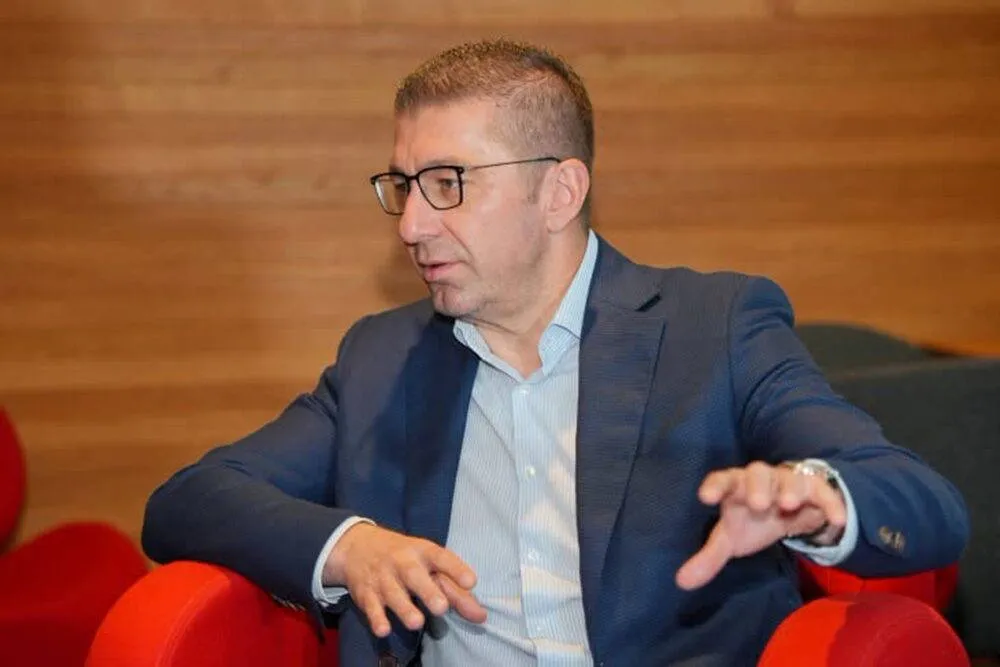
From Washington, the prime minister asks for a third party at the table so the dispute stops being bilateral. Brussels...
Mickoski lays out the chain from Washington: pipeline, power, data centres, artificial intelligence. The order of the announcements runs backwards...
Marta Kos listed the countries getting a timetable. We are not on it. What remains is the condition we know...
Monitoring by the All for Fair Trials coalition: hearings twice a year, proceedings running up to 33 months, and young...
Of 340 million denars, only 40 million came from private money - the rest came from the State Lottery. Prosecutors...
This site uses cookies - is that okay? Learn more
Be the first to know when Metla launches something new
Leave your email and we will write when there is a new guide or something new on Metla.
