


Four Injured in Crash With Police Vehicle Near Kicevo: The Statement Says Everything Except Who Is at Fault
28.08.2026


28.08.2026
28.08.2026

28.08.2026

28.08.2026

28.08.2026
28.08.2026

28.08.2026

27.08.2026

26.08.2026

28.08.2026

28.08.2026

27.08.2026

28.08.2026

28.08.2026
28.08.2026

28.08.2026

27.08.2026

26.08.2026

28.08.2026

28.08.2026

28.08.2026

28.08.2026

28.08.2026
27.08.2026

09.03.2026

27.02.2026

19.02.2026

28.08.2026

27.08.2026

26.08.2026

23.04.2026

23.04.2026

12.04.2026
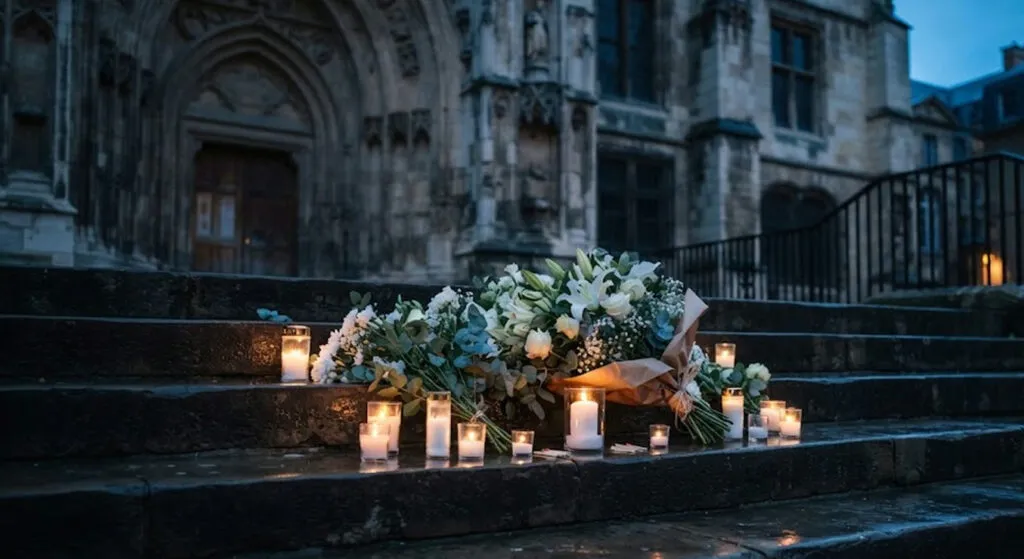
Norway's King Harald V has died at the age of 89. The royal palace in Oslo said he died peacefully on Friday at 6:35 in the morning, at the National Hospital, where he was admitted last week with a rare blood disease. Family members visited him over the final 24 hours, and citizens left flowers outside the palace. He is succeeded on the throne by his son Haakon.
He reigned for 35 years. He will be remembered as a reformer who modernised the monarchy - he married a woman without a noble title, which opened the same freedom to his children. They called him "grandfather of the nation" and "the people's king", a title his father Olav V had carried too.
The king who wept in front of the nation
In July 2011, after Anders Breivik killed eight people with a bomb in Oslo and then a further 69, mostly teenagers, on the island of Utoya, Harald addressed the nation. Weeks later he gave a speech in which he grieved with the victims and their families as a father, grandfather, husband and king. His voice shook and he was on the edge of tears. "I can only imagine the depth of your pain," he said then.
In 2016 he gave a speech still quoted today: that Norwegians come from Afghanistan, Pakistan and Poland, from Sweden, Somalia and Syria, that they believe in God, in Allah, in the Universe or in nothing at all. Not many European monarchs reached for a sentence like that in those years.
A child in exile, an athlete in old age
Born on 21 February 1937, he was three when Hitler attacked Norway. His mother fled with the children across the border into Sweden, and then to the United States at Franklin Roosevelt's invitation. After the war he returned, did his military service and studied at Oxford.
He met Sonja Haraldsen, a businessman's daughter, and waited nine years for his father's permission to marry her. He told him he would stay unmarried if he could not have Sonja. His father relented and the wedding was held at Oslo Cathedral on 29 August 1968. They were married for almost 58 years.
He was also a committed sportsman and environmentalist - one of the founders of the Norwegian branch of the World Wide Fund for Nature, which he led for 20 years, and a sailor who represented Norway at three Olympic Games.
The crises that narrowed the support
The final years were harder than the previous three and a half decades. The son of his daughter-in-law Mette-Marit, Marius Borg Hoiby, was sentenced in June to four years in prison for rape and is appealing the verdict. Before the trial began, documents emerged about Mette-Marit's contacts with Jeffrey Epstein, for which she apologised and admitted poor judgement. Two days after the trial ended she had a lung transplant for pulmonary fibrosis.
Support for the monarchy fell from 72 to 54 percent, and almost half of Norwegians think Mette-Marit should not become queen. Even so, the criticism was rarely aimed at Harald personally. The historian Trond Noren Isaksen puts it in a sentence that says a great deal about the institution: when things go wrong, people blame everything except the king.
That is the biggest question left to the new king Haakon. He inherits a throne whose popularity rested on one man rather than on the institution itself. How long can a crown live off personal affection for whoever wore it?
The latest 10 news from this category

The first visit by a CIA director to Russia since 2021. Intelligence assessments say Moscow does not feel cornered -...

The Pentagon is shifting money meant for wages and maintenance into combat operations. When an army has to choose between...

Ratcliffe landed in Moscow unannounced, the content stayed secret, and Trump called the visit semi-routine - then immediately added that...
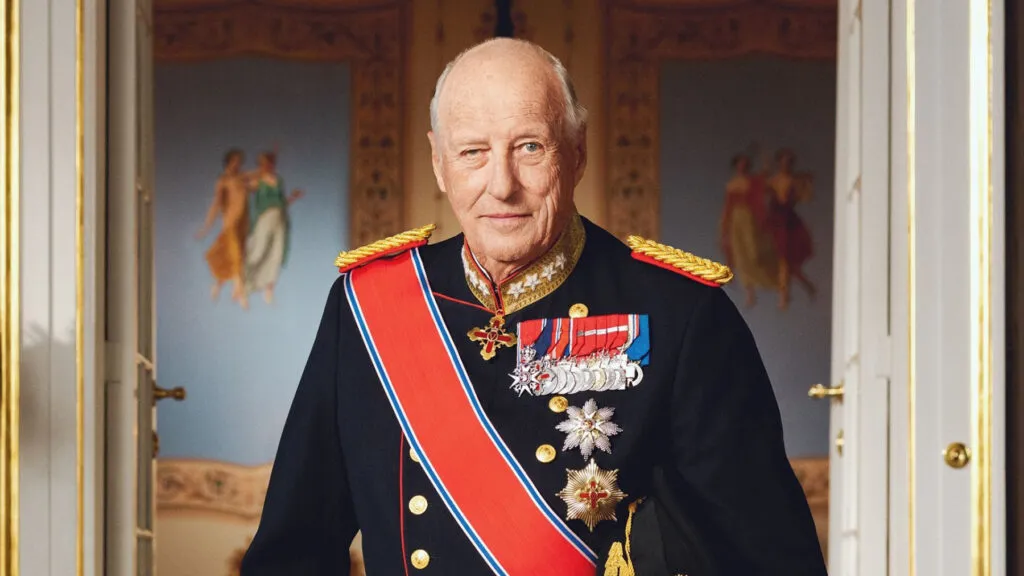
In 1968 he married a woman without royal blood and changed the equation for the whole of Europe. His death...

Seismographs read it as an earthquake. It was not. One hundred and fifteen kilometres later, 80 bridges are gone, and...

Kyiv was reportedly asked to hold fire for a few hours so the American aircraft could pass. That is not...

A Russian analyst openly claims the attacks on European ammunition plants. The German chancellor is still avoiding the word Russia....

The CIA director landed in Moscow on a military aircraft with the message that the Baltics are a red line....

Decree 604 gives the Russian state the right to take temporary control of factories and energy facilities if the owner...
The 89-year-old king has been in hospital for ten days, the regency has passed to Haakon, and Norwegians are writing...
This site uses cookies - is that okay? Learn more
Be the first to know when Metla launches something new
Leave your email and we will write when there is a new guide or something new on Metla.
