
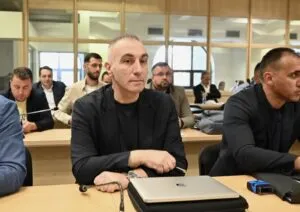
The "Lottery" Trial: 231 Pieces of Evidence, and So Far Not a Single Message Between Grubi and Bajrami
24.09.2026


24.09.2026
24.09.2026
24.09.2026
24.09.2026
24.09.2026
24.09.2026

24.09.2026
23.09.2026

22.09.2026
24.09.2026

24.09.2026

23.09.2026

24.09.2026

24.09.2026

24.09.2026

24.09.2026

23.09.2026

22.09.2026
24.09.2026

24.09.2026

24.09.2026

24.09.2026

23.09.2026

23.09.2026

09.03.2026

27.02.2026

19.02.2026
24.09.2026

23.09.2026
22.09.2026

23.04.2026

23.04.2026

12.04.2026

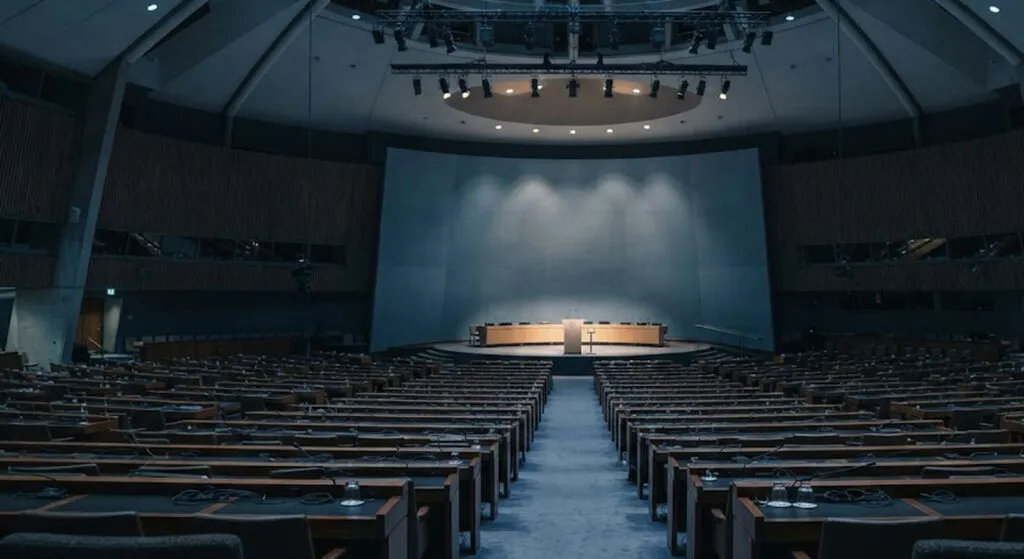
Andrej Plenković took the podium at the 81st session of the UN General Assembly and began diplomatically - with the enlargement of the European Union. South-Eastern Europe, he said, "remains an unfinished part of the European project". A few sentences later it became clear which address the message was meant for.
"Reconciliation becomes possible when responsibility for past crimes is acknowledged and their glorification is rejected. That standard allows no national exceptions," the Croatian prime minister said. Then he spoke the name that has kept coming back in regional news all week.
"Ratko Mladić is a convicted war criminal, responsible for the genocide in Srebrenica, the first genocide in Europe since the Holocaust. The military and official honours bestowed on him in Serbia were an insult to his victims and to the verdicts of international courts," Plenković said. The participation of state representatives and the public approval that accompanied the ceremony, he added, are "in complete contradiction with the values of the Union that Serbia wants to join".
Belgrade had its answer ready before the speech. President Aleksandar Vučić recently said there was no one in Europe who hadn't spoken up about the funeral, "as if the funeral could have been avoided, or we should have buried the man in a dog cemetery". According to him, there were ordinary soldiers at the funeral, no great honours, and three or four ministers came to offer condolences. Europeans, Vučić claims, were actually appalled by the scene and by the number of people who turned up. The Hague, he added, acted "extremely immorally", because it knew the man was dying and wouldn't let him die in his own country.
So the same funeral now has two versions. Zagreb talks about military and state honours, Belgrade about ordinary soldiers and ministers who came to offer condolences. But the Srebrenica verdict doesn't depend on which version sounds more convincing in New York - it is final, and that is exactly what Plenković invoked.
The question is what comes next. Croatia is an EU member, and its voice carries weight every time a new chapter needs to be opened. Will Brussels turn this sentence into a condition for Serbia, or will it remain just another Balkan speech in a hall that has heard them all?
The latest 10 news from this category
Before the General Assembly, Vučić complained of double standards over Kosovo, attacked Croatia and looked to Trump to save the...

The Serbian president told the great powers they demand respect for rules they trampled themselves, from Kosovo to the 1999...
The question is not emotional but institutional: what does accepting European criteria mean if the verdicts of a court whose...
An economic normalisation signed in 2020 is now filed as a finished war before the General Assembly. A conflict does...
Under the trailer there is not one claim that anything in the film is untrue. There is a ledger: you...
Regimes do not spend tabloid artillery on candidates they are not worried about. Ilija Srdanović got that treatment ahead of...
The president who dissolved parliament himself is now resigning too, promising a cabinet of no more than 12 ministers and...
Eight countries, 120 million people, a motorway to Timisoara and energy connections. And one cancelled visit that says more than...
The call was about damaged furniture on a terrace. Armin Dzutovic died three days later. The internal investigation found first...
Four KLA leaders received 81 years in prison, and Albania's parliament immediately adopted a declaration calling the verdict unjust. The...
This site uses cookies - is that okay? Learn more
Be the first to know when Metla launches something new
Leave your email and we will write when there is a new guide or something new on Metla.
