

State Lottery: Two Arrests Over an 80-Million-Denar Embezzlement, While the Star Witness in Court Changed His Story
06.10.2026


06.10.2026

06.10.2026

06.10.2026
06.10.2026
06.10.2026

06.10.2026

06.10.2026

06.10.2026

05.10.2026

06.10.2026

06.10.2026

05.10.2026

06.10.2026

06.10.2026

06.10.2026

06.10.2026

05.10.2026

04.10.2026

06.10.2026

06.10.2026
06.10.2026

06.10.2026

06.10.2026

05.10.2026

09.03.2026

27.02.2026

19.02.2026

06.10.2026

05.10.2026

04.10.2026
06.10.2026
05.10.2026
04.10.2026

23.04.2026

23.04.2026

12.04.2026

The man once considered Elizabeth II's favourite son is once again seeking exactly the kind of attention the royal household is running from. Andrew Mountbatten-Windsor, the former Duke of York, has launched legal proceedings against Thames Valley Police. Not to prove his innocence, but to challenge the search warrants under which he was arrested.
On 19 February 2026, the day he turned 66, Andrew was detained on suspicion of misconduct in public office. It was the first arrest of a senior member of the British royal family in modern history. The trigger was the millions of Jeffrey Epstein documents released by the US Department of Justice: they include emails and files suggesting that in 2010, while serving as the UK's special trade envoy, the former duke forwarded confidential business reports to Epstein.
On the day of the arrest, police searched Wood Farm, his residence on the royal Sandringham estate, and Royal Lodge, his former home in Windsor. After questioning, Andrew was released but remained under formal investigation. King Charles III said publicly at the time that "the law must take its course" and that the Crown would not interfere.
A challenge to the warrants, not the charge
Now Andrew is seeking a judicial review of the warrants, approved by an Old Bailey judge, that allowed police into both homes. A closed hearing is scheduled at the High Court on Thursday to decide whether the documents in his application can be made public. Thames Valley Police oppose that.
The British press notes that this is the first time a member of the royal household has challenged the lawfulness of a legal procedure since the trial of Charles I in 1649. Back then the king lost the case, and then his head. Andrew, for now at least, risks only another cycle of front pages.
And that is exactly Buckingham Palace's problem. Charles III has spent months building an institutional wall between the Crown and his brother. Andrew knocks it down with every new filing. The man who started losing everything in 2019, after the disastrous interview about Virginia Giuffre's allegations, clearly still won't accept that he is out of the game - and every move he makes swings the camera back to the family that wants to forget him.
One rule for all, or a side door for the Windsors?
The real question isn't whether Andrew wins. It's whether the public will ever even find out what he's asking for. If the hearing stays behind closed doors, an old debate will reopen: do members of the royal family get procedural discretion that an ordinary citizen under investigation would never get?
The Balkans know the scene well: the powerful suing whoever is investigating them. We'll see whether the British courts show that over there the rules apply equally to everyone - or that there, too, a surname sometimes opens doors that stay locked for everyone else.
The latest 10 news from this category

Oman Air had grounded him over extremist views, then Flydubai hired him and put him in the cockpit of a...
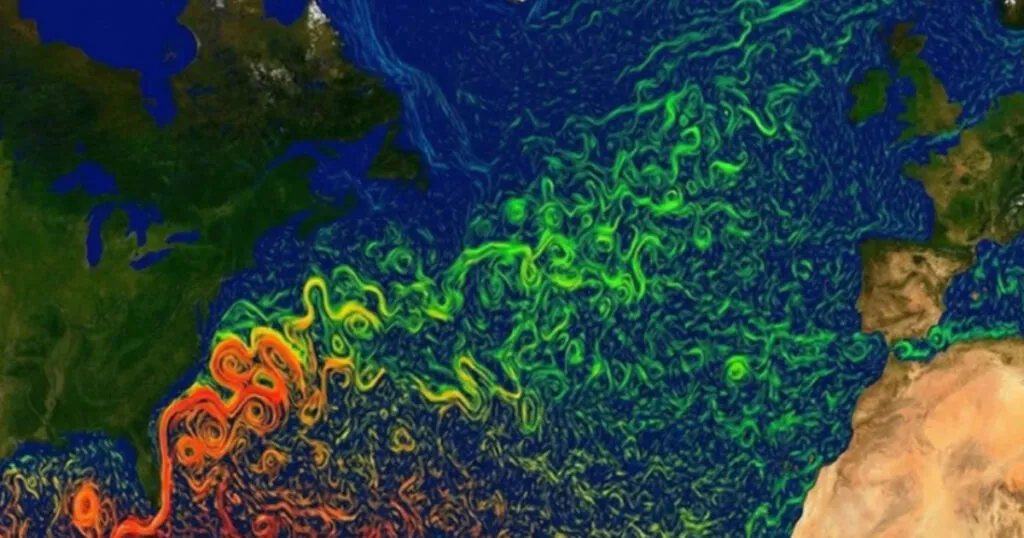
Iceland, the Netherlands, Finland and Britain are already calculating what it would mean if the ocean pump that keeps Europe...
European diplomats called it blackmail - and then gave in within a day. If Berlin and Paris crack after a...

The official version says it all started with a broken test tube. A well-known Russian epidemiologist calls that ridiculous, and...

While Washington and Moscow talk about territory and a ceasefire, a package of refineries also lies on the table -...
The wrong tournament, a war in which he "decided to go further", polls that are "fake" and advice to go...

Suspended for extremist views, and then a pilot at two more airlines. A five-thousand-metre drop in two minutes and two...
A shelter alert on phones, fighters in the air, a closed airport, and in the end nobody found anything. This...

Around 60 researchers, opened family archives and one uncomfortable truth: the Orange dynasty didn't just tolerate slavery, it actively supported...

Нафтата денес е 67% поскапа во однос на периодот пред војната со Иран, тој удар постепено се пренесува низ целата...
This site uses cookies - is that okay? Learn more
Be the first to know when Metla launches something new
Leave your email and we will write when there is a new guide or something new on Metla.