
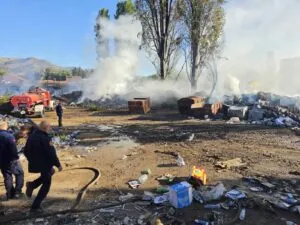
Fire by the railway in Prilep: residents watched black smoke over textile waste, "Komunalec" says - a small part, no danger
04.10.2026


04.10.2026
04.10.2026

04.10.2026

04.10.2026

04.10.2026
04.10.2026

04.10.2026

03.10.2026

02.10.2026

04.10.2026

04.10.2026

03.10.2026

04.10.2026

04.10.2026

04.10.2026

04.10.2026

03.10.2026

02.10.2026

04.10.2026

04.10.2026

04.10.2026
04.10.2026

04.10.2026
03.10.2026

09.03.2026

27.02.2026

19.02.2026

04.10.2026

03.10.2026

02.10.2026
02.10.2026
22.08.2026

20.08.2026

23.04.2026

23.04.2026

12.04.2026

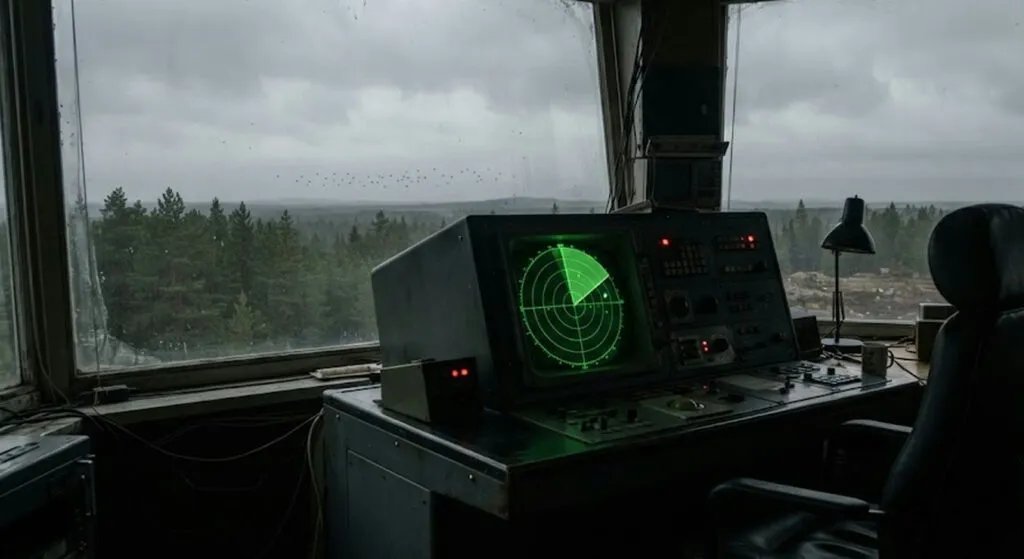
On the morning of October 3 Lithuania scrambled NATO fighter jets, issued an air-danger warning and temporarily closed the controlled airspace over Vilnius. The reason: radar had picked up an unidentified object moving from the direction of Belarus. Residents of the Vilnius district and the Ukmergė area received a message on their mobile phones to be ready to seek shelter.
The head of Lithuania's National Crisis Management Centre, Vilmantas Vitkauskas, said the parameters of the radar return resembled a drone, but that this could not be confirmed at that moment. "An object that could pose a danger and was approaching the Lithuanian border was registered on our radars. An air defence mission was activated and fighters were scrambled to identify the target," he said.
The fighters arrived, the object was gone
At around 10:15, three planes flying to the Lithuanian capital were circling over Dzūkija, and a Polish LOT plane from Warsaw was diverted to Kaunas. NATO fighters went to where the radar had last seen the object. They found nothing. At around 10:30 the military lifted the alert and lowered the warning level from "yellow" back to "white". "The fighters did not register any object in that area," the Lithuanian military said, and an air force helicopter was to inspect the spot where the signal disappeared. Vilnius airport then resumed normal operations.
The authorities did not rule out even the most banal possibility: that the radar had picked up a flock of birds. Vitkauskas said there had been similar cases before. A smugglers' weather balloon was judged less likely because of the wind direction. Citizens reported seeing or hearing something moving towards Jonava, but that information, Vitkauskas stressed, did not come from radars, only from people on the ground.
Why nobody takes chances
The nerves have a basis. Less than three weeks earlier, on the night of September 14 to 15, a drone from the direction of Belarus really did fly into Lithuanian airspace and was shot down with a missile by Italian Eurofighters on a NATO mission. Lithuanian authorities later said the craft was carrying explosives, and President Gitanas Nausėda said it was a Russian "Gerbera"-type drone, intended for an attack on Ukraine, that had veered off course.
This is what daily life looks like on NATO's eastern flank: one dot on the radar is enough for fighters in the air, a closed airport and a shelter message on your phone. Better birds than explosives. But how many times can a society hear the siren before people stop taking it seriously?
The latest 10 news from this category

The wrong tournament, a war in which he "decided to go further", polls that are "fake" and advice to go...
Suspended for extremist views, and then a pilot at two more airlines. A five-thousand-metre drop in two minutes and two...

Around 60 researchers, opened family archives and one uncomfortable truth: the Orange dynasty didn't just tolerate slavery, it actively supported...

Нафтата денес е 67% поскапа во однос на периодот пред војната со Иран, тој удар постепено се пренесува низ целата...

Со децении Франција се поставуваше како еден од гласните светски бранители на демократијата, човековите права и правото на протест. Од...

Washington is considering halting diesel exports a few weeks before the congressional elections, while asking Europe to release its stocks...
For years he presented himself as a family man who loved skiing and long motorbike trips. According to the investigation,...
Posters no one has officially confirmed, a photo captioned "Narva area. 2026" and a ship stopped in the Gulf of...

The building was empty and under reconstruction, and the fire spread over around 2,000 square metres. There's no link to...

Some sixty researchers, five volumes and access to the Crown's private archives - for one sentence few royal houses would...
This site uses cookies - is that okay? Learn more
Be the first to know when Metla launches something new
Leave your email and we will write when there is a new guide or something new on Metla.