
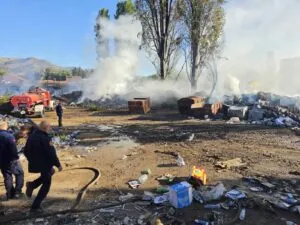
Fire by the railway in Prilep: residents watched black smoke over textile waste, "Komunalec" says - a small part, no danger
04.10.2026


04.10.2026
04.10.2026

04.10.2026

04.10.2026

04.10.2026

04.10.2026

04.10.2026

03.10.2026

02.10.2026

04.10.2026

04.10.2026

03.10.2026

04.10.2026

04.10.2026

04.10.2026
04.10.2026

03.10.2026

02.10.2026

04.10.2026

04.10.2026

04.10.2026

04.10.2026

04.10.2026
03.10.2026

09.03.2026

27.02.2026

19.02.2026

04.10.2026

03.10.2026

02.10.2026
02.10.2026
22.08.2026

20.08.2026

23.04.2026

23.04.2026

12.04.2026

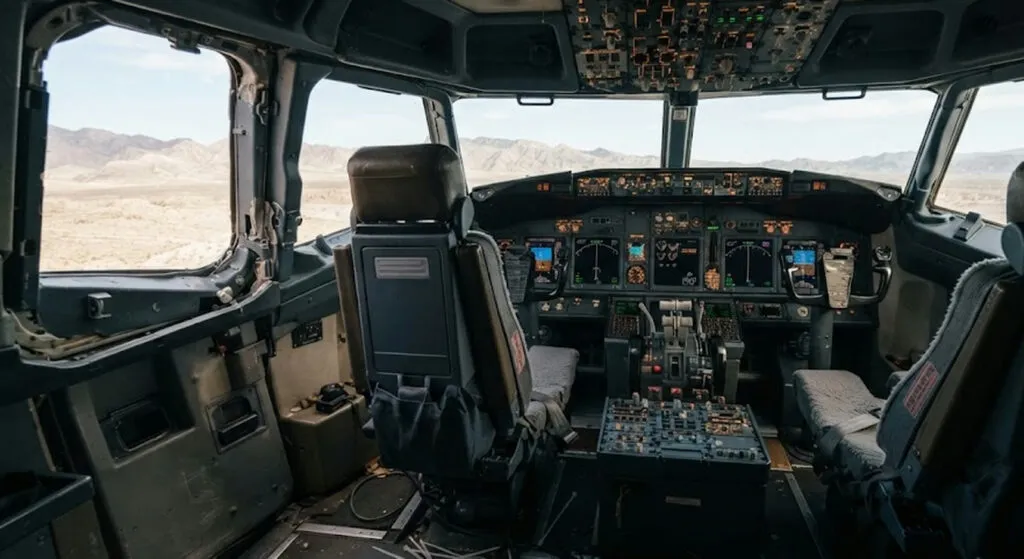
The man who on Wednesday tried to bring down the Flydubai plane from Dubai to Tel Aviv was not an unknown case. Oman's national carrier, Oman Air, removed him from flying duties last year because of his extremist views, two informed sources say. He then flew for Royal Air Maroc, and had worked at Flydubai for only eight months.
The man is Hamam al-Hamami, an Omani citizen born in the United Arab Emirates to an Omani father and a Syrian mother. His LinkedIn profile said he had worked for Oman Air for seven years, leaving in February 2025, and then flew for the Moroccan carrier from June 2025 to January 2026. A diplomat from the region says that at Oman Air he was suspended from flight training precisely because of his radical views and moved to another position.
Two minutes, five thousand metres
In the cockpit, al-Hamami attacked the other pilot, Indian national Smit Machar, with a knife and tried to crash the plane carrying more than 170 passengers, mostly Israelis. In just two minutes the plane dropped sharply by more than five thousand metres, and the crew sent out an international hijack signal. The badly injured pilot fought back, and passengers and cabin crew managed to get into the cockpit, overpower the attacker and tie him up with cables and plastic zip ties.
The plane was saved by two pilots who were on the flight only because they were due to fly the plane back from Tel Aviv to Dubai. "They don't carry two extra pilots on every flight," passenger Daniel Schlichter recounted. One of them literally jumped over the people holding the attacker, got into the cockpit and took the controls, and then the second joined him. It took them maybe ten minutes or more to stabilise the plane. About 45 minutes later they announced they would land in Tabuk, in Saudi Arabia. Three days later, their names have still not been released.
Al-Qaeda on LinkedIn
Nine hours after the attack, two posts appeared on his LinkedIn profile. The first contained footage from the cockpit of a Boeing 737 Max - the same model as the plane that landed in Tabuk - including a clip from Dubai airport in which the camera zooms in on a plane of the Israeli airline El Al. The video ends with photos of Ayman al-Zawahiri, who took over the leadership of al-Qaeda after the killing of Osama bin Laden, and of Humam Khalil Abu-Mulal al-Balawi, the suicide bomber who in 2009 killed nine people, including seven CIA officers and contractors. It is still unclear who posted them and whether they had been scheduled in advance. The profile was then deleted.
An analysis of almost 3,000 deleted posts on his X profile from 2021 and 2022 showed a man with deeply rooted religious and markedly misogynistic convictions. He wrote that his mother had long been looking for a wife for him who would agree to wear the niqab and stop working after the wedding. "One after another they all refused. And then my mother told them her son is a pilot - and suddenly they all agreed," he wrote in February 2022.
Who checks who is sitting in the cockpit?
Israeli Prime Minister Benjamin Netanyahu said the suspect is believed to have undergone "radical Islamist indoctrination". Shin Bet, Mossad, the army and the Transport Ministry are investigating how a citizen of Oman, a country that doesn't even recognise Israel, ended up in the crew of a flight to Tel Aviv despite Israel's strict aviation security measures. The UAE's Attorney General has opened an investigation into whether the attack was terrorism-related and whether it was planned in advance. Flydubai is not commenting "while the official investigation is ongoing".
Suspended for radicalism at one carrier, then a job at two more - and the man sat at the controls of a passenger plane again. If the system for vetting pilots didn't catch this, what exactly does it catch? And how many times will passengers have to rely on the luck of two pilots happening to be on the same flight?
The latest 10 news from this category

The wrong tournament, a war in which he "decided to go further", polls that are "fake" and advice to go...
A shelter alert on phones, fighters in the air, a closed airport, and in the end nobody found anything. This...

Around 60 researchers, opened family archives and one uncomfortable truth: the Orange dynasty didn't just tolerate slavery, it actively supported...

Нафтата денес е 67% поскапа во однос на периодот пред војната со Иран, тој удар постепено се пренесува низ целата...
Со децении Франција се поставуваше како еден од гласните светски бранители на демократијата, човековите права и правото на протест. Од...

Washington is considering halting diesel exports a few weeks before the congressional elections, while asking Europe to release its stocks...
For years he presented himself as a family man who loved skiing and long motorbike trips. According to the investigation,...

Posters no one has officially confirmed, a photo captioned "Narva area. 2026" and a ship stopped in the Gulf of...

The building was empty and under reconstruction, and the fire spread over around 2,000 square metres. There's no link to...

Some sixty researchers, five volumes and access to the Crown's private archives - for one sentence few royal houses would...
This site uses cookies - is that okay? Learn more
Be the first to know when Metla launches something new
Leave your email and we will write when there is a new guide or something new on Metla.