

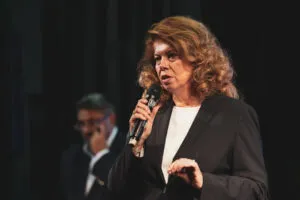
Jotova to Mickoski: Talks "Without Ultimatums" - but First Skopje Must Forget the Issue Is Bilateral
05.10.2026


05.10.2026

05.10.2026
05.10.2026
05.10.2026
05.10.2026
05.10.2026

05.10.2026

05.10.2026
04.10.2026

05.10.2026

05.10.2026

04.10.2026

05.10.2026

05.10.2026

05.10.2026

05.10.2026
04.10.2026
03.10.2026

05.10.2026

05.10.2026

05.10.2026

05.10.2026

05.10.2026

05.10.2026

09.03.2026

27.02.2026

19.02.2026

05.10.2026
04.10.2026
04.10.2026
05.10.2026
04.10.2026

02.10.2026

23.04.2026

23.04.2026

12.04.2026

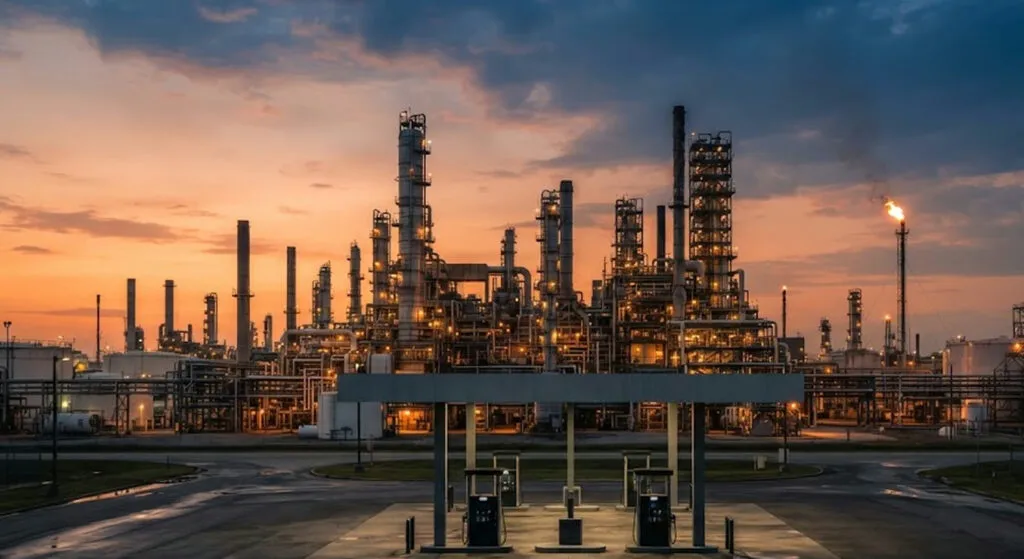
Until now, the negotiations between Washington and Moscow on ending the war in Ukraine have been conducted in the vocabulary of generals and diplomats: territory, security guarantees, sanctions, a ceasefire. According to the American press, something far more profitable has now entered the talks - the international assets of Russian oil giant Lukoil, valued at around 20 billion dollars.
These aren't a few petrol stations by the highway. The package includes oil and gas fields from Central Asia to Mexico, more than three billion barrels of proven and probable reserves, thousands of petrol stations around the world and refineries in Europe - among them plants in Bulgaria and Romania. Part of what is being haggled over in the Kremlin, then, sits right in our neighbourhood.
Putin raised the topic himself
According to people familiar with the talks, Vladimir Putin personally raised the question of the sale at his meeting with Steve Witkoff and Jared Kushner in the Kremlin on 5 September. His idea, according to one source, was for the deal to serve as a demonstration to the Russian public that Moscow can do business with America again. Peace, then, is supposed to come together with proof of a successful transaction.
The buyers are close to the negotiators
The main candidate for the assets is American billionaire Todd Boehly, co-owner of the Los Angeles Dodgers baseball club. Boehly previously gave a total of two million dollars to projects linked to Donald Trump - one million to a political committee supporting Trump and another million through his company for the presidential inauguration. His consortium also includes Qatari businessmen Moutaz and Ramez Al Khayyat, whose family already does business with Kushner and Ivanka Trump. Together they are also developing a large luxury tourism project - in Albania.
The second big player is expected to be a fund linked to Sheikh Tahnoun bin Zayed Al Nahyan, the United Arab Emirates' national security adviser and the president's brother. Funds under his control are linked to Kushner's investment firm Affinity Partners, and another structure close to him bought a large stake in the Trump family's crypto company World Liberty Financial, which Witkoff co-founded. The American press notes, however, that there is no evidence Witkoff or Kushner would personally profit from the sale, and Witkoff's representative said he has no financial interest in the deal and no conflict of interest.
The state is both buyer and judge
The strangest part is that the American state itself is included in the consortium - the International Development Finance Corporation (DFC), which according to earlier reports could get around 15 per cent of the new company set up for the takeover. A senior administration official confirmed that Witkoff and Kushner also took part in negotiating the terms of the state's stake, so that the US would get a substantial upfront payment and a share of future profits. That puts Washington in a double role: one part of the state becomes an investor and co-owner, while another part has to decide whether to grant regulatory approval and a sanctions exemption, without which the deal practically can't go through. So who is going to say "no" to whom?
Sanctions as a money machine
It's precisely the American sanctions that make the story so sweet for the buyers. Lukoil put its international assets up for sale after it came under sanctions - which reduced the number of possible buyers and crashed the value of the package. If Washington approves the sale and lets the new owner operate without those restrictions, assets bought cheaply could be worth far more almost immediately. Boehly, meanwhile, is trying to push out the American investment firm Carlyle, which has already reached a deal for part of the assets but has been waiting months for approval from US authorities.
Peace with an invoice
The Trump administration calculates that opening up big American-Russian business deals could give the Kremlin an extra motive to compromise. American negotiators also believe the Lukoil deal would increase energy supply and lower world prices. For Putin, the calculation is different: concrete proof that a political agreement with Washington opens the doors of Western capital and markets to Russian companies.
The deal hasn't been closed yet. It needs approval from both the US authorities and the Kremlin, and the White House, the US Treasury and Lukoil did not comment on the reports. But the framework is clear: alongside territory, guarantees and a ceasefire, 20 billion dollars' worth of oil assets now lies on the negotiating table. When the big players agree on peace and refineries in neighbouring Bulgaria change owners as part of a package, will anyone in the region even be asked?
The latest 10 news from this category
European diplomats called it blackmail - and then gave in within a day. If Berlin and Paris crack after a...

The official version says it all started with a broken test tube. A well-known Russian epidemiologist calls that ridiculous, and...
The wrong tournament, a war in which he "decided to go further", polls that are "fake" and advice to go...
Suspended for extremist views, and then a pilot at two more airlines. A five-thousand-metre drop in two minutes and two...
A shelter alert on phones, fighters in the air, a closed airport, and in the end nobody found anything. This...
Around 60 researchers, opened family archives and one uncomfortable truth: the Orange dynasty didn't just tolerate slavery, it actively supported...
Нафтата денес е 67% поскапа во однос на периодот пред војната со Иран, тој удар постепено се пренесува низ целата...
Со децении Франција се поставуваше како еден од гласните светски бранители на демократијата, човековите права и правото на протест. Од...
Washington is considering halting diesel exports a few weeks before the congressional elections, while asking Europe to release its stocks...
For years he presented himself as a family man who loved skiing and long motorbike trips. According to the investigation,...
This site uses cookies - is that okay? Learn more
Be the first to know when Metla launches something new
Leave your email and we will write when there is a new guide or something new on Metla.