


Jotova to Mickoski: Talks "Without Ultimatums" - but First Skopje Must Forget the Issue Is Bilateral
05.10.2026


05.10.2026

05.10.2026
05.10.2026
05.10.2026

05.10.2026
05.10.2026

05.10.2026

05.10.2026

04.10.2026

05.10.2026

05.10.2026

04.10.2026

05.10.2026

05.10.2026

05.10.2026

05.10.2026

04.10.2026

03.10.2026

05.10.2026

05.10.2026

05.10.2026

05.10.2026

05.10.2026

05.10.2026

09.03.2026

27.02.2026

19.02.2026

05.10.2026

04.10.2026

04.10.2026
05.10.2026
04.10.2026

02.10.2026

23.04.2026

23.04.2026

12.04.2026

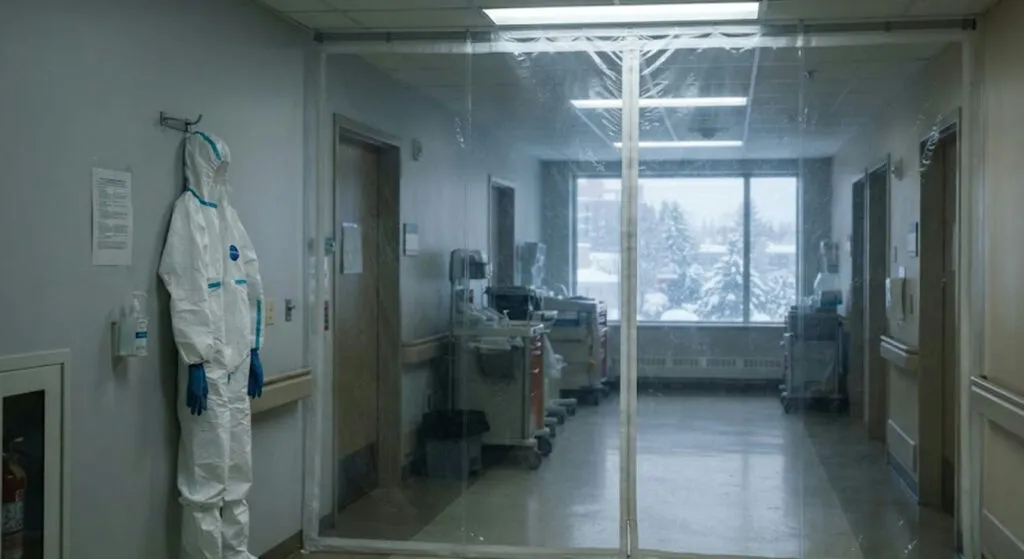
In Shelekhov, a small town in Siberia's Irkutsk region, a young lab technician from the Irkutsk Anti-Plague Institute has died. Darya Shipilova was hospitalised with severe pneumonia and put on a ventilator, and died a few days later. Since then official Russia has applied its favourite tactic: as few words as possible.
Regional governor Igor Kobzev refuses to name the disease - for him it is "a dangerous infectious disease". All public events in the region have been cancelled. The head of Russia's sanitary service, Anna Popova, personally travelled from Moscow, some 4,200 kilometres away. Doctors and medical staff openly talk about plague among themselves, but that diagnosis appears nowhere in the official medical documents.
A broken test tube or an expedition?
According to one version, on 25 September Shipilova broke a test tube containing a live sample of the bacterium. According to the other, the symptoms appeared after she returned from a field expedition in Buryatia, near the border with Mongolia, where there is a natural reservoir of the disease. Well-known Russian epidemiologist Mikhail Favorov dismisses the test-tube story: "That's ridiculous. Someone working at the Irkutsk Anti-Plague Institute wears a protective suit. If you break a test tube, the probability of infection is very small." And he adds: "This is absolutely frightening. They won't tell us what actually happened."
Closed hospitals and armed escorts
Although the regional authorities tried to reassure the public, the numbers say otherwise. Officially, 197 people have been identified as having been in direct or indirect contact with the deceased, and 189 of them were urgently hospitalised. According to independent Russian media, three city hospitals in Irkutsk, the Ivano-Matreninskaya children's hospital and a city maternity ward have been placed under strict quarantine. One husband was not allowed into the delivery room, even though he had previously arranged and paid for an accompanied birth - the doctors cited the plague risk directly.
Even more telling: since 1 October, all ambulances taking contacts for testing and isolation have been driving under armed escort by FSB patrols. At the Irkutsk Aluminium Smelter in Shelekhov, masks are mandatory for all workers, and director Artyom Fominykh openly admitted that contradictory information is circulating around the town. On the morning of 3 October, the town administration of neighbouring Baikalsk urged residents not to travel to Shelekhov for the time being because of a confirmed death from plague - and then the post vanished without any explanation.
Governor Kobzev insists that none of those hospitalised has symptoms so far and that the tests are negative. Maybe so. But when the FSB escorts ambulances and warnings are deleted from official channels, it's hard to believe the situation is "stable". There have also been reports that antibiotics have run out in the region, sending frightened residents to pharmacies looking for help.
Pneumonic plague is the rarest but also the most dangerous form of infection with the bacterium Yersinia pestis. Unlike bubonic plague - the medieval "Black Death", which was passed to humans mainly through bites from infected rodent fleas - pneumonic plague spreads directly from person to person through droplets, like a severe flu. According to the World Health Organization, if antibiotics aren't taken within the first 24 hours of symptoms appearing, the death rate is almost 100 per cent.
Anyone who remembers Chernobyl knows that in an accident like this the most dangerous thing is often not the threat itself, but the silence of the authorities. Will Moscow say what really happened in Shelekhov, or will the closed hospitals tell the story?
The latest 10 news from this category
European diplomats called it blackmail - and then gave in within a day. If Berlin and Paris crack after a...

While Washington and Moscow talk about territory and a ceasefire, a package of refineries also lies on the table -...

The wrong tournament, a war in which he "decided to go further", polls that are "fake" and advice to go...

Suspended for extremist views, and then a pilot at two more airlines. A five-thousand-metre drop in two minutes and two...
A shelter alert on phones, fighters in the air, a closed airport, and in the end nobody found anything. This...

Around 60 researchers, opened family archives and one uncomfortable truth: the Orange dynasty didn't just tolerate slavery, it actively supported...

Нафтата денес е 67% поскапа во однос на периодот пред војната со Иран, тој удар постепено се пренесува низ целата...
Со децении Франција се поставуваше како еден од гласните светски бранители на демократијата, човековите права и правото на протест. Од...

Washington is considering halting diesel exports a few weeks before the congressional elections, while asking Europe to release its stocks...
For years he presented himself as a family man who loved skiing and long motorbike trips. According to the investigation,...
This site uses cookies - is that okay? Learn more
Be the first to know when Metla launches something new
Leave your email and we will write when there is a new guide or something new on Metla.