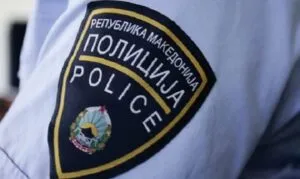
Police officer from Drachevo drove without ever passing a driving test: Who checks the people who check everyone else?
18.10.2026


18.10.2026
18.10.2026
18.10.2026
18.10.2026
18.10.2026

18.10.2026
18.10.2026
18.10.2026
18.10.2026

18.10.2026

18.10.2026

17.10.2026

18.10.2026
18.10.2026

18.10.2026

18.10.2026

17.10.2026
16.10.2026
18.10.2026

18.10.2026
18.10.2026
18.10.2026
18.10.2026

18.10.2026
18.10.2026
18.10.2026
17.10.2026
17.10.2026
15.10.2026
13.10.2026

23.04.2026

23.04.2026

12.04.2026

Ratko Mladic died in detention in The Hague, in his 84th year, as a man serving a final life sentence for the genocide in Srebrenica. That is the fact. Everything else that happened across the region over the next twenty-four hours matters more than the death itself - because it showed who, thirty years on, still refuses to read the verdict.
In the towns of Republika Srpska, several hundred people, mostly young, came out onto the streets with torches. In Zvornik and Visegrad his name was chanted and fireworks were set off. In Novi Sad and Belgrade - the same. These are not people who remember Mladic; they are people who were children, or not yet born, when his army was besieging Sarajevo. Somebody taught them.
A prayer service in Banja Luka, a massacre in Sarajevo - the same day
A prayer service was organised at the Orthodox church in Banja Luka, and Milorad Dodik attended. In front of reporters he said Mladic was a great figure for the Serbian people and that "the people cannot be forbidden from remembering him". The entity's prime minister Savo Minic went a step further - he confirmed that for him too Mladic is some kind of hero, then immediately added that he has to be careful what he says. Why? Because in Bosnia and Herzegovina, glorifying convicted war criminals is a criminal offence carrying up to five years in prison.
A man who publicly says he is watching his words because the law punishes them knows exactly what he is doing. That is not emotion spilling over. That is calculation.
And on that same 28 August, Sarajevo was marking 31 years since the second Markale market massacre, when a shell fired from the positions of Mladic's army killed 43 people and wounded more than 80. That crime, together with the genocide in Srebrenica, was the direct trigger for the NATO intervention - the air campaign that opened the way for the ground offensive and the Dayton negotiations. In other words: the thing that actually stopped the war. In one city they were lighting candles for the victims, in the other torches for the man who sent the shells.
Opposition and government - the same tune
The most interesting detail is not Dodik. He is predictable. What is interesting is that the most prominent opposition figures also paid tribute to Mladic - the mayor of Banja Luka Drasko Stanivukovic, along with the SDS candidates for president of Republika Srpska and for the BiH Presidency, Branko Blanusa and Mladen Bozovic. They took part in a prayer service at a monastery on Ozren.
So: government and opposition, different programmes, different electoral lists, and on this question - not one millimetre of difference. When the entire political spectrum of an entity stands in the same place around a man convicted of genocide, the question is no longer a party one. The question is what those young people with the torches are being offered as an alternative.
The vice-president of Republika Srpska, Camil Durakovic, published the footage from Zvornik and reminded people what that town means - thousands of expelled Bosniaks, hundreds killed, under his command. He called on the police and the judiciary to act. "I am asking, loud and clear: is there a state, are there institutions, and if there are, will they react or will it all stay at the level of trivial press releases?", he wrote. He got no answer.
Vucic: The Hague is to blame
From Belgrade the reaction went in the expected direction. Aleksandar Vucic announced that the state, if the family requests it, will organise everything for a dignified funeral in Serbia. He then directly accused the court in The Hague of being responsible for the death: "Now we see that The Hague wanted Mladic dead behind bars. They did not allow the general to die in Serbia, in the place he himself wanted".
The mechanism that succeeded the Hague tribunal did indeed repeatedly reject requests for Mladic's provisional release for medical treatment in Serbia. Since 2024 he had been in the detention hospital and under palliative care. But notice how the sentence is built - not "the convict", but "the general". Not "he died in the prison where he was serving a sentence for genocide", but "they did not let him die at home". One noun changes the whole story.
Vucic immediately tied in the upcoming verdict on Hashim Thaci as well, predicting it would be largely an acquittal, and concluded that the West is thereby saying "Serbian blood does not matter". That is a construction that works regardless of the outcome: if Thaci is convicted, the court was fair just once; if he is acquitted, it is proof of the conspiracy.
Montenegro: the test taken in full view of Brussels
For the region, the most concrete story was in Montenegro. The speaker of parliament and leader of the New Serb Democracy, Andrija Mandic, posted on X that he had sent condolences to Darko Mladic "on the occasion of the death of his father, General Ratko Mladic". The answer came from his own government.
Foreign minister Ervin Ibrahimovic wrote: "A war criminal convicted by a final judgment deserves nothing but contempt, alive or dead". Deputy prime minister Nik Gjeloshaj said that glorifying a convicted war criminal is not a relationship with the past but an indicator of the values someone holds today. President Jakov Milatovic said that respect for the deceased's family cannot be an excuse for relativisation.
Except - Ibrahimovic and Gjeloshaj sit in a government in which at least four ministers and one deputy prime minister come from Mandic's own party. And prime minister Milojko Spajic's ruling Europe Now said nothing at all. Silence is also a position.
The European Commission, asked by the Podgorica daily Vijesti, replied that any glorification of war criminals runs contrary to European values and that there is no place for it either in the EU or in candidate countries. The sentence is accurate and familiar. The question is whether anything other than a sentence follows it - because the Balkan candidates learned long ago that a press release from Brussels is cheaper than a concession.
What was never tried
Mladic was found guilty on ten of the eleven counts of the Hague indictment - genocide in Srebrenica, persecution, extermination, murder, deportation, forcible transfer, the terror against civilians in Sarajevo, and taking UN personnel hostage. The verdict became final in 2021.
But his war began earlier, in Croatia, as one of the key JNA commanders in northern Dalmatia. Documents and testimony before the Hague court link him to the preparation of the attack on Skabrnja on 18 November 1991, after which dozens of civilians and defenders were killed. He was never tried for that - the indictment was limited to crimes in Bosnia and Herzegovina between 1992 and 1995.
So even after a life sentence and after death, part of the account was left unopened. That is what happens to the families from Skabrnja: justice reached somebody else, for something else, and stopped there.
The Balkans know this scene by heart - the convicted man dies, and the argument about what he was stays alive and gets handed down to people who saw none of it. The question for the region is not how Ratko Mladic will be buried. The question is who will explain to the boys with the torches in Zvornik why candles were being lit in Sarajevo that same day.
The latest 10 news from this category
Eight Croatian conditions, 2.7 billion euros for military property from the former Yugoslavia and the name of a swimming pool...
A Russian military blogger, his wife and three others expelled from Montenegro - and Moscow is already talking about a...
The prime minister of an EU and NATO country climbed onto a campaign stage in Serbia and declared that foreigners...
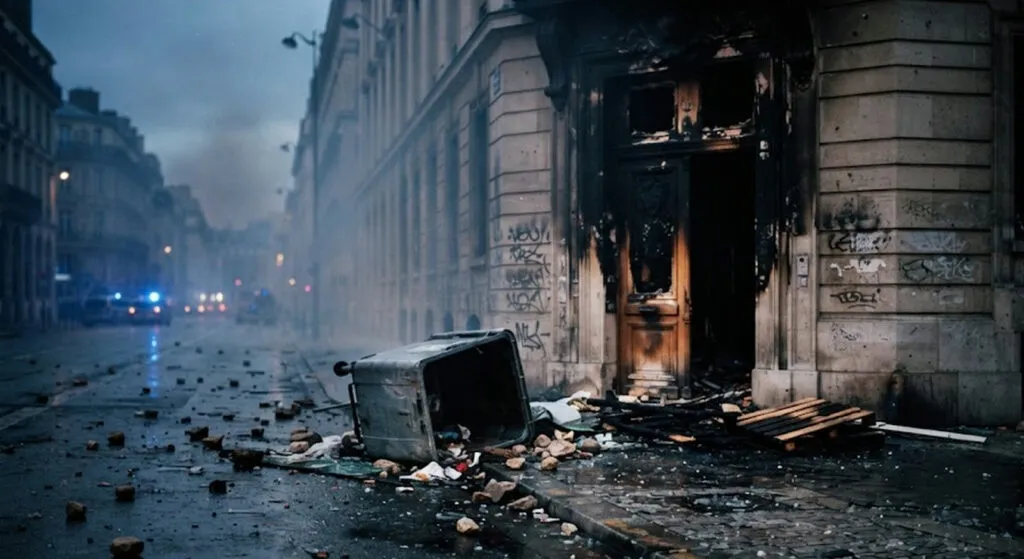
It started with expensive degrees and poor conditions at universities, and has reached burning ministries and 55 arrests. Is the...

Serbia accuses Zagreb of "the grossest interference in the electoral process" over newspaper articles, and Croatian reporters are bracing for...
Belgrade counted Croatian articles about Vučić and declared election interference. Meanwhile Vučić's campaign ad is almost a copy of a...
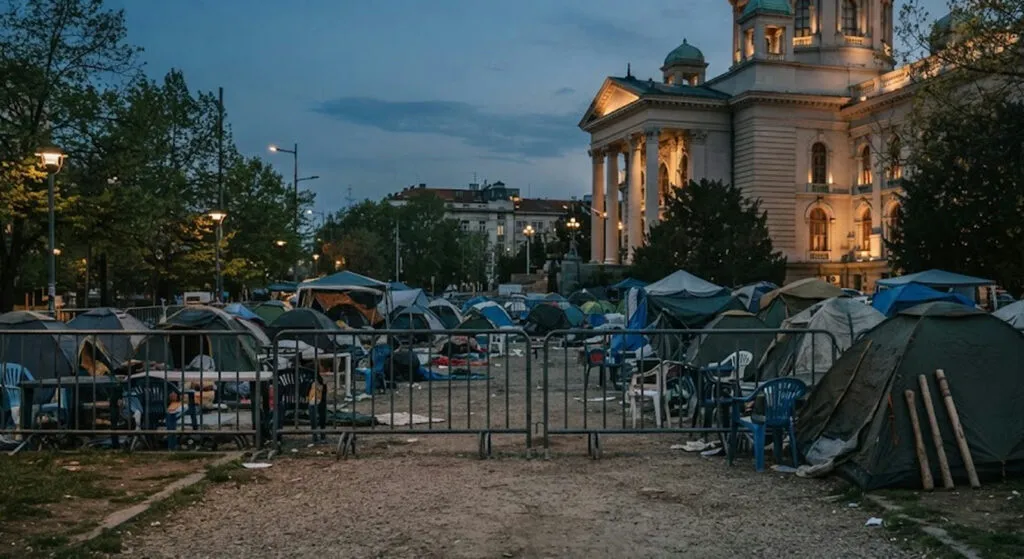
Batons, pepper sprays, balaclavas and a hundred-odd revolvers in Ćacilend, a salary for no work and cash from the city...
From November 1, Russians will no longer enter Montenegro on a passport alone, and Moscow immediately answered with visas for...

Belgrade has refused to sanction Moscow for years, and now Vučić claims even the US no longer fully enforces sanctions....
Of the four questions only one is binding, and the one that matters most to people from the former Yugoslavia...
This site uses cookies - is that okay? Learn more
Be the first to know when Metla launches something new
Leave your email and we will write when there is a new guide or something new on Metla.