

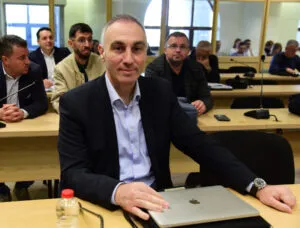
Grubi calls the entire government as witnesses, while 9.7 million euros' worth of machines sit in a warehouse
21.10.2026


21.10.2026
21.10.2026
21.10.2026

21.10.2026

21.10.2026

21.10.2026

21.10.2026
20.10.2026

20.10.2026

21.10.2026

21.10.2026

20.10.2026

21.10.2026

21.10.2026

21.10.2026

21.10.2026

20.10.2026

19.10.2026

21.10.2026

21.10.2026

21.10.2026

21.10.2026

21.10.2026
20.10.2026

21.10.2026

20.10.2026

19.10.2026
20.10.2026

19.10.2026

17.10.2026

23.04.2026

23.04.2026

12.04.2026

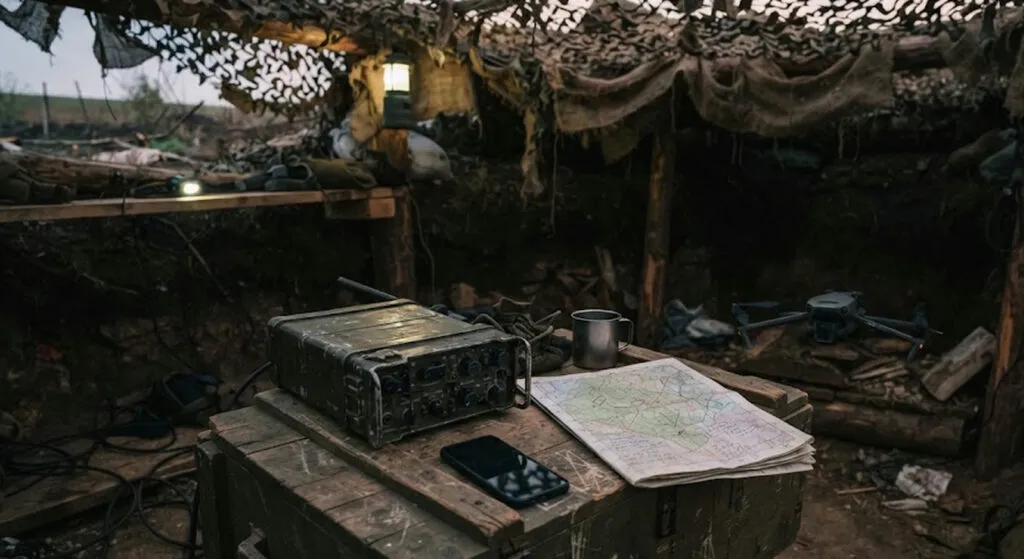
Lev Stupnikov was 26 years old, held the rank of lieutenant and had access to everything a brigade wants to keep secret: troop movements, combat plans, radio frequencies and footage from reconnaissance drones. He served as a communications officer in the Russian army's 36th Motorised Rifle Brigade, on the front near Vuhledar. According to the American newspaper The Wall Street Journal, for months he sent all of it straight to Ukrainian military intelligence.
The paper writes that over time Stupnikov became disillusioned with the corruption and brutality in the Russian army, as well as with the war in Ukraine. In February 2024 his mother, Tatyana Yantsen, helped him get in touch with Ukrainian intelligence. He agreed to cooperate on one condition - that he receive no money at all for the information.
The first strike came fast. As early as February 2024 Stupnikov sent the coordinates of a location near Vuhledar where between 120 and 150 Russian soldiers and officers had gathered, including the brigade command. Before the strike he photographed the gathering to confirm the numbers, and then, claiming stomach problems, he left the position. Soon after, the Ukrainian missiles fell. According to the data he himself provided, 68 Russian soldiers were killed and 60 wounded. Among the dead were ten officers, including the brigade commander, Colonel Huseyn Musaev.
That was not the end. Stupnikov kept wearing the uniform and doing his duties, while in parallel sending the positions of Russian units, operation plans, the movements of command staff and frequencies. In May 2024 he provided the coordinates of a building housing two Russian assault units. The attack that followed killed another 20 soldiers, among them a captain. He also sabotaged equipment from the inside: he switched off surveillance cameras and drone control devices, and gave the Ukrainian side access to footage from Russian reconnaissance systems.
When the Russian command began to suspect that someone in its own ranks was leaking the plans, Stupnikov decided to run. On the night of July 6, 2024 he crossed the front line through a mined area, along a route prepared in advance by Ukrainian forces, with a Ukrainian drone showing him the way. On the other side he handed over a mobile phone with access passwords, which Ukrainian operatives used for months afterwards to watch Russian surveillance cameras and drones. He then joined the Russian Volunteer Corps - a formation of Russian citizens fighting on Ukraine's side.
The figure of more than 300 dead Russian soldiers, which the paper attributes to his cooperation, is based on data from Ukrainian operatives, on footage and on Russian reports. In other words, part of the numbers came from the side with the biggest interest in making the story sound impressive. His role only became public in September 2025, after an interview with the former Russian officer was published, and the Russian authorities then issued a warrant for his arrest.
The final death toll will probably never be independently confirmed. But the story already says something uncomfortable about the Russian army: the corruption and brutality the paper writes about ended up turning one of its own officers against his comrades. The Balkans remember wars in which the line between "ours" and "theirs" ran through neighbourhoods, and even through families. How many stories like this exist on both sides of the front - ones we will never get to read?
The latest 10 news from this category
The terminals lost connection above 160 kilometres an hour, and an interceptor drone has to fly faster than that. Trump...
European allies have missiles for Kyiv, but without a green light from Washington they can't send them. What is a...
Six dead, among them a girl just over a year old who was in her pushchair. Kyiv is asking for...
Israel's minister condemned the attack - and in the same breath scolded the diplomats for not notifying the army. When...

The energy truce Trump imposed unilaterally has collapsed, and the war has reached a city 856 kilometres north of the...

The tanker that burned in Hormuz still has no name, but Tehran already knows whose fault it is. And who...
America has missiles for Saudi oil and Qatari gas, while Ukraine is left without interceptors before winter. When the great...
One bombed arms shipment split them apart, and Houthi missiles put them back on the same side. How long does...
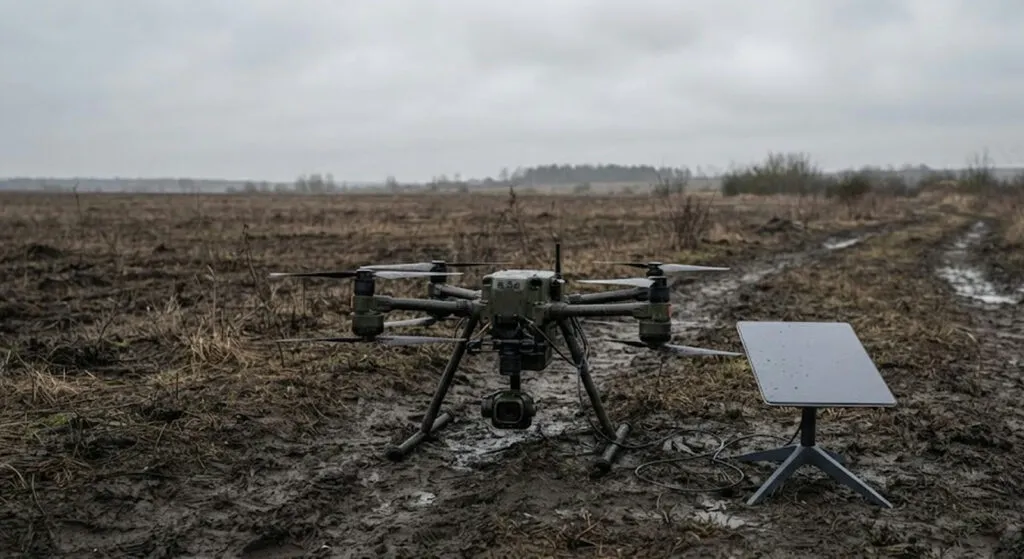
While Trump presses Kyiv to stop hitting Russian refineries, the satellite system guiding Ukraine's drones suddenly stopped working at high...
Bombers that can also carry nuclear weapons fly along NATO's borders, and both sides claim they're playing by the rules....
This site uses cookies - is that okay? Learn more
Be the first to know when Metla launches something new
Leave your email and we will write when there is a new guide or something new on Metla.


