Skopje Breathed Smoke From Two Mountains: 21 Fires in One Day, and Vodno Was Clean
25.08.2026


25.08.2026
24.08.2026

23.08.2026

25.08.2026

25.08.2026
24.08.2026

25.08.2026
25.08.2026

25.08.2026
25.08.2026

24.08.2026
23.08.2026

25.08.2026

25.08.2026
25.08.2026

25.08.2026
25.08.2026

25.08.2026

09.03.2026

27.02.2026

19.02.2026

23.04.2026

23.04.2026

12.04.2026
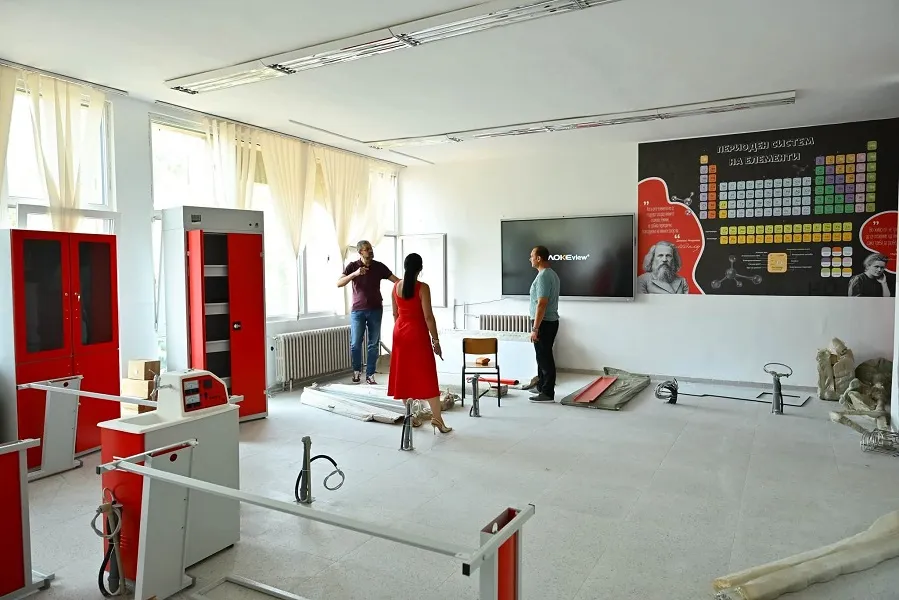
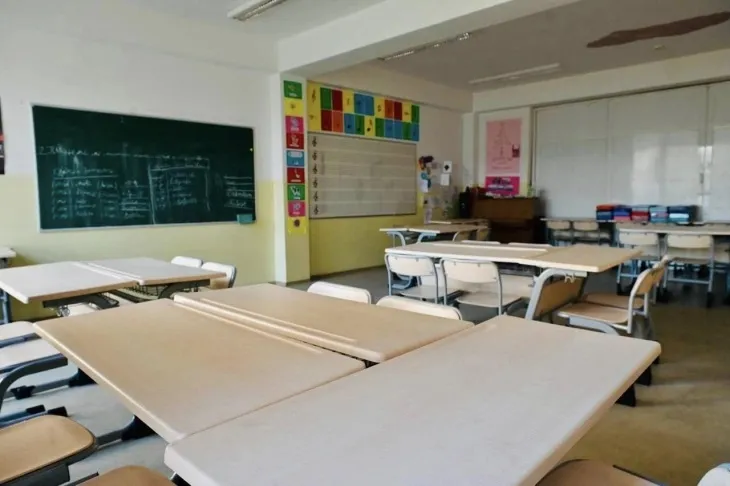
Secondary schools in Skopje are getting new maths and physics rooms, chemistry and biology labs, interactive panels and - a smart greenhouse with sensors and a weather station. If all of that works as promised, a Skopje teenager will be learning physics this autumn in a way his father never did.
Skopje mayor Orce Gjorgjievski said work is underway on the classrooms, which are getting new teaching equipment, didactic aids, interactive technology and school furniture adapted to modern needs.
The idea, at least on paper, is right. "Instead of studying the laws of physics and mathematical concepts only through formulas written on a blackboard, pupils will be able to understand and prove them through real models, precise measurements and hands-on experiments," Gjorgjievski says. With the interactive panels, complex scientific concepts will be taught through video, simulations and three-dimensional models.
The greenhouse is the most interesting part
The least expected element of the whole project is also the best one. A smart greenhouse is being built to serve as a school laboratory, fitted with sensors and microcontrollers for monitoring and regulating temperature, soil moisture, irrigation and feeding. Some of the systems will be trackable and controllable through a smartphone app.
Inside the greenhouse there will be a weather station and a professional agro-station, letting pupils collect and analyse data on weather and soil conditions themselves. The greenhouse will run year-round, with vegetable, fruit and flower crops - from seedling to fully grown plant.
That is exactly what Macedonian secondary education is missing: a place where physics, biology, programming and agriculture are not four separate subjects but one and the same thing seen from different angles. Agriculture also happens to be the largest economic sector where this kind of knowledge pays off directly.
Now comes the hard part
Kitting out classrooms is a visible project. It photographs well, a ribbon gets cut, an announcement goes out. What happens afterwards is harder and nobody films it.
An interactive panel without a teacher trained to use it is an expensive television. A chemistry lab with no reagents in next year's budget is a nice room with glass bottles. A greenhouse with sensors needs somebody to maintain it when a sensor fails in February.
None of this is an argument against the investment - on the contrary, the investment is needed and years overdue. It is only a reminder that the project does not end when the equipment is carried into the classroom. That is actually when it starts.
The school year begins in a few days. That is when we will see how much of this is finished and how much is still "underway".
The latest 10 news from this category
A decade ago the town had over 10,000 pupils. This year it has 5,569. The first-grade desk is the most...
The operators stopped after years of funding the service out of their own pockets. The mayor says the debt was...
The administration calls it dispersing power, the opposition calls it party hiring worth 200,000 euros. The real problem is the...
A full year of work - seedlings, planting, picking leaf by leaf - taken by a storm at the most...
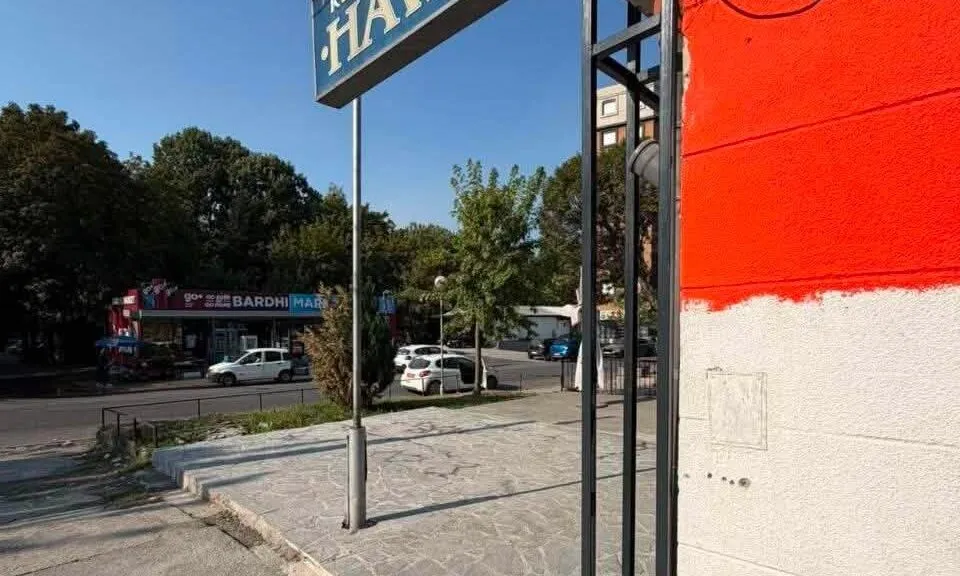
Butel municipality announced demolition and criminal charges on Saturday. By Monday there was nothing left to demolish. Illegal builds go...
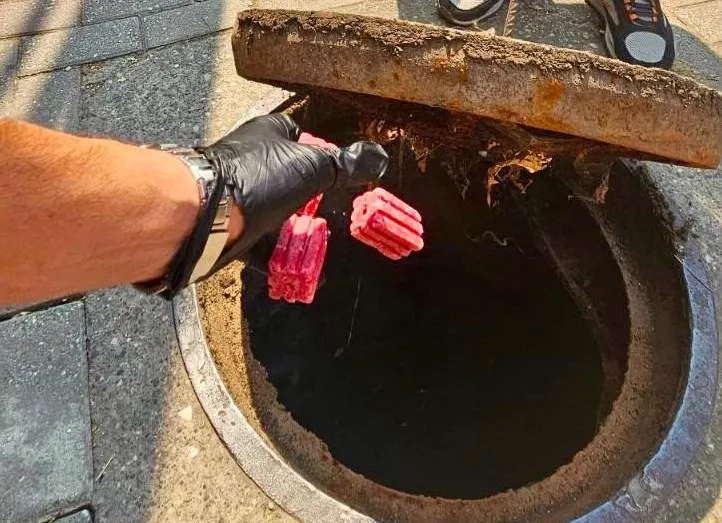
Kapishtec, Debar Maalo, Bunjakovec, Kale - and almost every address is defined by the same two words: by the bins.
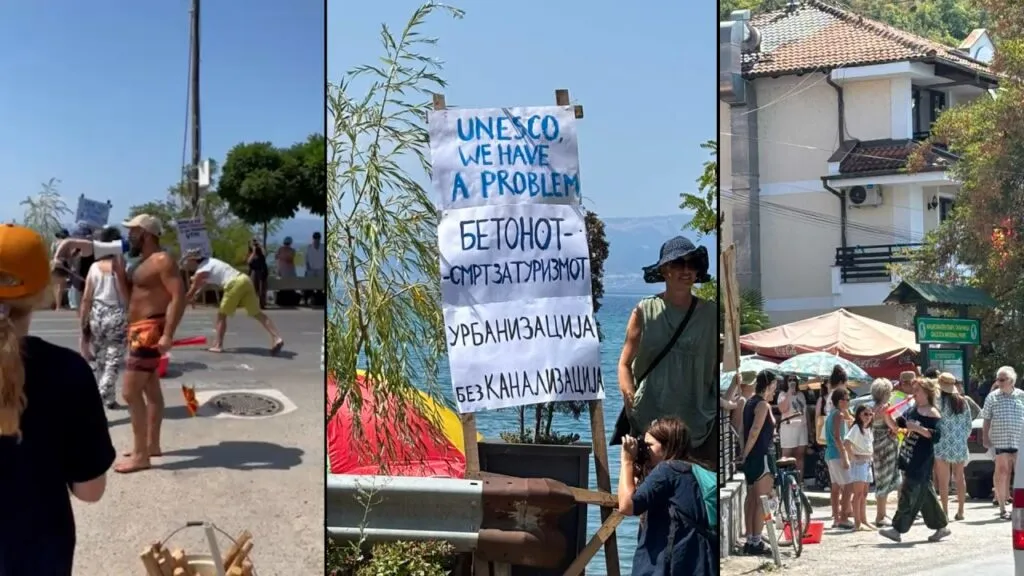
When institutions stay quiet long enough, citizens start enforcing the law themselves. In Lagadin that looked like a blockade on...
Good news that deserves to be said without reservation. The question is whether the numbers will also come out in...
Kostovski announced an excavator for Monday. By Monday there was nothing left to demolish. How many other land grabs are...

A first-class decoration for contributing to Ukraine's defence capabilities. A small country, but not a state whose voice does not...
This site uses cookies - is that okay? Learn more
Be the first to know when Metla launches something new
Leave your email and we will write when there is a new guide or something new on Metla.