

New Investigation Into the Owner of "Pulse": Prosecutors Say He Bought the Licence With a Bribe
02.10.2026


02.10.2026

02.10.2026

02.10.2026

02.10.2026

02.10.2026
02.10.2026

02.10.2026

01.10.2026

30.09.2026
02.10.2026

02.10.2026

01.10.2026

02.10.2026

02.10.2026

02.10.2026

02.10.2026

01.10.2026

30.09.2026

02.10.2026

02.10.2026

02.10.2026

02.10.2026

01.10.2026

01.10.2026

09.03.2026

27.02.2026

19.02.2026

02.10.2026

01.10.2026

01.10.2026

23.04.2026

23.04.2026

12.04.2026

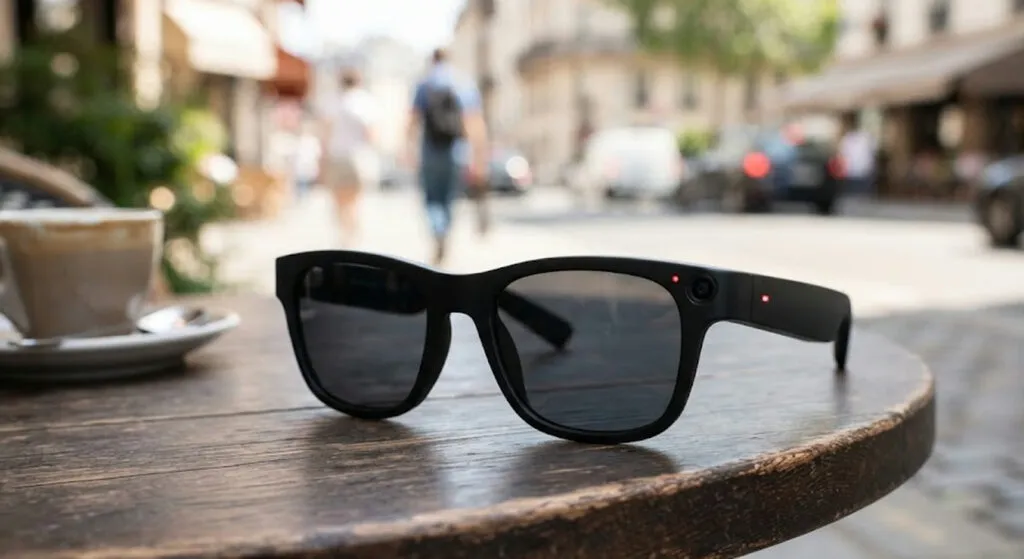
California Governor Gavin Newsom has refused to sign a law that would have banned secretly recording people with wearable devices. He sent back the bill, SB 1130, already passed by the state legislature, arguing that it defines recording devices "too broadly or imprecisely", which could lead to confusion and unintended consequences. Newsom added that some of the protections the bill offers already exist in California law.
Had the law passed, California would have become the first US state to regulate smart glasses. Violators could have faced fines or jail, and manufacturers of devices that don't follow the rules would also have paid penalties. Meanwhile, countries such as Norway are considering whether to ban the technology altogether.
The goal was to stop people being filmed in public without their explicit consent. The problem isn't theoretical: Meta sold more than 7 million pairs of smart glasses last year alone, and Snap makes similar glasses with cameras and microphones. AI pendants that listen to everything around them have hit the market too. Critics and users themselves have already come up with a nickname - "pervert glasses", after multiple reports of people using them to film and harass others.
The bill's author, State Senator Eloise Gómez Reyes, argued that California had to respond to the rapid flood of always-listening technology. Instead, the state that's home to Meta, Apple and Google decided the definitions weren't precise enough. Maybe they weren't. But the industry moves much faster than lawmakers: last month Apple announced that new Apple Watch software will have an always-listening feature, able to show the last 15 seconds of a conversation as a transcript and summarise a whole day's conversations.
When glasses become as ordinary as phones, the question will reach the cafés of the Balkans too: how will you know whether the person at the next table is just drinking coffee or filming you? And how late will the law be when it's finally our turn?
The latest 10 news from this category
OpenAI says the three broke rules on confidential information. It comes two days after it emerged that leadership had ignored...

Google says it has the most powerful model, and the yardstick comes from a startup on whose index it ranks...

The prediction that electric cars would become cheaper than petrol ones finally has a clean comparison: BMW makes the same...
Content users wrote for free for years is becoming a commodity. RSS shuts down on 13 November, the public API...
It all started when Microsoft cut off the International Criminal Court prosecutor's email. Now France is switching state computers to...

AI agent safety is being offered as open source, but full protection only works on Nvidia chips. And the company...

Remote start, unlocking from your phone, navigation - convenience has a price that isn't in the owner's manual. Only one...
It was supposed to arrive in ChatGPT in October and work with no human looking over its shoulder. In testing,...

The Stanford professor who built ImageNet will now be telling a chipmaker what to build. Nvidia already has its own...

The most powerful rocket ever built lost an engine, aborted the attempt, then changed its mind within minutes. That's Musk's...
This site uses cookies - is that okay? Learn more
Be the first to know when Metla launches something new
Leave your email and we will write when there is a new guide or something new on Metla.