
A sniper rifle, automatic weapons and an ISIS flag from 12 locations in Skopje: intelligence agency talks of radical imams and recruiting young people
30.09.2026


30.09.2026

30.09.2026

30.09.2026

30.09.2026

30.09.2026

30.09.2026

30.09.2026

29.09.2026

28.09.2026

30.09.2026

30.09.2026

29.09.2026

30.09.2026

30.09.2026

30.09.2026

30.09.2026

29.09.2026

28.09.2026

30.09.2026

30.09.2026

30.09.2026

09.03.2026

27.02.2026

19.02.2026

30.09.2026

29.09.2026

28.09.2026

23.04.2026

23.04.2026

12.04.2026

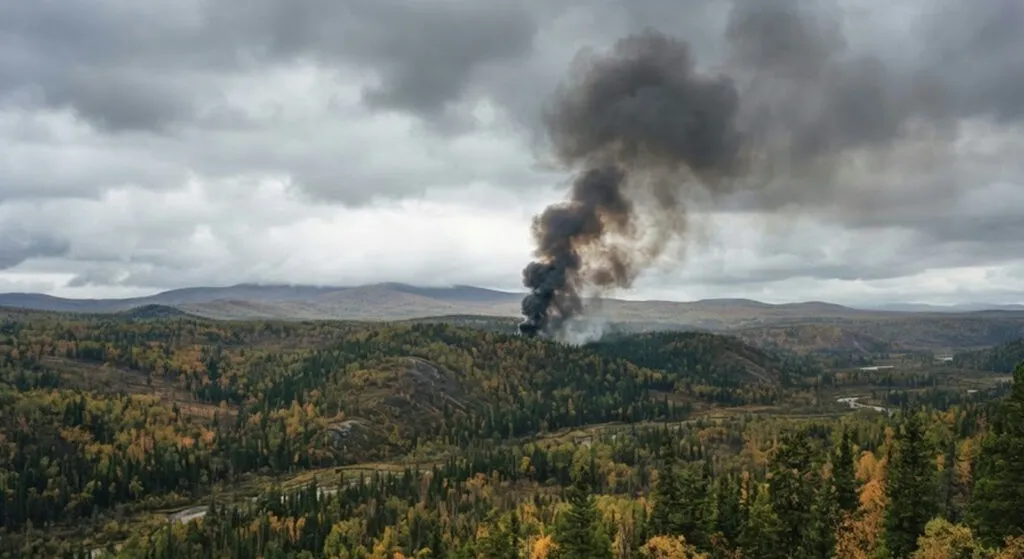
A Russian Tu-95 strategic bomber crashed in the Amur region, in the Far East, during a training flight. Russia's Defence Ministry confirmed six dead. According to Russian media, there were seven servicemen on board - the only survivor was taken to hospital. The plane came down near the village of Krasnoyarovo.
The first reports from the ground told a completely different story: that a Tu-154 military transport plane had crashed. That version didn't last long. Footage taken just before the crash carries the distinctive sound of four turboprop engines - a sound the Tu-154, with its three jet engines, simply doesn't make. Only then came official confirmation: not a transport plane, but a missile-carrying bomber, one of the key aircraft in Russia's Long-Range Aviation.
The cause has not been officially established. Early unofficial reports mention a fuel explosion on board, but the ministry isn't confirming that for now. A commission is working at the crash site. The names of the dead haven't been released, and there's no word on the survivor's condition. First the wrong version, then a number, then a "commission" - how many times have we in the Balkans seen the same sequence when the army writes the press release?
This was no ordinary aircraft. According to Russian media, the bomber was linked to the Ukrainka air base, north of Belogorsk - one of the main strongholds of Russian strategic aviation in the Far East. The irony in the name is hard to miss. It's home to exactly the Tu-95MS, the air leg of Russia's nuclear triad, which regularly take off from there on training and patrol flights over the Pacific.
The Tu-95 is a Soviet-era machine, recognisable by its huge contra-rotating propellers. The upgraded Tu-95MS and Tu-95MSM variants are still among the main carriers of Russia's strategic cruise missiles, including the Kh-101, as well as nuclear versions of strategic weapons. Together with the Tu-160, it is one of the main airborne carriers of Russia's strategic arsenal. The standard crew of a Tu-95MS is seven - exactly the number, according to early reports, that were on the plane that crashed.
The investigation has to establish whether it was a technical fault, an engine problem, a fuel problem or something else. But when a plane that carries nuclear missiles in wartime falls out of the sky on a routine training flight, the question isn't only what broke on this particular airframe. It's what condition the others of the same vintage are in. Whether Moscow will say so publicly is another story entirely.
The latest 10 news from this category
An informal document, sent via the embassy in Brussels, carrying the heaviest message possible. NATO condemns "irresponsible nuclear rhetoric" -...
The Russian embassy in London openly raised nuclear weapons as the answer to any attempt to blockade Kaliningrad. The Balkans...

While Kyiv and Seoul argue over two prisoners, Pyongyang is picking thousands more soldiers for training and deployment to Russia....
The offensive, fought almost entirely under an information blackout, has liberated three more villages and 51 square kilometres. The general...
Kyiv spent 18 of 24 hours under air raid sirens, one dead and 19 injured, three of them children. Belgrade...

Russian channels say the target was the logistics corridor to Europe; Ukrainian ones say a new jet-powered Geran was flying....
Washington is still silent, Tehran is expected to applaud, and the Kurdish prime minister calls the withdrawal "shameful". The Balkans...

More than half the drones were jet-powered, and the fastest thing in the sky was an unconfirmed report of a...
Tehran offers to open Hormuz within seven days, Washington answers with a photo and a plan for bombs after the...

Telegram channels claim Putin is considering a Defense Ministry proposal, and Moscow confirms nothing. "It's not on the agenda," the...
This site uses cookies - is that okay? Learn more
Be the first to know when Metla launches something new
Leave your email and we will write when there is a new guide or something new on Metla.