"Being careful" is Macedonia's most-used contraceptive: 43.9% of couples, against 14% using a modern method
28.09.2026


28.09.2026

28.09.2026
28.09.2026
28.09.2026
28.09.2026

28.09.2026

28.09.2026

27.09.2026

27.09.2026

28.09.2026

28.09.2026

27.09.2026

28.09.2026

28.09.2026

28.09.2026

28.09.2026

27.09.2026

26.09.2026
28.09.2026

28.09.2026

28.09.2026

09.03.2026

27.02.2026

19.02.2026

28.09.2026

27.09.2026
27.09.2026

23.04.2026

23.04.2026

12.04.2026

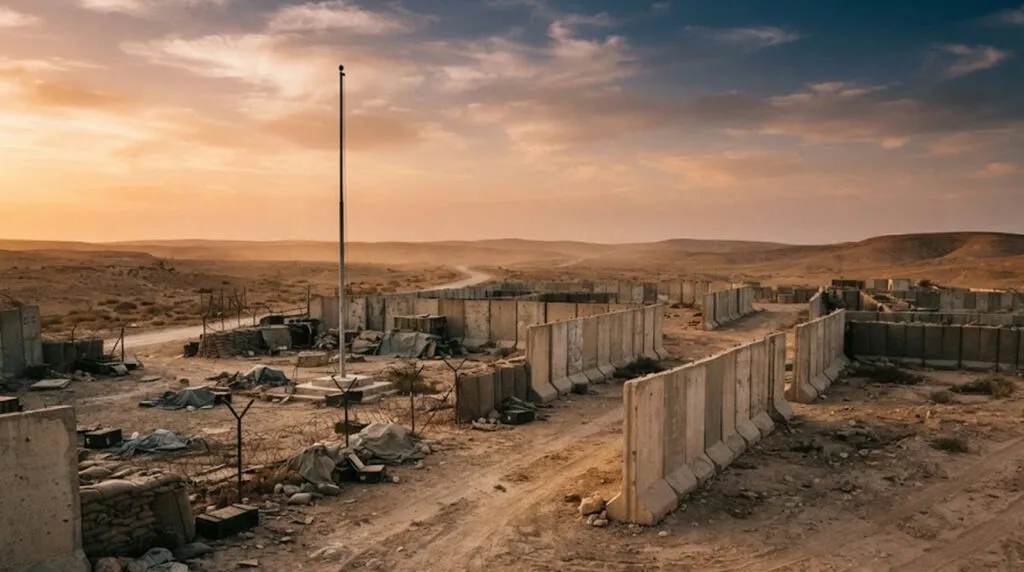
The US military has fully withdrawn from Iraq - or so the Iraqi government says. All American combat forces and logistical support units have left the country, an Iraqi official told the German news agency dpa yesterday. Washington has not yet officially confirmed the withdrawal.
The two countries agreed on the withdrawal back in 2024. According to Pentagon figures, around 2,500 US troops have been stationed in Iraq in recent years - in Erbil in the Kurdish region, at a base by Baghdad airport and in the Green Zone, the government district in the capital. The formal deadline expires on Wednesday, when Iraq begins four official public holidays for "Independence Day". The symbolism is hard to miss.
From Saddam to Iran
The US and its allies invaded Iraq in 2003, despite international criticism, and toppled Saddam Hussein. They pulled out in 2011 and came back in 2014 - at the Iraqi government's request - to fight the Islamic State. The combat mission against IS was declared over in 2021. Then, in February this year, the war with Iran began and security collapsed again: US facilities and troops in Iraq were attacked, and Kurdish forces were targeted too.
"It's shameful to be left behind"
The loudest reaction came from Kurdish Prime Minister Masrour Barzani. "The threat is real, we are vulnerable and we are being attacked," he told the Financial Times. "It's shameful that we are left without any - let's call it - adequate defence system."
The problem isn't only political. The Kurdistan Regional Government can't buy air defence systems on its own - only the central government in Baghdad can. And since the war with Iran began, the Kurdish region has been hit by hundreds of missiles and drones, including an attack on Barzani's own office. Tehran sees the Kurdish region as an ally of the West and of Israel on Iraqi soil. Erbil also hosts a multinational base with American and German troops, which has also come under attack.
So what do the Americans leave behind? Iran-backed paramilitary groups in Iraq were supposed to disarm and be folded into the state security apparatus in parallel with the US withdrawal. The move, announced by Prime Minister Ali al-Saidi, has been postponed - it's now due in June next year. In other words: the Americans are leaving now, and the militias close to Tehran will disarm - maybe - next year.
The Kurds, a people of around 30 million scattered across Iraq, Iran, Syria and Turkey, have fought for their own state for decades and were long persecuted in both Iraq and Iran. Their semi-autonomous region in Iraq emerged after Saddam's fall, and before that it was protected by the US no-fly zone imposed in 1991. Now the American presence is leaving too. The Balkans know this scene well: a great power packs up, and the people left on the ground don't even have their own air defence. Who will fill the vacuum - Baghdad, Tehran, or someone else?
The latest 10 news from this category
More than half the drones were jet-powered, and the fastest thing in the sky was an unconfirmed report of a...
Tehran offers to open Hormuz within seven days, Washington answers with a photo and a plan for bombs after the...
Telegram channels claim Putin is considering a Defense Ministry proposal, and Moscow confirms nothing. "It's not on the agenda," the...
Ukrainian programmers and gamers are flying drones that strike up to 2,900 kilometres deep inside Russia. Moscow hits back with...
Saudi Arabia's highest religious authority has told soldiers to be ready to die in the war with the Houthis. When...
Ukrainian drones are hitting refineries hundreds of kilometres deep inside Russia, while Russia's jet-powered "Shaheds" are already breaking through Ukraine's...
Russian sources call it a "Geran night", as if it were a date in the calendar. Explosions from Kyiv and...
One dead, eight injured, two major providers offline and the city railway halted. The Balkans knows what a city preparing...
99 MPs voted in favour, and a threat arrived from Moscow right away. Is a small country on the line...
The offer is deliberately narrow - energy only, with a deadline before winter. When a power line goes down in...
This site uses cookies - is that okay? Learn more
Be the first to know when Metla launches something new
Leave your email and we will write when there is a new guide or something new on Metla.