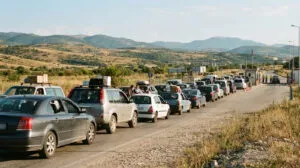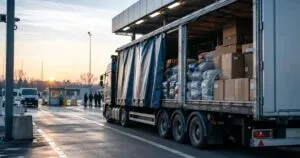
Five Tonnes of Cannabis Straight Through Customs: A Medical Licence as Cover, at Least Five Runs
18.08.2026


18.08.2026
18.08.2026

18.08.2026

18.08.2026

18.08.2026

18.08.2026

18.08.2026

17.08.2026

16.08.2026

18.08.2026
18.08.2026

17.08.2026

18.08.2026

18.08.2026

18.08.2026

18.08.2026

17.08.2026

16.08.2026

18.08.2026

18.08.2026

18.08.2026

18.08.2026

17.08.2026
17.08.2026

09.03.2026

27.02.2026

19.02.2026

18.08.2026

17.08.2026

16.08.2026

23.04.2026

23.04.2026

12.04.2026
For years Ankara and Moscow played a game that suited both sides: Turkey is a NATO member, but it did not join the sanctions, it bought Russian oil, sold drones to Ukraine and played the mediator when nobody else was trusted. Pragmatism, they called it. Over the past few days that balance has started cracking in three places at once.
First: American weapons through Turkish territory
According to Ukrainian and Russian sources, a large quantity of American weaponry is due to reach Ukraine via Turkey. The Ukrainian portal „Militarnyi” lists 70 American M39 ATACMS ballistic missiles with a range of around 300 kilometres, 12 M270 MLRS launchers, 2,524 unguided M26 artillery rockets, and 47,000 M509A1 cluster artillery shells. A delivery arriving exactly as the Russian army intensifies strikes on energy infrastructure.
The Russian foreign ministry demanded explanations from both Washington and Ankara. Spokeswoman Maria Zakharova warned that the terms of such a transfer are „counterproductive” and do not contribute to peace. In the same breath Moscow claims the delivery will not change the balance of forces at the front - the standard formula for when something actually hurts.
The explanation from the Turkish side is thinner. International security expert Canan Tercan said Ankara does not plan to send weapons manufactured as Turkish. But there is an exception, and it is the key one: this does not apply to weapons previously delivered to Turkey or produced on its territory under US licence. A definition narrow enough to save face, wide enough to move the cargo.
Second: the Black Sea
Turkish Foreign Minister Hakan Fidan called for a moratorium on attacks on ships in the Black Sea. Moscow refused. Zakharova judged the proposal „incomplete” and said Ukraine would be its main beneficiary.
Behind the diplomatic vocabulary sits economics. Almost 70 percent of Ukrainian grain exports go by sea, and the revenue from those exports is one of the most important lines in the Ukrainian economy. Russia has, in these very days, stepped up strikes on Ukrainian vessels and port infrastructure, including the Danube ports. Whoever asks for a moratorium on attacks is really asking for a way out for grain.
Third: the oil that is no longer being bought
Turkish imports of Russian oil have fallen sharply, particularly through Black Sea ports - by reported accounts, the drop has reached almost a million tonnes. For the Kremlin this is the most uncomfortable of the three items, because it is neither a statement nor a proposal. It is an empty tanker.
Moscow then began looking further ahead. Russian analysts are following the military-technical rapprochement between Turkey, Pakistan and Saudi Arabia with growing attention, and „RIA Novosti” already calls that potential alliance a „Muslim NATO”. Some Russian media go as far as asking whether such an alignment would bring Turkey closer to nuclear weapons development capacity. For now that is analysts' speculation - but the fact that the scenario is being considered at all shows how carefully every Erdogan step is being measured.
For a reader in the Balkans there is something familiar here. A state that sits between two blocs and collects from both sides works beautifully - until one bloc starts adding up the bill. Weapons for Kyiv, pressure over the Black Sea, less oil purchased and new military alliances: four separate disagreements that Moscow no longer reads as coincidence.
The latest 10 news from this category
The lowest rating of his career, but the damning detail is elsewhere: 71 percent of Republicans expect the war to...
Vance said goal number one is cheap fuel. Trump contradicted him the same day. When the goal shifts mid-stride, it...
A frigate carrying Kalibr and Zircon missiles appeared off the German island of Fehmarn, and Moscow is silent about its...

Marjorie Taylor Greene wrote that Washington is discussing nuclear weapons against Iran. She attached no document and no source, and...
A few days ago the palace flatly denied the king arrived by ambulance. Today it explains he has been on...
The Pentagon was ordered to scale back the manoeuvres the day before they began, because the drills were sending a...

The youngest Black professor in the university's history was given a home alarm and mail screening because of racist threats....

Netanyahu said a week ago that Trump's plan was unacceptable; today he is on the meeting schedule. Hamas accepted it...
NATO published cockpit footage - a flash in the night over allied skies. The drone carried no explosives. Anyone reading...

A principality whose monarch holds a real veto has finally equalised primogeniture. The reform applies only to future births, meaning...
This site uses cookies - is that okay? Learn more
Be the first to know when Metla launches something new
Leave your email and we will write when there is a new guide or something new on Metla.