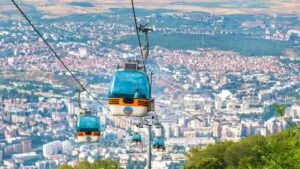
Three of Four Sensors Were Dead: Skopje's Vodno Cable Car Ran Fifteen Years Without a Real Service
17.09.2026


17.09.2026

17.09.2026
17.09.2026

17.09.2026

17.09.2026
17.09.2026

17.09.2026

16.09.2026

15.09.2026

17.09.2026

17.09.2026

16.09.2026
17.09.2026

17.09.2026

17.09.2026

17.09.2026

16.09.2026

15.09.2026

17.09.2026

17.09.2026

17.09.2026

17.09.2026

17.09.2026

17.09.2026

09.03.2026

27.02.2026

19.02.2026

23.04.2026

23.04.2026

12.04.2026

VMRO-DPMNE is pulling out the same line again, this time dressed up as a question about constitutional amendments: while European institutions praise North Macedonia's progress, the argument goes, it is opposition leader Venko Filipche who insists that constitutional changes are the only reform on offer - and he does so, they claim, on the same wavelength as Bulgarian president Rumen Radev.
The ruling party leans on its pats on the back from Brussels - it notes that the President of the European Council and the Commission see Macedonia as a regional leader with results. From there it builds its punchline: if Europe is happy, why does the opposition insist precisely on constitutional changes, a question that has historically meant, for many Macedonians, a concession under pressure?
The rhetoric goes further still. Filipche is called an "agent" of Radev, ready to make national and identity compromises, and the constitutional changes get compared to Zoran Zaev's name deal - even billed as "a bigger betrayal." This is the language we know from every election season: the other side isn't just wrong, it's a national enemy.
Skepticism is warranted toward both camps here. VMRO-DPMNE is speaking as a party facing possible elections, and it has a clear interest in this framing - to cast itself as the defender of identity and the opposition as a threat. That doesn't make the constitutional question trivial; on the contrary, it's one of the hardest Macedonia faces. But when a complex matter of state gets boiled down to the label "agent," the loser is the debate itself.
The question a voter should be asking isn't who called whom a traitor, but something harder: what do the constitutional changes actually demand, who benefits from them, and what does Macedonia gain or lose in each scenario? On that question, not a single statement - not from the government, not from the opposition - gives an honest answer. And while the labels fly, that is exactly the question left without a real debate.
The latest 10 news from this category

Of 340 million denars, only 40 million came from private money - the rest came from the State Lottery. Prosecutors...
The State Audit Office already warned that withholding the points makes favouritism possible. The rulebook requiring them to be published...
Two senior officials announced progress, the two largest parties denied it the same day. The amendments sit blocked behind 13,500...
The police acted on their own knowledge, without the PM filing anything at all. The same mechanism exists for every...
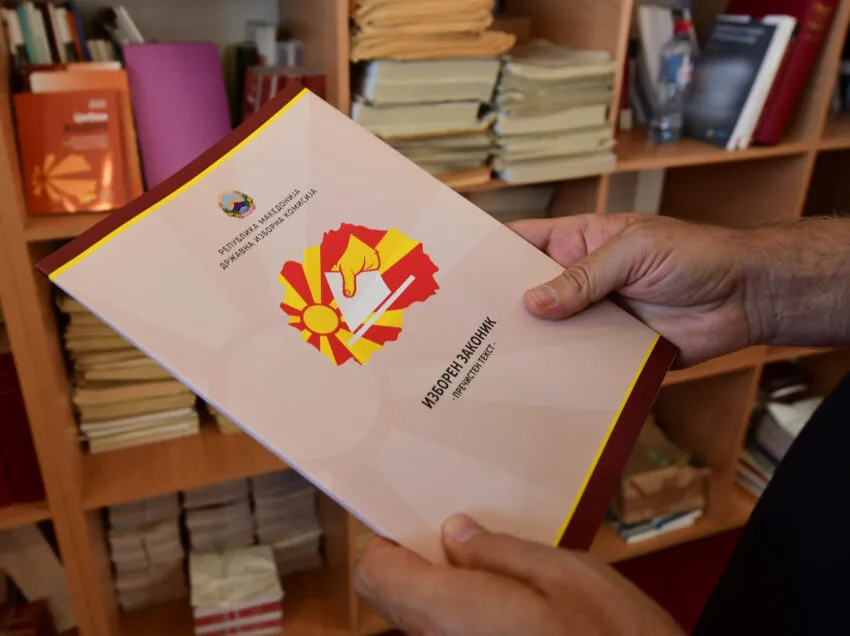
The Electoral Code is the one unfulfilled reform obligation, and the working group does not even know when it will...
It was supposed to cost "zero denars". Now the opposition wants an investigation, and the timeline - David Guetta announced...
Five negations in one sentence, pension growth "16 times higher" with not a single figure beside it, and a third...
One side waits for a letter, another waits for a different commission, a third waits for consent. In those same...
The commission's chairman says it only checked whether the documents were complete. The public call says something else entirely -...
Three candidates, two of them lawyers, one of them employed by the very municipality he is running for. The line...
This site uses cookies - is that okay? Learn more
Be the first to know when Metla launches something new
Leave your email and we will write when there is a new guide or something new on Metla.