


Kratovo man stabs police officer mid-intervention: prosecutors want the 40-year-old detained
15.09.2026


15.09.2026

15.09.2026

15.09.2026

15.09.2026

15.09.2026

15.09.2026

15.09.2026

14.09.2026

13.09.2026

15.09.2026

15.09.2026

14.09.2026

15.09.2026
15.09.2026

15.09.2026

15.09.2026

14.09.2026

13.09.2026

15.09.2026

15.09.2026

15.09.2026

15.09.2026

15.09.2026

14.09.2026

09.03.2026

27.02.2026

19.02.2026

15.09.2026

14.09.2026

14.09.2026

23.04.2026

23.04.2026

12.04.2026

San Francisco has ordered Apple and Google to pull from their stores the apps that „undress\" people - programs that use artificial intelligence to digitally strip the clothing off any photograph. The targets are, almost without exception, women and girls. Both companies knew for years what they were hosting, yet kept collecting their commission.
The legal basis is clear. A 2025 California law criminalises anyone who „knowingly enables\" the creation of non-consensual pornographic deepfakes and lets victims sue the intermediaries directly. And the intermediary here is not just whoever wrote the app - it is also the store that sells it and takes its cut.
David Chiu, San Francisco's city attorney, does not mince words: „Apple and Google profit from apps that exploit women and girls by creating non-consensual intimate deepfakes.\" According to his office, both firms had been warned since January through reports by the Tech Transparency Project - and still went on processing the payments for these illegal downloads.
The organisation's April report goes a step further: it claims that Google and Apple deliberately „steered\" users toward these apps. The city attorney estimates the two companies made „millions of dollars\" in commissions. The letters demand a response within 28 days and warn of possible civil penalties.
The response came fast, as it always does when the penalty becomes real. Apple confirmed it had removed three apps and terminated three developer accounts, and is reviewing four more. Google announced that all five reported apps on the Play Store had been suspended, and that it had suspended hundreds of such programs in total. The question that raises itself is why court threats were needed for something these stores' own „policy\" has banned for years.
Both companies present themselves as guardians of privacy when it comes to ads and data. But that same guard was strikingly patient while tools whose only purpose is to produce a nude image of a woman without her consent flowed through their channels. Moderation, it seems, works faster when the threat is not to the user, but to the firm itself.
The latest 10 news from this category

A scientist at the same company puts the probability of human extinction above 10 percent within the next decade. The...

The president called in while the event was running, and the man who makes the chips answered that there would...

No virus attached, no suspicious file. Just a box that looks like the "I am not a robot" check and...

A researcher quit because the firms are gambling with our lives. Instead of denying it, Anthropic confirmed it - with...
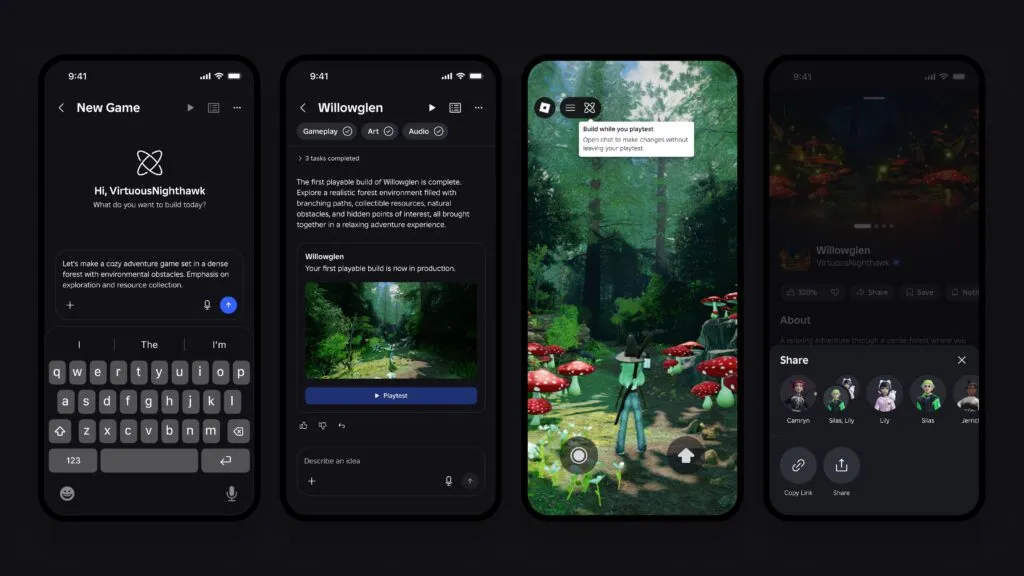
Write a sentence, get a game. Until now it worked only in New Zealand, now in Belgrade too. Creators on...
When the two biggest firms in an industry ask for rules on how fast anyone may run, the rules rarely...

Not a single password fell. What fell was the assumption that a request from a government domain is automatically a...

The biggest names in mathematics have signed a letter against the AI labs. The dispute is not whether the machine...

Five campaigns, 200 million exchanges, and the defences fell to a request for a Japanese translation. The industry that harvested...

The hackers were inside for a whole year. The company confirmed it only after a journalist found his own licence...
This site uses cookies - is that okay? Learn more
Be the first to know when Metla launches something new
Leave your email and we will write when there is a new guide or something new on Metla.
