
Prime suspect in the Dukjandžik killing arrested in Kosovo - the hunt for the second goes on
26.09.2026


26.09.2026

26.09.2026
26.09.2026

26.09.2026
26.09.2026

26.09.2026

26.09.2026

25.09.2026

24.09.2026

26.09.2026

26.09.2026

25.09.2026

26.09.2026

26.09.2026

26.09.2026

26.09.2026

25.09.2026

24.09.2026

26.09.2026

26.09.2026

25.09.2026

26.09.2026

26.09.2026

26.09.2026

09.03.2026

27.02.2026

19.02.2026

26.09.2026

25.09.2026

24.09.2026

23.04.2026

23.04.2026

12.04.2026

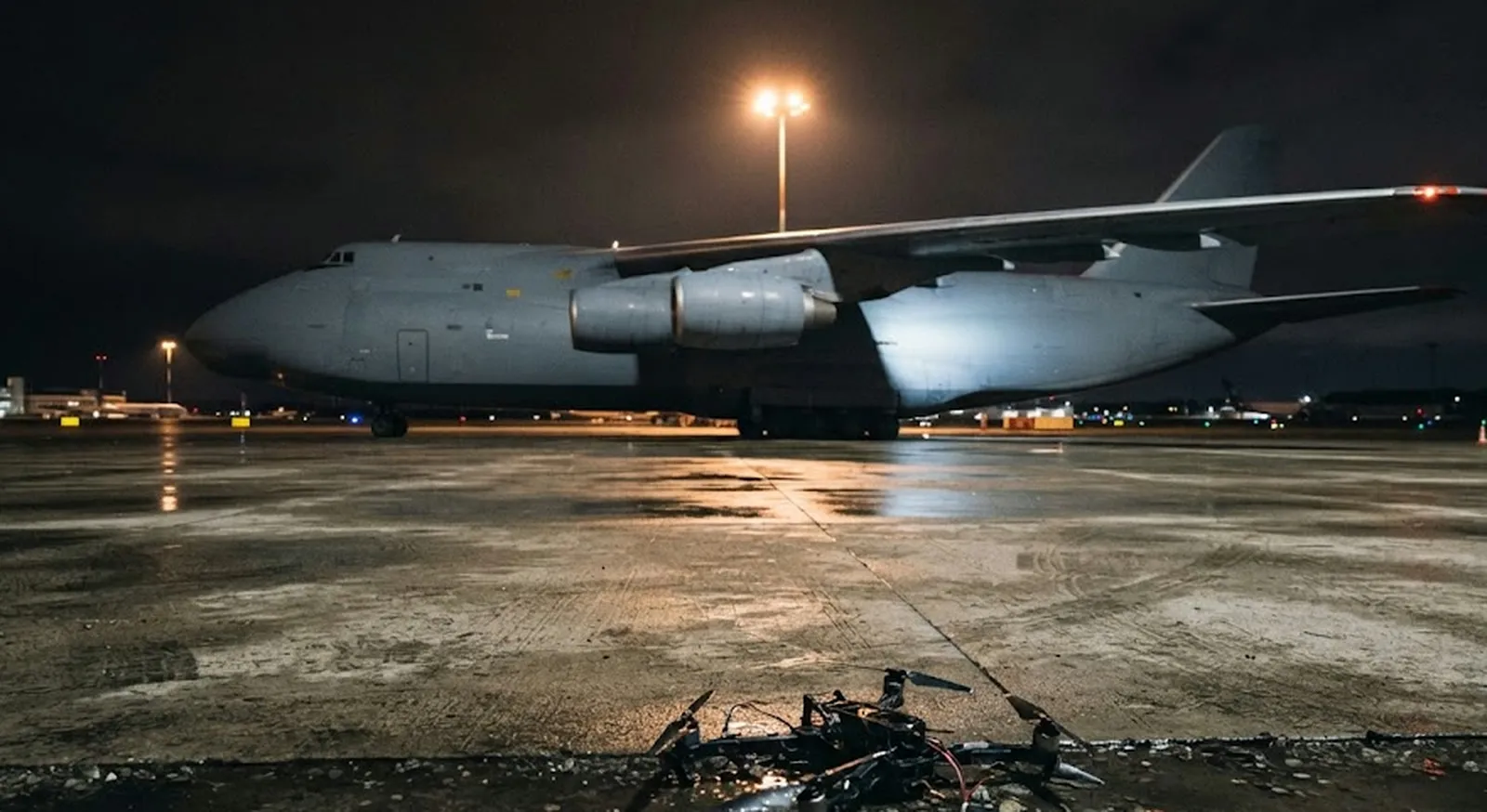
On the night of 5 August, at Leipzig/Halle airport, a drone loaded with explosives crashed into a cargo plane belonging to the Ukrainian company Antonov Airlines. According to the German press, the aircraft was carrying ammunition destined for Ukraine.
Surveillance footage, as reported, shows the drone flying deliberately towards the Ukrainian plane at around 7:30pm and striking its wing. The Semtex device did not detonate - it bounced off and fell to the ground, with the explosive probably separating on impact. According to other accounts, the drone struck near the fuel tank.
For four hours nobody noticed
This is the part of the story that should be read by anyone who thinks European airports are a fortress. The security systems did not detect the drone at all. The device on the apron was found - four hours later - by the driver of an airport van.
So if the explosive had detonated, there would have been nobody to prevent it. And if it failed to detonate by error, the only reason there are no casualties is that something didn't work the way whoever sent the drone intended.
A DNA trail leading backwards
Five days later investigators isolated DNA traces from the drone. The person has not yet been identified, but according to reports there is a match in a European database pointing to Lithuania. The same DNA, it is claimed, matches evidence from an attack on 20 July 2024 on a DHL logistics centre at the same airport, where a parcel bomb exploded on the ground only because the cargo plane was running late.
Lithuanian prosecutors have already spoken of terrorism and sabotage on behalf of a foreign power regarding the 2024 attacks, pointing to Russian military intelligence and to operations in Germany, Poland and Britain.
Nobody wants to say the name out loud
The German federal prosecutor's office has opened an investigation. Chancellor Merz avoided mentioning Russia. The interior minister mentioned only possible "foreign involvement". The Kremlin denied it and called the attack a provocation.
Here is what genuinely worries. If there is a DNA trail, if there is a database in which that trail has already appeared once, and if Lithuanian prosecutors have already named the power behind the previous attack - what is missing for someone to say it out loud? A diplomatic response is one thing. But when a state cannot bring itself to name, then every next drone takes off into a slightly less risky environment.
The Balkans have heard for decades that Europe is stable and instability is here. A drone carrying explosives on a German runway, lying undetected for four hours, corrects that map.
The latest 10 news from this category
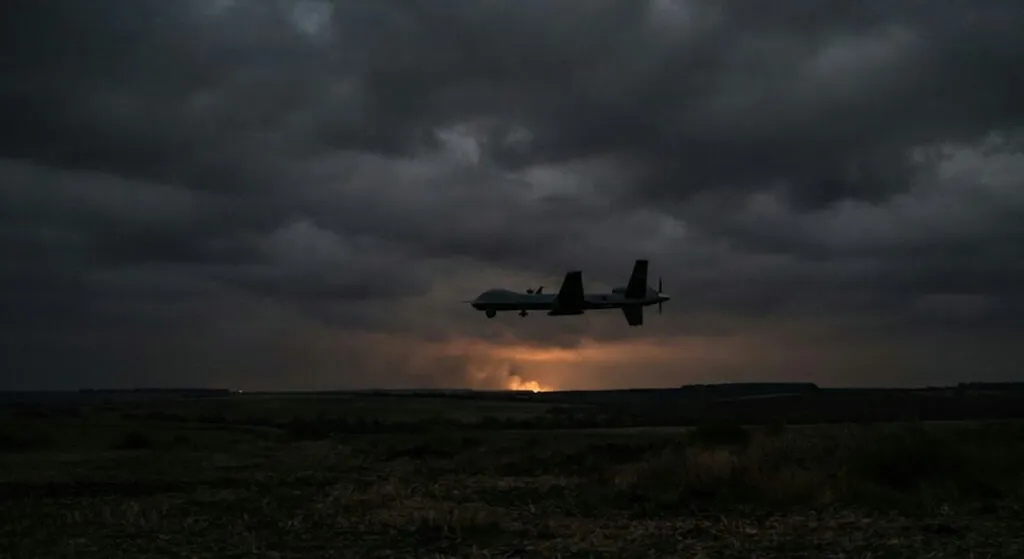
Ukrainian programmers and gamers are flying drones that strike up to 2,900 kilometres deep inside Russia. Moscow hits back with...
Saudi Arabia's highest religious authority has told soldiers to be ready to die in the war with the Houthis. When...
Ukrainian drones are hitting refineries hundreds of kilometres deep inside Russia, while Russia's jet-powered "Shaheds" are already breaking through Ukraine's...
Russian sources call it a "Geran night", as if it were a date in the calendar. Explosions from Kyiv and...
One dead, eight injured, two major providers offline and the city railway halted. The Balkans knows what a city preparing...
99 MPs voted in favour, and a threat arrived from Moscow right away. Is a small country on the line...

The offer is deliberately narrow - energy only, with a deadline before winter. When a power line goes down in...

On the night Russia was closing its parliamentary elections, Ukrainian drones reached the refinery at Kapotnya and residential blocks in...

Every sentence about last night's offensive has the same author - the Russian Ministry of Defence. There is smoke over...
The Telegram statement reads like a trailer: drones that blind drones, robots dropped from the air behind enemy lines, and...
This site uses cookies - is that okay? Learn more
Be the first to know when Metla launches something new
Leave your email and we will write when there is a new guide or something new on Metla.